


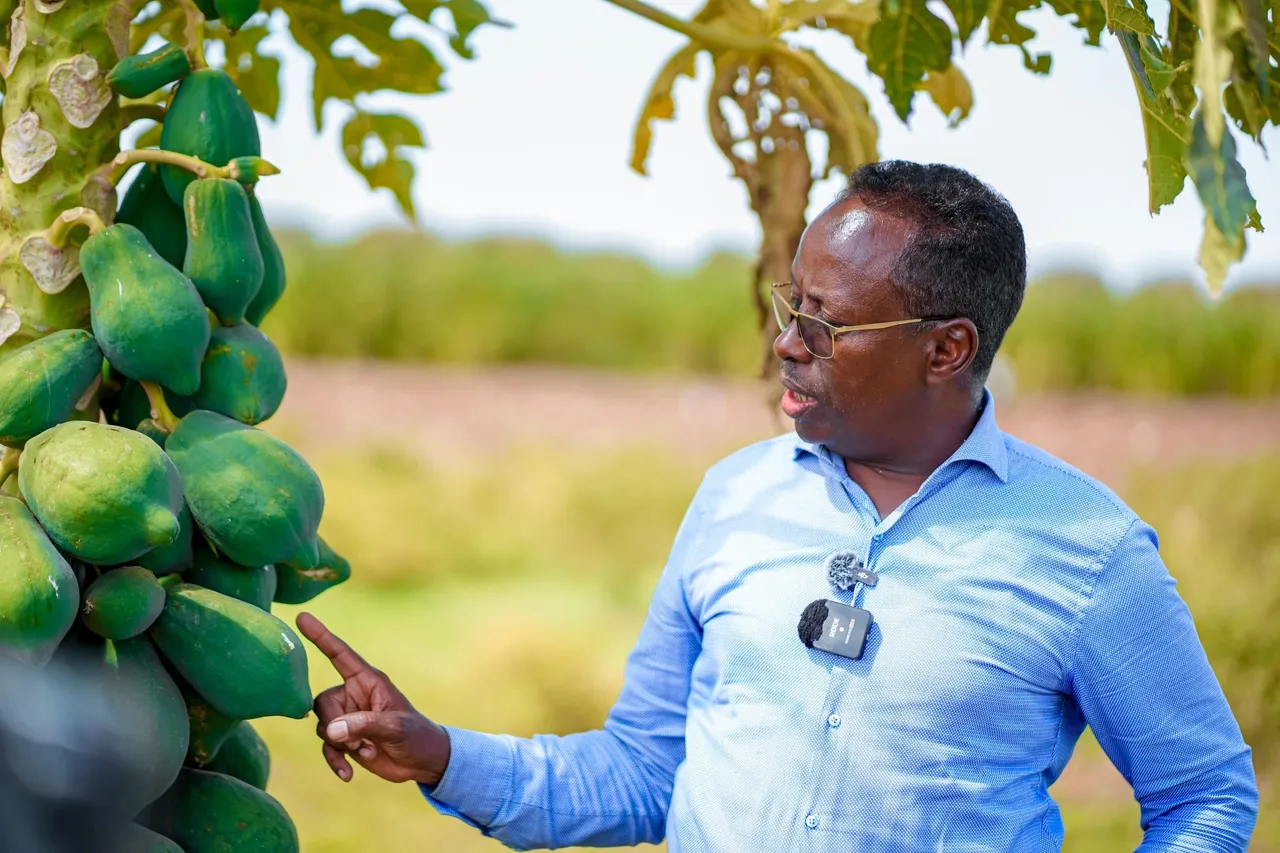
Saturday 4 April 2026 {HMC} Somalia’s Minister of Agriculture and Irrigation, Mohamed Abdi Hayir, also known as Mareeye, has issued a stark warning on the country’s future, urging citizens, investors, and policymakers to urgently redirect their focus toward agriculture, livestock, and fisheries as the foundation of national survival and economic growth.
In a wide ranging address in Mogadishu, the minister painted a candid picture of both the challenges and untapped opportunities facing Somalia, emphasising that the country stands at a critical crossroads between dependency and self-reliance.
“For decades, we have relied too heavily on external systems,” he said. “But the reality is changing. The world is becoming more uncertain and Somalia must produce what it consumes.”
Reflecting on recent droughts, Maareeye noted a significant shift in how Somali communities are responding to climate shocks.
Unlike previous years, where droughts devastated livestock and livelihoods, recent efforts by communities, government institutions, and the diaspora helped mitigate losses.
Turning point
Financial contributions from across society, including senior government leaders and Somalis abroad, played a crucial role in delivering water and feed to vulnerable pastoralists. As a result, the majority of livestock was preserved, marking a turning point in resilience.
“This time, people adapted. They learned how to protect their animals, how to manage their farms, and how to respond to changing conditions,” he said.
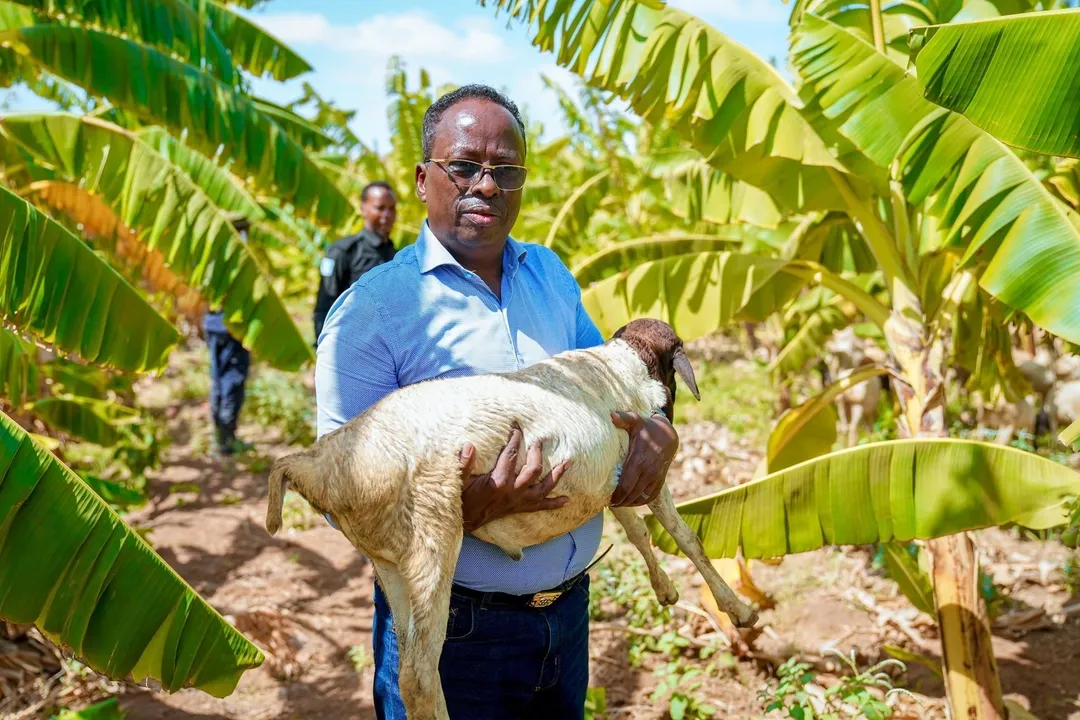
The minister stressed that Somalia’s future prosperity lies not in speculative sectors, but in its natural resources. He pointed to agriculture, livestock,and fisheries as the country’s most viable and sustainable sources of wealth.
“People are investing millions in real estate that cannot be easily liquidated,” he said. “But that same investment in agriculture could generate far greater returns, while feeding the nation and creating jobs.”
Success stories
He highlighted emerging success stories, particularly youth-led greenhouse farming initiatives around Mogadishu. These projects are already supplying a significant share of the city’s fresh produce and demonstrating how small scale investments can yield meaningful income.
“A single greenhouse can sustain a family,” he noted. “This is not theory, it is already happening.”
Maareeye underscored the need for coordinated national and international efforts to unlock Somalia’s agricultural potential. He called for targeted investments in irrigation, livestock systems, fisheries, and export oriented crops such as bananas, which once formed a key part of Somalia’s economy.
He also emphasized the importance of aligning international support with national priorities, ensuring that assistance is directed toward long-term productivity rather than short-term relief.
“Support must go to the right places, the right land, the right systems, the right ideas,” he said.
Dependency culture
In one of his most direct messages, the minister challenged what he described as a culture of dependency on humanitarian aid.
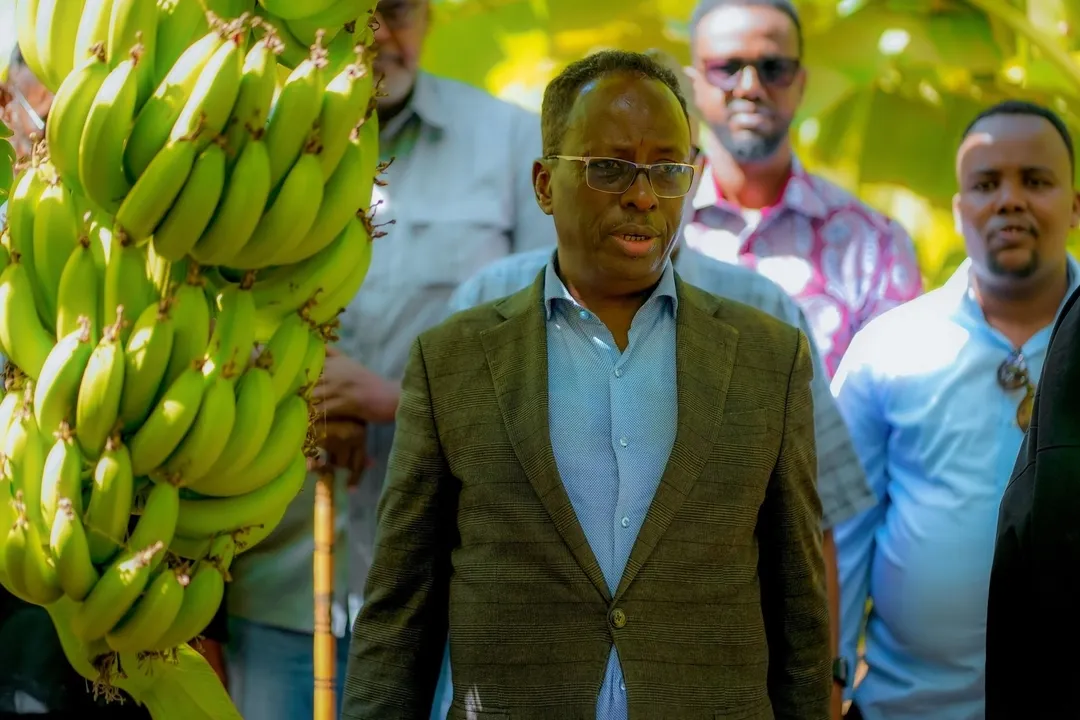
“Agriculture is not just survival, it is the future,” said the minister.
While acknowledging the role of aid during crises, he stressed that sustainable progress requires a shift toward self-reliance and dignity through work.
“Begging is not a solution,” he said. “People must work, produce, and protect their dignity.”
He also revealed plans to crack down on exploitative systems that profit from displaced populations, while encouraging the return of farmers to productive land as security conditions improve.
The minister warned that Somalia cannot ignore global developments. Conflicts in key regions, including Eastern Europe and the Middle East, have already disrupted food supply chains and driven up prices worldwide.
“If these conflicts continue, even countries with money may struggle to access food,” he cautioned. “The only real security is what you produce yourself.”
He pointed to historical precedents, noting that even wealthy nations have faced food shortages during major global crises when supply chains collapsed.
Maareeye has made an urgent call that Somalia must reclaim its productive capacity.
With vast agricultural land, a long coastline rich in marine resources, and a population increasingly aware of the need for resilience, the country has the potential to transform its economy from dependency to self sufficiency.
“The opportunity is there,” he said. “Agriculture is not just survival, it is the future.”
SOURCE:TRT Afrika English
