


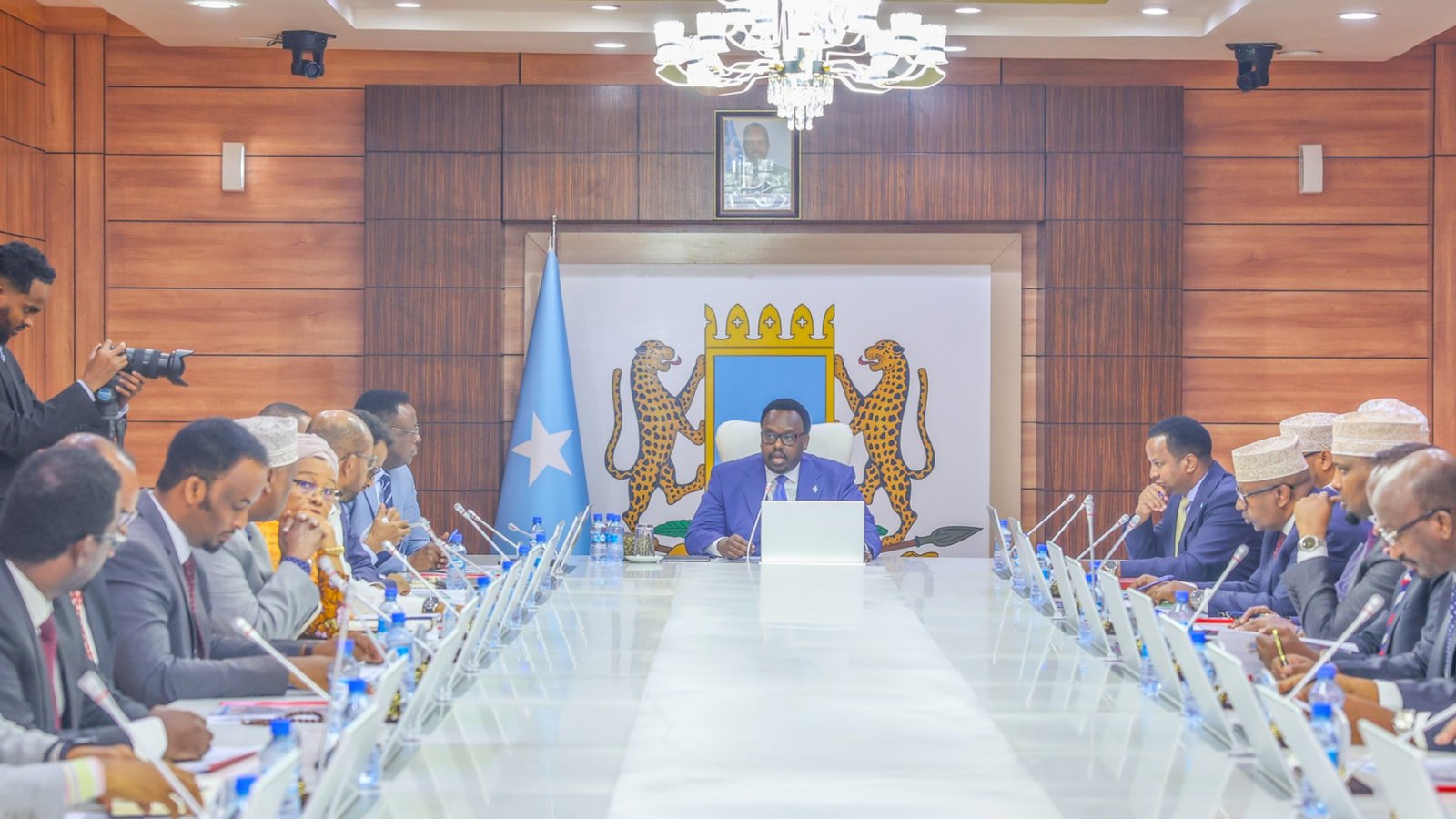
Tuesday 13 jun 2026 {HMC} Somalia’s federal cabinet said on Monday that it had voided all agreements previously signed with the United Arab Emirates, including deals covering defense cooperation, port management and security assistance, escalating a long-running dispute over Abu Dhabi’s direct dealings with Somalia’s regional authorities.
Government officials said the decision followed what they described as repeated breaches of Somalia’s sovereignty, citing agreements the UAE had concluded with regional administrations without the approval of the federal government. Under Somalia’s provisional constitution, foreign relations are reserved for the federal state.
The announcement came as the UAE began withdrawing military assets from Somalia, according to federal officials, days after Mogadishu barred Emirati military and cargo flights from Somali airspace. The government said the ban was imposed amid concerns about the use of strategic airfields and the expansion of foreign security activities beyond federal oversight.
Cabinet members framed the annulments as an effort to reassert national authority over international partnerships and critical infrastructure. At the same time, officials acknowledged that enforcement could be difficult, particularly in regions where Emirati-backed projects are already in operation.
Somaliland and shifting regional alignments
The dispute has unfolded against a changing regional backdrop, including Somaliland’s expanding ties with Middle Eastern countries. Earlier this month, Israel’s foreign minister visited Hargeisa shortly after Israel announced that it would recognize Somaliland’s claim of independence, a move that drew condemnation from Somalia’s federal government.
Mogadishu rejected the decision, saying it violated Somalia’s sovereignty and territorial integrity, and reiterated that Somaliland — which declared independence in 1991 — remains part of the Somali state. Officials in Hargeisa welcomed Israel’s decision, describing it as a diplomatic opening that could bolster security and economic prospects. They denied reports circulating in regional media that the relationship would involve foreign military bases or the relocation of refugees.
Ports, foreign investment and Somalia’s federal system
The UAE has for years been Somaliland’s most significant external partner. It maintains a trade mission in Hargeisa and has supported major infrastructure projects, including the expansion of the Berbera port, managed by the global port operator DP World. Berbera’s position along major shipping routes between the Red Sea and the Indian Ocean has increased its strategic value.
Somalia’s federal government has repeatedly objected to such arrangements, arguing that they bypass constitutional authority and encourage Somaliland’s push for international recognition. Similar disputes have surfaced in Puntland, where the UAE has supported port development and maritime security initiatives, and in Jubaland, where Mogadishu has expressed concern about foreign security assistance to regional administrations.
Analysts say the cabinet’s decision reflects a broader struggle over power, resources and foreign engagement within Somalia’s federal system. While federal leaders insist that all international agreements be handled through Mogadishu, regional authorities argue that security pressures and economic needs require direct engagement with foreign partners.
The annulment of the UAE agreements is likely to further strain relations between the federal government and regional administrations, even as Somalia seeks stability, investment and international support amid shifting alliances in the Horn of Africa.
Source Hiiraan online
