

Sabti 16- Nov-2024 {HMC} Dhageystayaal halkan waxa aan idiin kugu soo gudbi neynaa Warka Habenimo ee Warbaahinta Hiiraanweyn
Warka waxaa soo jeedinayo ::Muse Ali Heroow
Farsamadii ::Mohamed Baryare Haamud

Sabti 16- Nov-2024 {HMC} Dhageystayaal halkan waxa aan idiin kugu soo gudbi neynaa Warka Habenimo ee Warbaahinta Hiiraanweyn
Warka waxaa soo jeedinayo ::Muse Ali Heroow
Farsamadii ::Mohamed Baryare Haamud

Sabti 16- Nov-2024 {HMC} Ra’iisul Wasaarada dalka Holland Dick Schoof ayaa sheegay in dowladdiisu ay ka badbaaday qalalaase siyaasadeed, kaddib marki ay Jimcihi shalay is casishay wasiirkii maaliyadda, sababo la xiriiray caro ay ka qaadday qaabka ay dowladda u maareysay rabshadihi ka dhashay taageerayaal dhinaca kubadda cagta oo isugu gacan qaaday magaalada Amesterdam todobaadki hore.
Nura Ashahbar, oo aheyd Wasiirki Maaliyadda, isla markaana ah gabadh asal ahaan kasoo jeeda Morocco balse heysata dhalashada Netherlands ayaa Jimcihi si lama filaan ah u gudbisay iscislaadeedda.
Afar ka mid ah xisbigeeda NSC ee siyaasaddiisu dhex-dhexaadka tahay ayaa iyaguna wacad ku maray in ay is casili doonaan, arrintaasi ayaa keentay in kulan deg deg ah ay isugu yimaadaan golaha wasiirrada.
Ra’iisulwasaaraha Dhajka, Dick Schoof ayaa xalay sheegay in golahiisa wasiirrada ay gaareen heshiis lagu soo afjaray xasaraddan, isla markaana ay iscasishay kaliyah Nura Ashahbar, lagana baaqsaday is casilaado kale.
Ashahbar, ayaa u sababeysay is casilaadeedda hadallo todobaadkaan kasoo yeeray hogaamiyaha xisbiga midigta fog ee Holland Geert Wilders, kuwaas oo uu si cunsuriyadi ku dheehantahay ugu weeraray bulshada asal ahaan kasoo jeedda Morocco ee ku nool dalka Holland.
Wilders ayaa Arbacadi ku eedeeyay dadka Morookaanka ah in ay ka danbeeyeen iskudhacyo dhex maray Isara’iiliyiin u badnaa taageerayaasha koox kubadda cagta ah oo ka socotay Isra’il iyo taageerayaal Muslimiinta Holland ah oo badankooda watay cimmaamadaha Falastiin.
Wilders ayaa yiri: “waxaan aragnay Muslimiin ugaarasanaya Yahuud, iyo Morookaan rabay in ay burburiyaan Yahuud.”
Wasiiradda Iscasishay, Nura Ashahbar ayaa hadalkaasi ku tilmaantay mid kala qeybinaya bulshada reer Holland, isla markaana dhaawac ku ah wadajirka, sidaasi daraadeedna aysan la shaqeyn karin dowladdaan wadaaga ah ee Holland.
XIGASHO VOA

Sabti 16- Nov-2024 {HMC} Madaxweyne Joe Biden ayaa Jimcihii bogaadiyay iskaashiga u dhexeeya dowladaha Mareykanka, Kuuriyada Koonfureed iyo Japan, si looga hortago wax uu Biden ku tilmaamay khatarta iyo iskaashiga ku dhisan xasillooni-darrida ee ka dhaxeeya Kuuriyada Waqooyi iyo Ruushka.
Madaxweynaha Mareykanka ayaa hadalkan ka sheegay kulan doceed uu Jimcihi shalay dalka Peru kula yeeshay Madaxweynaha Kuuriyada Koonfureed Yoon Suk Yeol iyo Ra’iisul Wasaaraha Japan Shigeru Ishiba.
Mas’uuliyiintan ayaa Peru u jooga ka qeybgalka shir-madaxeedka iskaashiga dhaqaalaha ee Aasiya iyo Baasifiga. Waxana wadahadalladi shalay ay imanayaan xilli uu jiro walaac xoog leh oo laga qabo iskaashiga millatari ee sii kordhaya ee u dhaxeeya Ruushka iyo Kuuriyada Waqooyi.
Kulanka Biden uu la yeeshay madaxda Japan iyo Kuuriyada Koofureed ayaa noqon doona kiisii ugu danbeeyay, ka hor inta uusan xafiiska Aqalka Cad u banneyn, madaxweynaha dooran ee Mareykanka Donald Trump.
XIGASHO VOA
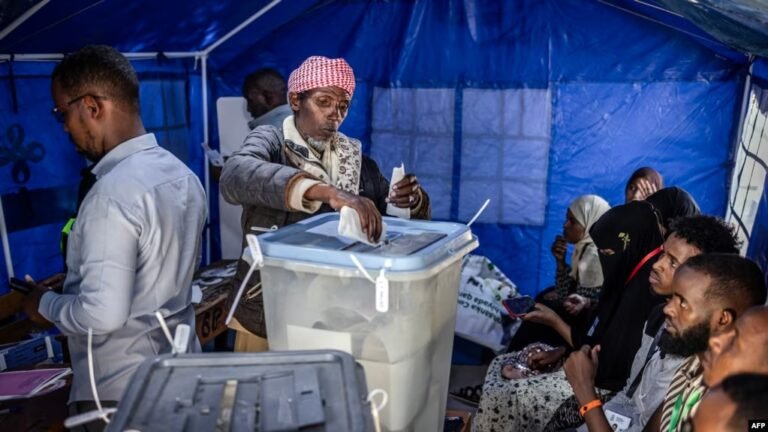
Saturday 16- Nov-2024 {HMC} Western diplomats have urged Somaliland’s three presidential candidates and their supporters to accept the election results, expected in the coming days, as vote counting continues. The diplomats said they have visited 30 polling stations in different cities in Somaliland to “reaffirm their support for the democratic process.”
The foreign diplomats from nine European countries and the United States, who were in Somaliland on Wednesday to witness the elections, said they commend Somaliland’s National Electoral Commission for conducting a “transparent voter registration and candidate nomination process.”
In a statement read by the U.K. ambassador to Somalia, Mike Nithavrianakis, the diplomats said they stand ready to work alongside Somaliland to further strengthen democracy and accountability in the future.
Meanwhile, international observers in Somaliland said the elections were peaceful, although in some parts the polling stations did not open “due to conflict.”
Tim Cole, a former British diplomat, is the chief observer of the International Election Observation Mission Somaliland. He is leading a team of 28 international observers invited by the Somaliland election committee.
Cole said the observers visited 146 polling stations and saw “some administrative issues” and said in some places “procedures weren’t followed.” However, he said the team observed that in general, people wanted to participate in the election, there was enthusiasm for voting and the elections were peaceful.
“In some parts of Somaliland … the polling stations didn’t open because of conflict. So that’s one issue that some voters faced,” he told VOA’s Horn of Africa Service.
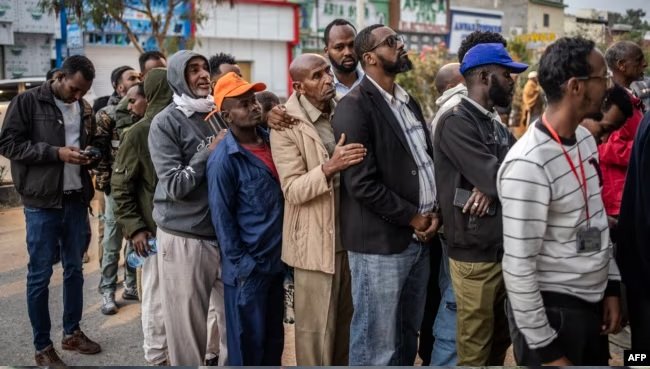
“There were long queues, which can be seen as a good thing, but it also means people are standing around for a long time. But, yeah, the main challenges were really, I would say, there were some procedural issues. As I said, some of the polling stations, for example, didn’t open as early as they should have done. They were due to open at 7 o’clock and they opened later. That was also true in the capital, Hargeisa.”
The observer said the tallying starts when the ballot boxes are brought from all six regions of Somaliland. He said the results will take days to be released.
“It will be sometime next week before we know the final results,” he said. “So, I’m not sure exactly which day that could be, because all of those things can take time or could be done very quickly depending on logistics, cars breaking down, all those sorts of things. That can happen in any country. So, it will be a few days yet before we get the final result.”
The Brenthurst Foundation, a Johannesburg-based think tank that sent observers to Somaliland, said no serious incidents threatened the integrity of the election on voting day.
“In our opinion, this election was free, fair and credible despite the constraints of Somaliland’s financial and institutional means,” it said in a report published Friday.
More than 1.2 million people registered to vote in the election, the fourth in Somaliland since 2003. The region seceded from the rest of Somalia in 1991 but gained no international recognition. Somalia still considers Somaliland as part of its territory.
Guleid Ahmed Jama is a prominent Somaliland human rights lawyer and analyst. He says the economy, international recognition, foreign affairs, and peace and security were the main issues the candidates have been campaigning on.
“The economy of Somaliland is in a very poor position. Somaliland is a poor country; it’s one of the poorest places in the world. It doesn’t produce or manufacture anything. Most of the things, most of the goods used in Somaliland are imported from the outside,” he said.
“Somaliland export is only livestock and also gets some money from remittance and by the diaspora community. So, its economy is very poor. That is an issue in Somaliland, particularly to the youth,” Jama said.
Recognition is another key issue in Somaliland. The current president, Muse Bihi Abdi, signed a Memorandum of Understanding (MOU) with Ethiopia in January, agreeing to lease 20 kilometers of seafront to the landlocked country in return for recognition.
Jama said if the incumbent wins, he will implement the MOU. He said the opposition has welcomed the agreement, but with reservations.
“The political leaders, particularly two main contenders, are all on the same page to have some sort of agreement with Ethiopia in relation to access to [the] sea. But the opposition’s position is that they will like to see the memorandum of understanding — what is written — because they haven’t seen it. It is not a public document, and they say the people will be consulted and the process will be transparent,” he said.
“But the ruling party candidate obviously says if he gets elected, he will convert it to a legally binding agreement. So, it depends on who wins in this election, whether they will proceed with the memorandum of understanding or not.”
Somalia condemns the MOU as illegal and an infringement of its sovereignty and territorial unity, while Ethiopia and Somaliland defend it.
Without commenting on the MOU, Ethiopia praised Somaliland’s election and congratulated the people of Somaliland “on the conduct of [voters for the] peaceful and democratic election.”
In a statement issued by the Ministry of Foreign Affairs, Ethiopia commended Somaliland’s National Electoral Commission for conducting a “free and fair election.”
“This process reflects the maturity of Somaliland’s governance and democratic system,” the statement concluded.
SOURCE VOA

Sabti 16- Nov-2024 {HMC} Dowlada Itoobiya ayaa ku dhawaaqday in ay sii wadi doonto dadaalkeeda lagu wiiqayo Al-Shabaab.
Ambassador Nebiat Getachew, afhayeenka Wasaaradda Arrimaha Dibadda ee Itoobiya, ayaa hoosta ka xariiqay doorka muhiimka ah ee Itoobiya ee dhimista khatarta al-Shabaab ee gobolka.
“Al-Shabaab waxay weli walaac ku yihiin amniga qarankayaga, dadaallada looga hortagayona waa ay sii socon doonaan xaalad walba si looga hortago inay khatar ku noqoto amniga gobolka,” ayuu yiri Nebiat Getachew.
Nebiat waxa kale oo uu xusay in maaddaama ay Itoobiya iyo Soomaaliya yihiin deris aan la kala maarmi doonin, ay sidaas daraadeed Itoobiya sii wadi doonto fulinta aragtideeda istiraatijiyadeed si ay xoojiso is-dhexgalka gobolka mustaqbalka fog.
Hadalka ka soo baxay Wasaaradda Arrimaha Dibadda ee Itoobiya ayaa daba socday war uu soo saaray Wasiirka Gaashaandhigga Soomaaliya, Cabdulqaadir Maxamed Nuur, kaasoo uu ku caddeeyay in Itoobiya aysan ka qeybgeli doonin howlgalka Midowga Afrika ee Soomaaliya AUSSOM.
Wasiirka ayaa ku dooday in heshiiskii ay Itoobiya la gashay Somaliland uu wax u dhimayo madaxbanaanida iyo midnimada Soomaaliya.
Xiriirka diblomaasiyadeed ee u dhexeeya Itoobiya iyo Soomaaliya ayaa xumaaday ka dib markii 01-kii January, 2024-kii ay Itoobiya iyo Somaliland kala saxeexdeen heshiis is-afgarad ah.
Is-afgaradku waxa uu ujeedadiisu tahay in Itoobiya loo fududeeyo gelitaanka badda si ay dhankeeda u aqoonsato madaxbannaanida Somaliland.

Sabti 16- Nov-2024 {HMC} Axmed Macalin Fiqi Wasiirka arrimaha dibadda Soomaaliya, ayaa beeniyay in ciidamada xoogga dalka Soomaaliya ay kasoo baxeen furimaha ay kaga jiraan gobolka Mudug, isagoo sheegay in dad dowladda kasoo horjeeda ay war been ah faafiyeen.
Wasiir Fiqi ayaa sheegay in todobaadkii tagay ay dowladda iskusoo dhiibeen 10 xubnood oo katirsan Alshabab, kuwaas oo uu sheegay inay u adkaysan waayeen go’doominta dowladda iyo nolasha adag ee ka jirta degaanada ay ku sugan yihiin Alshabaab.
Fiqi wuxuu sheegay inay jiraan masuuliyiin dowlado shisheeye lacag uga soo qaata magac dilka ciidanka xoogga dalka Soomaaliyeed ee dagaalka kula jira Alshabaab, wuxuuna sheegay inay skhakhsiyaadkaas ka xun yihiin in dowladdu dalka ka xorayso Shabaab.
“Dalkaan waxaan ognahay niman masuuliyiin ah oo lacag lagusoo siiyay, oo dowlado kale ay lacag soo siiyeen. Waxaan haynaa xaqiiqdooda, oo ah inay biil ku qaataan magac dil sameeya. Dadkaas waa naqaanaa, iyaguna way is yaqaanaan. Waan ka shifaynaa hadday xishoon waayaan,” ayuu yiri Fiqi.
Muddooyinkii ugu dambeeyay, dowladda Soomaaliya ayaa lagu dhaliilay inay ka jeesatay dagaalka lagula jiro Alshabaab, islamarkaasna ay dowladdu ku mashquushay khilaafka kala dhaxeeya dowlad goboleedyada iyo arrimaha doorashada.
Saturday 16, Nov 2024 {HMC} Rebecca Cheptegei loved chickens. She reared them and collected their eggs each morning. Her family would gently joke she loved them too much.
“She was always laughing,” says her mother, Agnes. “You always knew when she was home.”
Cheptegei had a chicken coop wherever she lived. Earlier this year, she built a house in the Kenyan village of Kinyoro, funded by her recent success — she won the World Mountain Running Championships in 2022, and finished second in last year’s Florence Marathon.
On the afternoon of September 1, while Cheptegei was at church, her estranged partner Dickson Ndiema Marangach lowered himself inside the coop, with its solid wooden walls. When she returned, she went outside to check on her flock, given the light drizzle.
As Cheptegei approached, Marangach burst out the coop and threw petrol in her eyes. While she stumbled, he used the jerry can to soak the rest of her body — and set her alight.
Her 17-year-old sister Dorcas ran out to help, clawing at Cheptegei’s black jacket, her finest church wear, but fled after being threatened by Marangach’s machete.
“I can’t forget it,” says Dorcas. “I keep dreaming of her calling for help.” Watching on inside were Cheptegei’s daughters from a previous marriage, 12-year-old Joy and Charity, nine.
Cheptegei ran to the front lawn, but with Marangach trailing behind, no neighbours came to help. As she collapsed onto the grass, Marangach walked over, and emptied the rest of the petrol onto her. He seriously burnt himself in the process.
By the time help came, the only parts of Cheptegei which had not been covered with either second or third-degree burns were her forearms and shins.
“Mama, why was there no one there to save me?” she wept to her pastor, Caroline Atieno, in hospital that evening.
For the first 24 hours, Cheptegei was able to speak and describe the attack. Before being transferred to a larger hospital in the Kenyan city of Eldoret, she raised hopes of survival by pulling herself into a wheelchair. The next day, Atieno kept vigil at the nearby Mount Bethel, where the pair had prayed before the Olympics.
Cheptegei worsened over the coming days. Her tongue swelled, blocking her airways. One by one, her organs began to shut down.
“I went to see her in intensive care,” says Kenyan athlete Violah Lagat. “And I made a bad decision visiting that day, because it has never left me. I’ve been having nightmares about how she looked. She went through all the struggles of life and made it. She was an Olympian. And it was taken from her.”
While she could still speak, Cheptegei repeated two things in Swahili.
“Why couldn’t Dickson have seen one good thing in me, so he wouldn’t have done this?”
“Who will look after my children?”
She died four days after being attacked, aged 33.
The hospital announced that Marangach had died of his own burns on September 10.
On November 3, Kenyan athletes finished 1-2-3 in the New York City Marathon. The previous month, in Chicago, Ruth Chepngetich became the first woman to run under two hours and 10 minutes, obliterating the world record by nearly two minutes.
The majority of Kenyan runners train in the town of Iten, near Eldoret. It lies above the Great Rift Valley on an escarpment a mile and a half high, the thin air and web of trails producing a regular stream of Olympic medallists. In Kenya, it has been named “the home of champions”. In recent years, it has become known for something else.
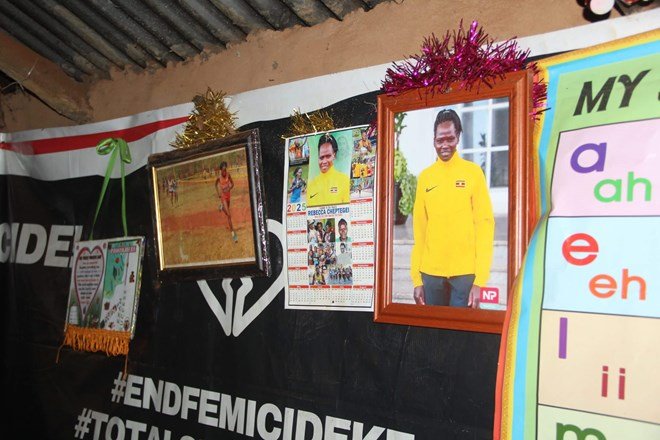
Cheptegei’s family have hung a banner on their living room wall. It reads “Fighting for Victims of Femicide” and lists four names.
Rebecca Cheptegei. Though she was born in and competed for Uganda, she had lived in Kenya since the age of two.

Damaris Muthee Mutua — strangled in Iten in April 2022. Born in Kenya, she represented Bahrain internationally. The police named her boyfriend Eskinder Folie as the chief suspect but he fled across the border to his native Ethiopia and attempts to capture him have been unsuccessful.
Edith Muthoni — murdered in October 2021. The 27-year-old sprinter also worked as a wildlife protection officer. Her husband was charged in relation to her death in 2022 and the case is ongoing.
Agnes Tirop — stabbed to death in the same week as Muthoni, a month after breaking the 10,000m world record in Germany. Her husband and coach, Ibrahim Rotich, confessed to beating her in a heated argument and then pleaded not guilty to her murder. This case is also ongoing.
“She was a pure talent,” says Janeth Jepkosgei, a former 800m world champion and Olympic silver medallist, of Tirop. “She could have been an Olympic champion. She could have done great things in the marathon.”
Though the legal process is at a different stage in all four cases, there is an apparent pattern: each woman athlete was killed after a financial dispute involving their partner. Speaking to athletes around Iten, everyone worries that they will not be the last.
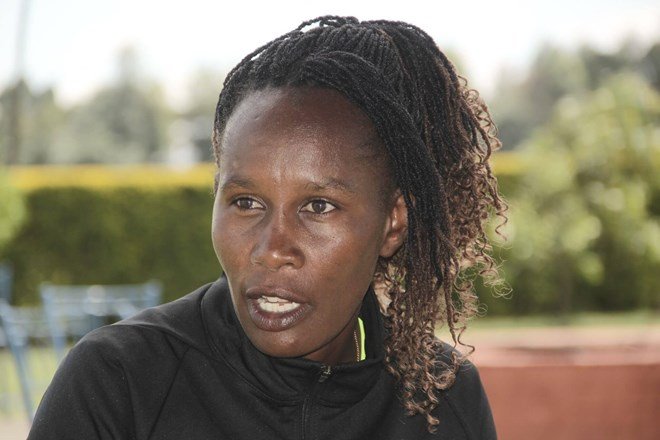
Jepkosgei is now one of Kenya’s best coaches, working predominantly with junior athletes, and witnesses the issues daily.
“We don’t want to bury more ladies, but the same things keep happening,” she says. “It’s no longer safe for any athlete, actually, especially when they’re starting a relationship. We feel scared as women.”
She is alluding to a system of control that is well-known throughout Kenyan running.
“There are these guys who go hunting for these girls who are talented, and then they pretend to be coaches,” explains Lagat, whose brother, Bernard, won two world championship gold medals competing for the USA.
“Ninety per cent of the time, us athletes come from very vulnerable backgrounds. Our parents don’t have enough money or enough food, they aren’t able to provide sanitary towels for the girls. Those men will initially provide that.”
Athletics in Kenya is a route out of poverty. The New York City Marathon prize money is $100,000, fifteen times a Kenyan’s average annual salary, but even performing well in local races can provide a comfortable lifestyle. Around 30 female runners earn more than $100,000 each year, in a nation where one-third of the population live below the poverty line. With the majority of athletes from poorer, rural backgrounds, they invariably will have never handled such large sums of money.
“In many cases, these men are gradually grooming or manipulating someone to put all their trust in them,” adds Lagat. “Then the control takes place — how they’re training, who they’re seeing, what they do with their earnings.”
“I call them vultures,” says Wesley Korir, winner of the 2012 Boston Marathon, and later a politician. “They look at them (women athletes) as an investment. The relationship is not out of love, these girls feel stuck, they’re trying to survive. For me, I feel like it’s slavery.”
When The Athletic visited Iten, many athletes — some speaking anonymously owing to fear of repercussions — reported further examples of gender-based violence, including domestic abuse, sexual assault, abduction, and feeling pressure to take performance-enhancing drugs. The response of authorities has also been questioned.
Lagat has trained in Iten for most of her adult life, and had grown close to Tirop, six years her junior. After her friend’s death, she resolved to bring change.
“The violence has gone from our grandmothers to our mothers,” she explains. “Agnes was younger than me. If we didn’t take a step, it’ll go all the way to our grandchildren as well.”
She co-founded Tirop’s Angels alongside fellow athlete Joan Chelimo, a domestic abuse charity run by current athletes which provides counselling and safe havens, as well as advice for athletes who suspect they are being exploited.
According to the charity, three-quarters of the women they support have contemplated suicide because of their situation.
On the day we meet, Lagat needs to leave early, rushed out to an emergency call of an athlete in distress. In recent months, the charity experienced a man trying to climb over an electric fence to reach one of the athletes they were harbouring. It was not out of the ordinary.
To get to Cheptegei’s family home, you take the highway from Eldoret, in Kenya’s far west, towards the gateway town of Kitale. It is near the Ugandan border, over which her parents fled ethnic violence in the early 1990s. From Kitale, it is a smaller road to the tiny village of Endebess, before a three-mile climb up a packed dirt trail into the shadows of Mount Elgon.
These roads are good for training — soft for the knees, undulating for the legs and high for the lungs. Cheptegei’s brother Jacob — an 18-year-old with a 5,000m personal best of 14 minutes flat, faster than this year’s world-leading junior time — leads the way.
Joy and Charity live with the family now, joining Cheptegei’s parents and siblings across four adobe huts and two acres of land, on which they grow cabbages, plantain, and yams.
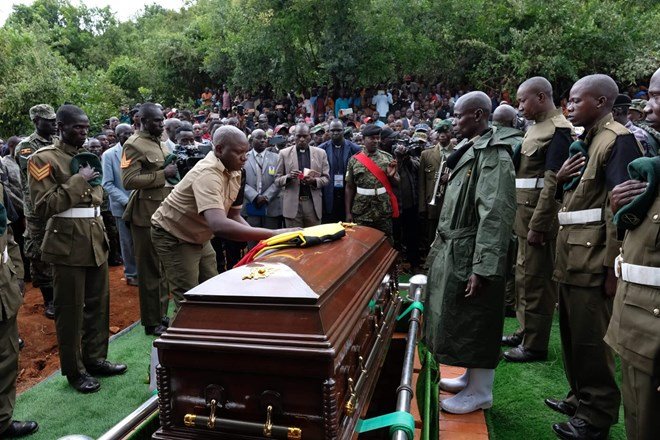
“Once we were 13, but now we are 12,” says Cheptegei’s father, Joseph. “She (Rebecca) dreamed of buying us another two acres, of building a permanent home. But that has disappeared.”
Cheptegei was spotted as a talented runner at seven. She opted to represent Uganda after missing out on a Kenya junior camp, and was supported in her training by the country’s army. After a short period in Uganda, she moved back to Kenya for the superior training facilities. There, she met Marangach.
“Dickson wasn’t a talented athlete,” says her close friend Emmanuel Kimutai. “He was a boda-boda man (a motorcycle taxi driver), but pretended to be a coach. He was looking for an opportunity.
“He started by escorting the runners with his motorcycle, carrying drinks, but when he realised Rebecca wasn’t in a relationship, he took advantage. He told Rebecca a lot of lies, but I think she wanted companionship. We eventually found out he was with three ladies at the time.”
The issues began when Cheptegei decided to buy her own motorcycle to take Joy and Charity to school. According to the family, Marangach said he would arrange it — and paid for it with Cheptegei’s money — but registered the bike in his name. When Cheptegei complained, Marangach threatened her.
“He keep repeating the same warnings to Rebecca,” says Agnes. “He said he’d maim her ears, maim her nose, maim her genitals.”
On one occasion, Jacob borrowed the motorbike, with his sister’s permission, for a race in Uganda. He says he was chased down by Marangach and three of his friends and had to flee, hiding in a eucalyptus tree to avoid being beaten. Marangach then reported him to the police.
All the while, Cheptegei was winning money from races — more than $50,000 each year.
“Dickson would see the money coming into the bank account, and he had a PIN code,” says Joseph. “He’d spend it how he wanted. Rebecca was uncomfortable with that, and so in April (2024) she went to the bank to change the number.
“After realising Rebecca had done this, Dickson came home in a fury with a machete. Her phone was charging, and he slashed at it with a machete. She ran away from the house in Kinyoro and reported it to the police.”
They say another another unprovoked attack took place soon after, when he knocked her out with a punch to her cheek.
“Dickson would tell her she couldn’t go anywhere to get justice, because he said a police officer in Kinyoro was family,” Joseph adds. “He said he would only lose a little, but if Rebecca complained, she would lose everything she has.”
Her most important asset was the house in Kinyoro, built strategically between her parents and the training bases of Iten and Eldoret. Joseph points to a framed photo on the wall, of Rebecca standing proudly in front of her new home.
“You see this house? This is why Rebecca was killed,” he says.
By the spring, Cheptegei and Marangach had separated as a couple, yet he continued to insist the plot was in his name, bringing his new partner to the house and refusing to leave. The police detained him, but he was back within a month, this time attempting to change the locks.
“Rebecca couldn’t even take the kids to school that day,” says Joseph. “She called the police at Kinyoro again, but the officer said he was tired of all the complaints at this homestead, and that he didn’t want to hear any more of their domestic argument.”
When asked about the handling of Cheptegei’s case, Jeremiah ole Kosiom, county commander of Trans Nzoia police, said in a phone call: “As a senior officer, no reports reached me from my juniors. The investigation is ongoing.”
This was just before the Olympics, at which Cheptegei finished 44th in the marathon.
“She wasn’t sleeping at home,” says Agnes. “She was fearful for her life. She couldn’t perform because she was so worried about Dickson.”
Cheptegei managed to get the case into the justice system, with the aim of ultimately settling the ownership question. According to her family, the weekend she was attacked, Marangach was unsuccessfully chasing signatures for his own documentation. He then went to a small filling station in Endebess, and bought petrol.
Before her relationship with Marangach, Cheptegei had been briefly married in Uganda to Joy and Charity’s father.
After her death, Joseph reconnected with his daughter’s ex-husband to enquire whether his grandchildren could benefit from land in Uganda she had bought them. He was told that it had already been sold.
Back in Iten, others followed what had happened in Kinyoro in horror. They had been here before.
“When Rebecca Cheptegei died in the same way as Agnes, I was in so much pain,” says Martin Tirop, Agnes’s brother. “I wanted to go and view her body when she was pronounced dead. But when I woke up in the morning, I didn’t have my courage anymore. I was traumatised from what came before.”
Just one month before she died, Tirop had broken the 10,000m world record in the small Bavarian town of Herzogenaurach. When she returned from Germany, she was killed.
Martin still lives in the compound in Iten which Tirop built with her winnings. As one of Kenya’s most successful female athletes, she typically earned more than $100,000 each year. Sitting in the dimly-lit living room, he points to a door.
“That’s where we found her,” he says.
That morning, October 13, no one had heard from Tirop for 24 hours. After police sawed through the compound gates, Martin was boosted on a family member’s shoulders, allowing him peer into a locked bedroom. There, he saw his sister’s dead body, lying in the doorway in pool of blood.
Tirop’s husband, Rotich, was around 15 years her senior and worked as her coach despite a lack of formal qualifications. Rotich pleaded not guilty to her murder, claiming he was provoked. Pre-trial testimonies are being gathered at Eldoret’s High Court, ahead of a full trial next year.
Tirop’s family outline how Rotich sought to cut off her support networks.
“Agnes just disappeared from school,” her father Vincent told the court. “Since she was 18 years old, the police said there was nothing they could do about it.”
Her sister Eve testified in court that she had seen Tirop being beaten and crying on the floor. On her return from the Tokyo Olympics in August, it was said Agnes was so afraid she went to stay with her mother, though eventually moved back in with Rotich in Iten.
Early on October 12, Tirop’s sister, who lived nearby, told the court she heard screaming and quarrelling at 5am. She said that Rotich gave her 1,000 Kenyan shillings ($7.70; £6.10) that morning to buy meat, insisting she left the house on the errand. When she returned, the gates were locked and she said her sister’s phone was off. Twenty-four hours later, and still without contact, police were summoned to break down the door.
An autopsy found Agnes had been stabbed four times in the neck and hit with a garden hoe. She was 25.
“The problems come when we trust too much in the wrong partner,” says marathon world-record holder Chepngetich. “When we’re tired, we can’t do everything by ourselves. We need help, and that’s when they take advantage — taking our properties, other things as well. And maybe then there can be violence.”
Kenya’s best runners are predominantly Kalenjin, the nation’s third-largest tribe. Traditionally, they are taught that the man is the head of the household — which is why many purchase properties in the man’s name, even if it is funded with the woman athlete’s money.
“You know, most of those female athletes who make it, actually own nothing,” says Tirop’s brother Martin. “Everything is in their husband’s name. There is nothing on record and they need to be protected.”
“My husband has taken firm control of my two petrol stations and proceeds from agricultural land, and I can’t earn from them,” Vivian Cheruiyot, a 5000m gold medallist at the 2016 Olympics, told Kenyan newspaper The Standard last year. “I don’t even know where the title deeds are. I want my property to be safe for the future of my children.” Her husband denies the allegations.
“Men need to learn they are supposed to be the one contributing, rather than using the female to succeed,” says Mary Keitany, a three-time winner of both the New York and London marathons. According to the Gates Foundation, across Kenya, women in rural communities do 50 per cent more labour, but make 80 per cent less income.
According to government research from 2022, around 40 per cent of Kenyan women aged between 15 and 39 have suffered physical abuse in their lifetime.
Chelimo Saina runs a domestic abuse support group through her and her husband’s charity, Shoe4Africa, and still competes for Kenya in masters athletics. A Kalenjin, she points to parts of her tribe’s culture as a factor.
“For men, circumcision at 15 to 17 is a big rite of passage,” she explains. “They’re expected to show no pain. But in the more traditional ceremonies, when they’re taught how to treat a woman, they’re told that occasionally beating a woman is OK. There are the same attitudes in wedding songs. Us women are taught to persevere.”
The abuse can also be sexual. In 2019, a government survey reported that one in six Kenyan women had experienced sexual violence before they turned 18.
“There are so many cases with the girls,” says Jepkosgei. “I deal mostly with Under-20 athletes, and whenever we tour around the country, we realise so many things have happened. I’ve had to rescue girls from some regions. There are so many abortions being done.” Abortion is banned in Kenya unless it is a medical emergency or proved as a product of rape.
Selina Kogo, known affectionately by athletes as ‘Shosh’ (grandmother), works as Tirop’s Angels’ counsellor. Even after almost two decades in this space, some cases shock her — such as that involving a junior international medallist, aged 13 and her so-called coach.
“The problem came during massages,” she says. “He told her that sex is part of the massage, and because she was just an innocent little girl, she thought that if the boss said it was normal, it was normal. He was the one who sent money and sugar home. Within a year, she got pregnant, at the age of just 14 or 15.”
In Kenya, the age of consent is 18. Sex with a minor is considered “defilement” and, in this case, could have been punished by at least 20 years imprisonment if convicted. The assault was never reported.
“She couldn’t run and went home, and then the poverty started,” says Kogo. “But she decided to give running one more shot, with her mother looking after the baby.
“Then another coach came into her life making promises. He offered to help her move to Iten, he proposed to her. She got pregnant again. Within six months he disappeared. She’s still 17, too young to work, and is so demoralised she can’t run.”
Unregulated massage parlours like these are not uncommon in Iten.
“So many girls are sexually violated because they go for a massage before a race and say they have 300 shillings (a few dollars or pounds),” says Lagat. “Then they are told, ‘No, it is 500′ — but if you’re preparing for a race and this is your shot, you can avoid the extra 200 if you do something else.”
That ‘something else’ may also include doping. According to the World Anti-Doping Authority, 44 per cent of positive tests for EPO come from Kenya. With the high levels of coach-partner exploitation, desperate to maximise income, the incentive to gain an unfair advantage is obvious.
“I know two runners where their husbands were the ones helping them get the drugs,” says Saina. “It’s whatever makes them win. And of course, they’re using the athlete’s money to source this.”
Athletics Kenya president Jackson Tuwei acknowledges the likely connection.
“We have started an enhanced anti-doping programme, and want to register all our coaches so we know who is a real coach and who isn’t,” he told The Athletic. “One of the recommendations is to increase the number of female coaches, and that will also help address the gender violence issue.
“A well-trained coach would not do the things we’re hearing about — we want to eliminate those who aren’t.”
Athletics is big business in Kenya — and the question of who is responsible for what is happening to women athletes is a pertinent one.
“In the year she died, (Agnes) reported what happened to Athletics Kenya, but nobody helped her,” says Martin Tirop. “Athletics Kenya and the government raise so much money through athletics. They need to protect female athletes.”
Other athletes, remaining anonymous to protect their position within the team, criticised the body for failing to release a report they say was promised to them in the aftermath of Tirop’s murder, and have also questioned a male dominance on the executive committee (13 men and five women).
Senior officials at Athletics Kenya have acknowledged that they needed to make significant changes to their protocols after her death, based on recommendations from World Athletics, the sport’s global governing body.
“(Gender-based violence) has continued to happen at a rate we cannot accept,” says Tuwei. “For this to happen, and to particularly happen to a top athlete, it’s very painful, and so we decided that we cannot accept this kind of thing. But we know it’s happened again and again thereafter.”
Athletics Kenya introduced several new policies this year, including a six-person panel — four women and two men — where gender-based violence and other safeguarding issues can be reported. A new office has opened in Eldoret, far closer to the athletes than Nairobi, which also offers support.
Others think some agents should be more aware of the difficulties faced by their athletes.
“In Kenya, we have the problem that there is no relationship with the athlete,” Korir says. “They see you as a money maker, not a person. As long as you are running well, they don’t care how you live.”
After Tirop’s death, the Athletics Integrity Unit — founded by World Athletics to address issues of ethical misconduct — contacted her agent, former Italian runner Gianni Demadonna. Court documents from last month show he was aware of some issues, with his assistant Joseph Chepteget testifying: “Gianni told me to calm to down her composure and mental situation because she was distracted as she was fighting with Ibrahim.”
Demadonna, contacted by Swedish Radio last year, defended himself by saying Tirop had asked him to stay out of her personal life.
Speaking to female athletes in Iten, many are also fearful that suspected abusers will not ever have to face justice.
Mutua’s alleged killer has still not been caught. Rotich is on bail — paying a bond of just 400,000 Kenyan shillings (around $3,000) for his freedom.
“Having been in custody for about two years, the accused ought now to be allowed his liberty,” wrote Justice Wananda Anuro in his bail judgement. Although he is barred from Iten, several athletes have expressed distress that Rotich is living in Eldoret.
“And you know the money to pay for the lawyer?” says Jepkosgei. “That’ll be Agnes’ money.”
Policing standards have also been criticised.
“It’s not like Europe or North America,” says Lagat, describing her difficulty in finding safe houses for athletes at Tirop’s Angels. “The police officers in Iten, for someone in crisis, will say, ‘OK, can you come to the office’ or, ‘We don’t have fuel — can you pay for us to come?’
“I have to pay the police and the local chief to protect my women, or act aggressively with the perpetrator,” says Saina bluntly. “It’s going to happen again, because nothing is being done.”
A police spokesperson for Uasin Gishu County insisted all cases are investigated, but stated they often found that athletes did not follow up their complaints, and claimed many incidents are settled without needing police intervention.
Cheptegei’s family live in the neighbouring county of Trans-Nzoia. They point out that she was actively seeking police assistance, and say she reported Marangach on multiple occasions.
“Rebecca would not have died if the police acted,” Joseph says. “My daughter complained continuously. Nothing was done.”
Jeremiah ole Kosiom, county commander of Trans-Nzoia police, said in response: “The investigation is ongoing, led by the DCI (detective chief inspector), and if the family are not comfortable with the results of the investigation, they can appeal.”
“Komesha, komesha,” is the chant from over 200 athletes. “Enough is Enough.”
“You have to prove you’re the home of champions,” ends president Tuwei’s speech, to applause.
On November 9, two months after Cheptegei’s death, Athletics Kenya held a day of workshops focused on ending gender-based violence.
Staff pass out numbers of safeguarding officers, and define and explain grooming and psychological abuse. There are lessons on how to handle personal finances, highlighting the Matrimonial Property Act. Coaches were also given warnings — no underage female athletes were ever to be alone with a male trainer, and a no touching policy was now in place across the board.
“Be careful,” says Elizabeth Keitany, the body’s head of safeguarding, during one talk. “You don’t know if somebody is a monster or a human being.”
Other preventative initiatives have also been springing up. Tirop’s Angels and Shoe4Africa are both fundraising for safe houses, the latter to include a mushroom farm, run by its occupants, which it is hoped, will eventually pay for itself outside of donations. Korir runs a school predominantly for talented teenage athletes, Transcend Academy, which aims to remove the opportunity for predatory coaches.
“Before you start winning races, you’re struggling because you have to feed yourself, you have to look for shoes, it’s all on your own,” he explains. “I used to sleep outside, I used to dig latrines and septic tanks. But girls don’t have that luxury — we need to give them a place to develop independently with no strings attached, where opportunists can’t make false promises.”
Brother Colm O’Connell, a 78-year-old Irishman who moved to Iten in 1976, has become known as ‘the godfather of Kenyan running’ for his work with athletes including double Olympic and world champion David Rudisha, Jepkosgei, and Cheruiyot. He ensures a 50-50 split of boys and girls at St Patrick’s High School, Iten, insisting on the importance of mixed groups and mutual understanding.
“We need to be more proactive than reactive,” he says. “It’s how to interact and behave towards each other, and that starts from day one. Athletics Kenya can’t solve it on their own, Tirop’s Angels can’t stop it on their own. It has to be absolutely combined.
“We do have very solid relationships, we do have husbands supporting their talented wives in the athletics world. I want to spread the good news about Kenya. But the day you stop fighting against this situation is the day you’ve completely lost.”
Back at the Cheptegei’s home, the rain is threatening to block the roads and Jacob has training the next day; Thursday morning intervals, the toughest session of the week.
Rebecca recognised her brother’s talent and passed on tips.
“She’d always tell me I needed to eat after sessions or my body would get weak,” he says. “Ugali, eggs, chicken, of course, even chapati and tea.”
Jacob dips his head, bashful.
“When it gets hard, I just remember her telling me push on, even when the body says it can’t,” he says.
The suffering is visible. Since the attack, Charity has been too traumatised to return to school, but will try again after the holidays. She whispers that she wants to be an English teacher when she grows up. Rebecca’s oldest daughter, 12-year-old Joy, is also talented and clearly a fast runner.
The family hope Joy will become an athlete. They also hope Kenya will change before she does.
(Additional reporting: James Gitaka)
(Top photos: Jacob Whitehead/The Athletic; design: Eamonn Dalton)

Jacob Whitehead
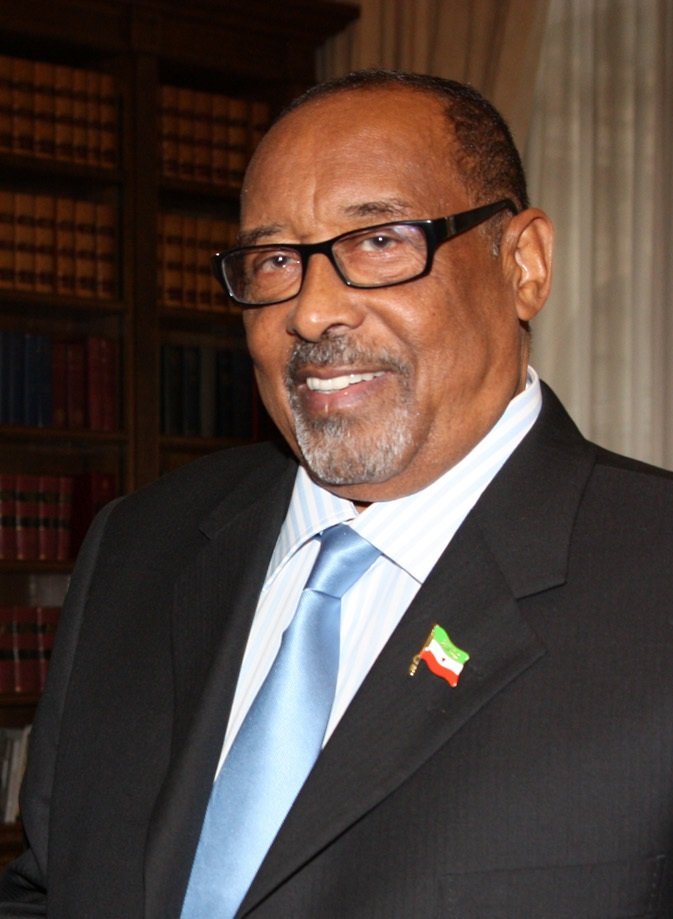
Sabti 16- Nov-2024 {HMC} Xildhibaannada iyo Wasiirrada kasoo jeeda Maamulka Somaliland Gobollada Waqooyi Jamhuuriyadda Federaalka Soomaaliya ayaa sheegay in kulan duco ah ay Magaalada Muqdisho ugu sameynayaan Madaxweynihii hore ee Maamulkaas Axmed Maxamed Maxamuud Siilaanyo oo xalay ku geeriyooday Magaalada Hargeysa.
Xubnahaan oo si wadajir ah ula hadlay Warbaahinta ayaa sheegay in Marxuum Siilaanyo keliya uusan ka geeriyoon Gobollada Waqooyi balse guud ahaan uu ka shaqeynayay sidii loo horumarin lahaa Ummadda Soomaaliyeed.
Wasiirka Wasaaradda Beeraha iyo Waraabka JFS Maxamed Cabdi Xayir Maareeye ayaa madashaan ka sheegay in kulankaan ay ugu duceyn doonnaan Marxuum Axmed Maxamed Maxamuud Siilaanyo oo waxqabad muuqda ka tagay.
“Maanta halkaan anaga oo ah Xildhibaannada & Wasiirrada Dowladda Federaalka waxa aan ka tacsiyeyneynaa geerida ku timid Madaxweynihii sida dimuqraadiga ah loo doortay ee Axmed Maxamed Maxamuud Siilaanyo, kulan Baroordiiq ah ayaan Muqdisho ugu sameyn doonnaa” Wasiir Maareeye.
“Waxa uu soo noqday Wasiirkii Qorsheynta oo hageysay dhammaan wixii horumar Dalkaan laga sameeyay, aqoonyahan weyn ahaa oo cimrigiisa oo dhan ummadda Soomaaliyeed usoo shaqeeyay, qofka marka uu dhinto Dadka oo dhan uma wada tago balse meesha uu joogo ayuu uga duceeyaa” Ayuu hadalkiisa sii raaciyay Wasiir Maxamed Cabdi Xayir Maareeye.

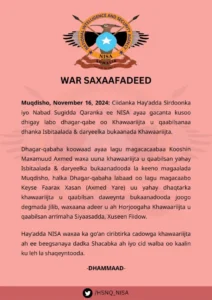
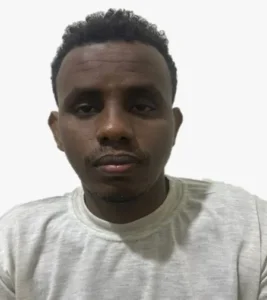
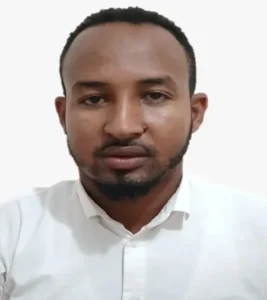
Sabti 16- Nov-2024 {HMC} Ciidanka hay’ada nabadsugida iyo sirdoonka Qaranka Soomaaliya ee NISA oo gacanta ku soo dhigtay labo xubnood oo lagu eedeeyay in kooxda Al Shabaab u qaabilsanaa Isbitaalada Muqdisho iyo daryeelka bukaannada kasoo dhaawacma.
Hay’adda NISA ayaa sheegtay in Kooshin Maxamuud Axmed u qaabilsanaa kooxda Al Shabaab daaweynta bukaanada soo dhaawacma ee la keeno magaalada Muqdisho, halka Keyse Faarax Xasan , isna la sheegay in Al Shabaab u qaabilsanaa daaweynta bukaanadooda jooga degmada Jilib.
Warka kasoo baxay hay’adda nabadsugida iyo sirdoonka Qaranka Soomaaliya , ayaa lagu sheegay in ay ka go’an tahay ciribtirka kooxda Al Shabaab , waxa ayna sheegeen in ay beegsanayaan cid kasta oo la shaqeysa kooxda Al Shabaab.

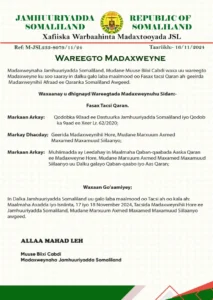
Sabti 16- Nov-2024 {HMC} Madaxweynaha maamulka Somaliland, Mudane Muuse Biixi Cabdi, ayaa waxa uu wareegto Madaxweyne ku soo saaray in deegaannada maamulkiisa galo laba maalmood oo fasax ah, oo ah tacsida Madaxweynihii afraad ee Somaliland Axmed Siilaanyo.
Wareegtada uu soo saaray Madaxweyne Muuse Biixi ayuu ku sheegay in beri oo Axad ah iyo Isniinta la galayo labo maalood oo fasax ah, taa oo loogu baroordiiqayo geerida Madaxweynihii hore ee maamulkaasi Axmed Siilaanyo oo xalay Hargeysa ku geeriyooday.