Home Blog Page 1726

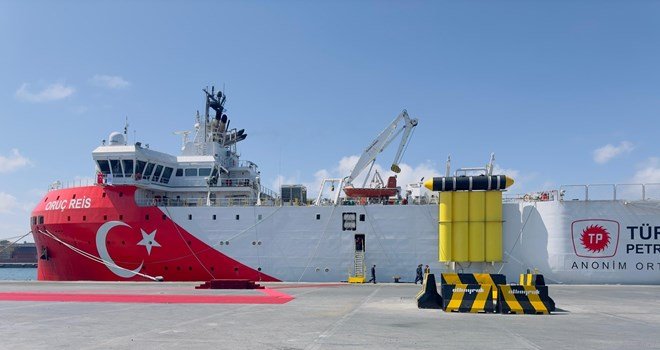
FGS Statement on the Arrival of the Oruc Reis, Turkish Offshore Research Ship for 3D Seismic Data Collection in Somali Waters

0

Mogadishu, 25 October, 2024 {HMC}  Today, we celebrate a significant achievement as we welcome the Oruc Reis, a Turkish offshore research vessel, to Somalia.

This ship will undertake the groundbreaking task of conducting the first-ever 3D seismic data collection in our maritime territory.

This event embodies hope and progress, representing a vital step toward harnessing Somalia’s vast economic potential.

The exploration of hydrocarbons in the Somali Sea holds transformative possibilities for our nation, with the potential to uncover resources that can drive sustainable development and prosperity.

We are optimistic that the research conducted over the next 5 to 7 months will affirm Somalia’s capability to establish a commercially viable oil industry.


Such a discovery could fundamentally change our economic landscape, attracting new investments, generating employment, and fostering long-term growth.


This achievement reflects the steadfast commitment of the current administration, led by President Hassan Sheikh Mohamud, to advance Somalia’s economic development, enhance security, and promote democratic values.


The President’s vision for a prosperous and stable Somalia continues to inspire bold initiatives like this one, steering our nation toward a brighter future.

The Federal Government of Somalia expresses heartfelt gratitude to the Turkish partners and all those involved in this vital project. We remain hopeful about the positive impact this exploration will have on Somalia’s future.

End

Shan askari oo Israa’iiliyiin ah oo ku dhintay gantaal ay riday Xisbullah

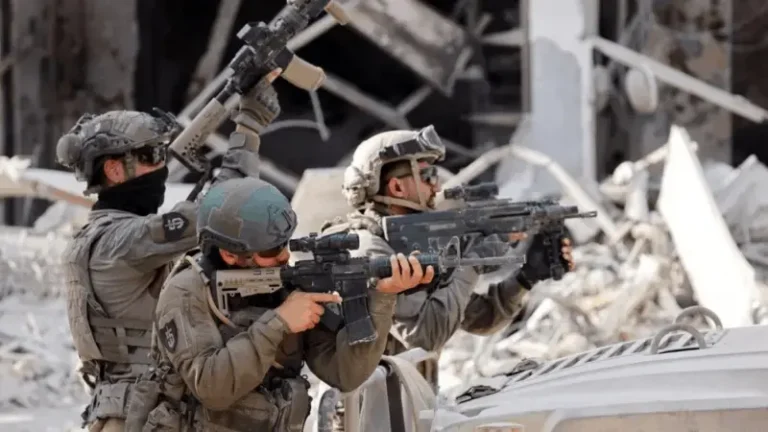
Jimco 25-Octo-2024 {HMC} Ciidamada Israa’iil ayaa maanta oo Jimce ah sheegay in shan askari oo ciidamadooda ah la dilay, 20 kalena la dhaawacay kaddib markii uu gantaal haleelay xili uu socday dagaal iyaga iyo Xisbullah ku dhexmarayay dhisme ku yaala koonfurta dalka Lubnaan.

Bayaanka ka soo baxay ciidamada Israa’iil ayaa lagu sheegay in shanta askari ee dagaalka lagu dilay ay dhammaantood ka tirsanaayeen kuwa kaydka, waxayna tirada dhimashada askarta Israa’iil ee lagu dilay dagaalka Lubnaan tan iyo September 30 ka dhigaysaa 32 askari sida ay sheegayso wakaaladda France Press.

Afhayeenka ciidamada Israa’iil Daniel Hagari ayaa baahiyay magacyada iyo sawirrada shanta askari.

Dhinaca kale ururka Xisbullah ee ay taageerto Iiraan ayaa sheegay in uu weerar gantaallo ah ku qaaday saldhig milatari oo ku dhaw magaalada Xayfa ee waqooyiga Israa’iil.

LRA rebel commander jailed in Uganda for war crimes in landmark case.

0

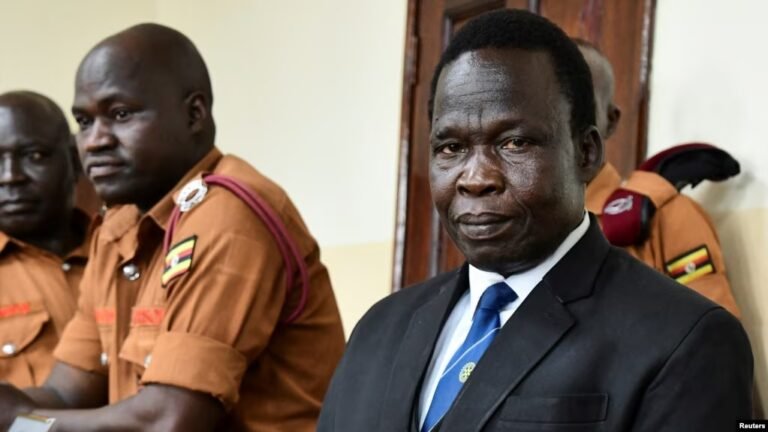
Friday 25, October  2024 {HMC}  Thomas Kwoyelo, a mid-level commander in the notorious Lord’s Resistance Army rebel group, was sentenced to 40 years in prison in Uganda on Friday for war crimes including murder, rape, enslavement, torture and kidnap.

Kwoyelo was convicted of dozens of war crimes in August, the first time an officer of his seniority had been tried by Uganda’s judiciary.

Founded in the late 1980s with the aim of overthrowing the government, the LRA brutalized Ugandans under the leadership of Joseph Kony for nearly 20 years as it battled the military from bases in northern Uganda.

The insurgents carried out horrific acts of cruelty, including rapes, abductions, hacking off victims’ limbs and lips and using crude instruments to bludgeon people to death.

“The convict played a prominent role in the planning, strategy and actual execution of the offences of extreme gravity,” Justice Duncan Gasagwa, one of the four judges, said.

“The victims have been left with lasting physical and mental pain and suffering.”

Kwoyelo avoided the death sentence because he was recruited by the LRA at a young age, was not one of the top-ranking commanders, and has expressed remorse and a willingness to reconcile with the victims, Gasagwa said.

Kwoyelo had denied the charges during the trial. His lawyer, Caleb Alaka, told the court he would appeal against both the verdict and the sentence.

In around 2005, under military pressure, the LRA fled to the lawless jungles of South Sudan, Democratic Republic of Congo and Central African Republic, where it also unleashed waves of violence against civilians.

Splintered elements of the group, including Kony, are believed to still live in those areas, although attacks are now infrequent.

The Ugandan military captured Kwoyelo in 2009 in northeastern Congo and his case crept through the Ugandan court system until he was convicted in August.

He was found guilty on 44 charges, 31 were dismissed as duplications of others while he was acquitted on three.

An arrest warrant was issued by the International Criminal Court’s (ICC) against Kony in 2005, making him the court’s longest standing fugitive.

The LRA’s original aim was to create a state based on Kony’s interpretation of the Ten Commandments.

SOURCE VOA

Somalia security cameras aim to cut al Shabaab attacks but militants fight back.

0

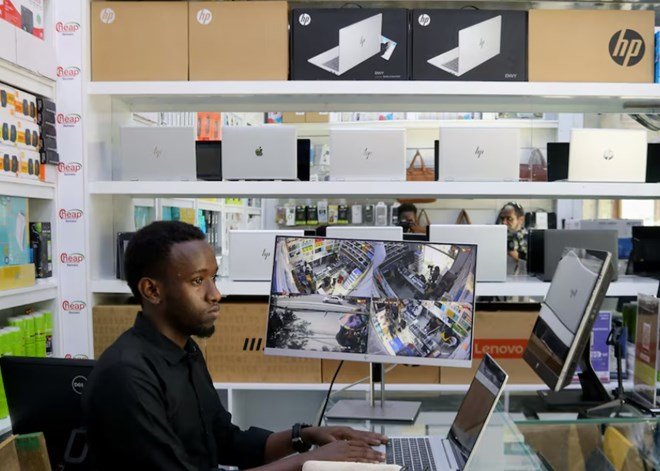
Friday 25, October  2024 {HMC} Thousands of security cameras have been installed across Somalia’s capital to monitor the movement of al Shabaab militants and reassure residents, but they have also made business owners fearful of reprisal attacks.

Rolled out this year as part of a municipal government initiative, officials say CCTV cameras have helped authorities keep track of militant activity in Mogadishu and ensure that security forces are doing their jobs properly.

The aim is to stave off the bombings and shootings that have plagued the capital in Islamist al Shabaab’s nearly two decade-long fight to overthrow the government.
But in a city where militants have eyes and ears everywhere, some businesses who have installed cameras have themselves come under attack.

At least three people have been killed and four wounded in assaults on such businesses since the start of October in the Daynile and Hodan districts of Mogadishu, Mohamed Ahmed Diriye, a deputy mayor, told Reuters.

Several businessmen told Reuters that al Shabaab had ordered them to take down the cameras, but government officials have warned they could face consequences for doing so.

“We warn them against taking orders from terrorists,” Diriye said after the latest attacks. “Anyone who removes the cameras will face the law.”

Farah Aden, a shopkeeper in Daynile, said business owners had been left exposed to attacks by militants and felt trapped.

“There is new fear due to security cameras,” he said. “We are in a dilemma. We are caught between two opposite directives.”

But some residents welcome the new surveillance. Second-year university student Ahmed Ibrahim said the cameras offered reassurance to people going about their daily lives.

“In the past, it was difficult to attend school or college,” he said. “There used to be explosions just outside the school or university campus and when going back home.”

Samira Olow, 30, a mother of six who sells food in front of her house, said she was afraid of being caught in the crossfire when out in public.

“There is always fear in Somalia, and now fear in Mogadishu is due to security cameras,” she said. “We go to shops to buy food and we can be at the shop when the shopkeeper is being targeted and this is dangerous.”

SOURCE

Somalia: Addressing the silent mental health epidemic

0

Friday 25, October  2024 {HMC} MSF mental health activity manager, Alberto Macin, has been working with Médecins Sans Frontières/Doctors Without Borders (MSF) for the last eight years. During this period, he has worked in various locations including Mexico, El Salvador, South Sudan, Ukraine, migratory routes between Libya and the Mediterranean, Mozambique, Kenya and now in Somalia. 


His role involves developing mental health strategy and integrating mental health services in MSF’s activities in the Somali region, implementing mental health and psycho-social support, and training and supervising project teams.


“Many women have experienced sexual violence, but it is something we cannot talk about.”

“I can no longer take care of my uncle. He has become very aggressive and has broken the chains we used to restrain him.”

“We have been displaced many times; hunger and poverty are now the only things we have left.”

“We no longer have to plant crops; it doesn’t even rain anymore, we have to go where there is water.”

“I don’t know how I can take care of him. They told me he also has psychosis. He can’t do anything by himself, and I have to work to raise my children.”

“There is no hope left anymore ...”

These are some of the testimonies that my team and I have heard during mental health consultations with people in Galkayo and Baidoa districts of Somalia, where Médecins Sans Frontières/Doctors Without Borders (MSF) works. Some of the issues we heard are related to violence, climate change, a lack of professional psychiatric services, chronic diseases, and extreme poverty.

 Somalia, a nation burdened by decades of conflict, is no stranger to humanitarian crises. Amid the ravages of conflict, displacement, climate crises, and poverty, a mental health crisis looms large, affecting the lives of millions of people. Yet the mental wellbeing of those affected is often overlooked, resulting in a silent epidemic of psychological distress and disorders.


The mental health challenges in Somalia are closely intertwined with the nation’s socio-economic and political ones. Existing social problems and discrimination faced by vulnerable groups especially women and children, lay the groundwork for mental health issues. This is compounded by natural disasters, prolonged conflict, and disease outbreaks, which bring additional layers of psychological trauma, family separation, lack of safety, the loss of livelihoods, and disrupted social territories. All of these contribute to acute emotional stress. In such environments resources become scarce, further deepening the crisis.

The humanitarian response to the crises in Somalia, while often well-meaning, can also inadvertently exacerbate mental health problems. Overcrowding in camps, lack of privacy, and undermining traditional community support systems can heighten feelings of anxiety and insecurity among affected communities.

The most common issues we see in Somalia include psychosomatic complaints, depression, stress, psychosis, and substance abuse. However, the stress of conflict also lead to new conditions or illnesses such as post-traumatic stress disorder (PTSD), bipolar disorders, types of anxiety, and acute stress reactions. For some people, the humanitarian response can lead to hopelessness, particularly when basic needs like food, water, and access to health services are uncertain.

The World Health Organization (WHO) estimates that the prevalence of mental disorders among conflict-affected populations is 13 percent, with reports of mild forms of depression, anxiety, PTSD, bipolar disorder, and schizophrenia, while four per cent still experiences moderate forms of these disorders. Generally, women, elderly people, children, and people with disabilities are disproportionately affected by mental health issues. People with severe mental health disorders are especially vulnerable during emergencies, requiring both clinical care with medication and access to basic needs. However, these essential services remain out of reach for many. The story in Somalia is unfortunately no different.

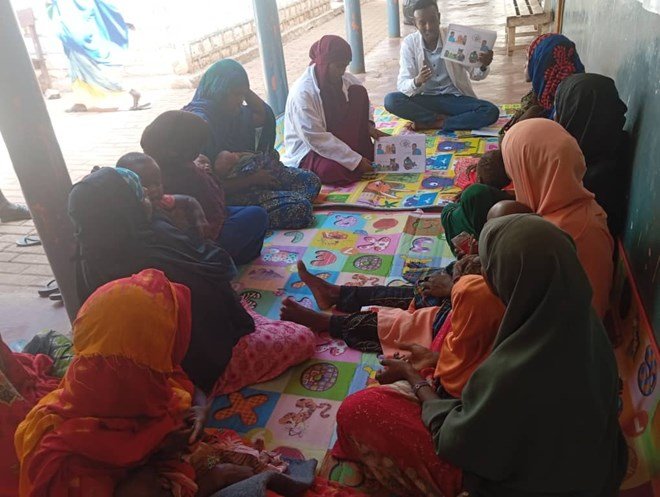
In Somalia, MSF works in collaboration with the Ministry of Health, offering essential mental healthcare in Baidoa and Mudug. For us, mental health is transversal to all medical activities. Teams provide psychosocial support, counselling, and specialised psychological care in health care facilities. However, the needs are many, and our services are not enough.

Currently, the Ministry of Health (MoH) offers support and counseling to people living with HIV, tuberculosis (TB) and multi drug-resistant TB, focusing on chronic patients to reinforce adherence and have an impact on quality of life. Some local organisations provide mental health services to survivors of sexual, psychological, social and economic violence. While there are great efforts put in by MoH and local organisationsbut it is not enough. Many people who require pharmacological and psychological treatment to recover functionality and integrate into their usual activities are left out of the loop.

Between January – September 2024, MSF’s mental health teams working in Somalia have conducted a total of 4,940 mental health consultations. Additionally, we conducted 7,644 group activities for mental health and psychological education, promotion of healthy coping strategies, training for community leaders, health care workers and non-medical teams in the management of psychological first aid, and peer support, benefiting a total of 38,476 people. 

There is an urgent need for an effective mental health response and it is clear that addressing Somalia’s mental health requires an immediate and coordinated response. Clinical care for mental health must be integrated into the broader humanitarian efforts, promoting the coverage of basic needs as food, safe spaces, shelter including basic mental health support, such as psychological first aid, community awareness, psychosocial groups, recreational activities, clear referral pathway to secondary mental health services. Mental health specialists, such as psychiatric nurses, psychologists, and psychiatrists, should oversee mental health services, ensuring access to quality care.

Somalia’s communities, resilient despite the adversity they face, must be empowered to take an active role in mental health support. Strengthening community self-help and social support systems will help address the needs of people in the absence of clinical specialists. By creating or re-establishing community groups, Somalis can collectively solve problems and offer psychological support to those suffering. This social cohesion not only restores a sense of normality but also provides emotional relief to those affected by the crisis.


Psychological first aid should be a key component of emergency response efforts. Trained workers, including health staff, teachers, and volunteers, should offer emotional and practical support to those in distress. These interventions, while seemingly small, can make a significant difference in the early stages of trauma.

Alberto Macin

Mental health activity manager


Failing to address this pressing issue will only perpetuate the cycle of suffering. Now is the time for humanitarian agencies, local authorities, and the international community to prioritise mental health care, ensuring that it is fully integrated into the broader emergency response. In doing so, we can offer hope and healing to the millions of Somalis whose mental well-being hangs in the balance.

Somalia’s future depends not just on rebuilding its infrastructure, but on healing the minds and hearts of affected people.

SOURCE

Aid cuts leave conflict-affected families in Galgadud camp without enough food

0

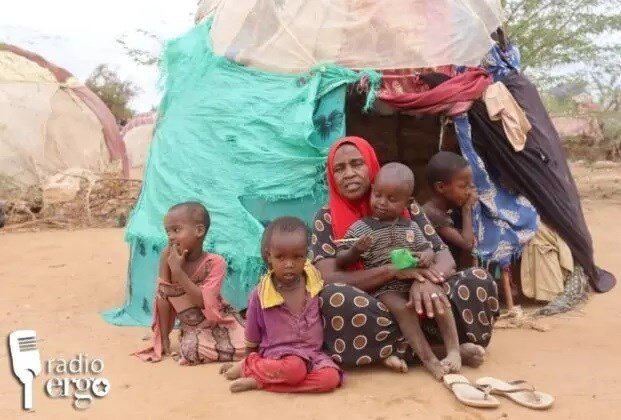
Friday 25, October  2024 {HMC} Nasteho Mohamud Hashi, a single mother, has been struggling to provide for her nine children after aid she was receiving from the World Food Programme stopped in June.

The $85 monthly WFP aid that Nasteho was receiving in Hilac IDP camp in Dusamareb, in central Somalia’s Galmudug state, was critical for her family’s basic food needs as they lost their livelihood when they fled their home due to conflict.

Desperate for income, Nasteho has resorted to gathering firewood from the outskirts of Dusamareb to sell in the local market. She makes the arduous and risky journey on foot three times a week, but only earns between $2 to $3 from each trip, which is not enough to cover her family’s basic needs.

“We don’t have enough food. My children eat in the morning, and then I go to the forest to collect firewood. It’s a long walk, and the firewood is far from town now. There’s danger in the forest so I go with other people and if they leave me there, I fear for my safety,” she told Radio Ergo.

When she is unable to sell enough firewood, Nasteho asks for small amounts of food on credit from a local restaurant. Her debt has accumulated to $200. They constantly ask her to repay the money, adding to her stress.

“Sometimes they threaten to take the firewood in place of money, which is upsetting. I’ve had to delay payments three times already, and this month is the final deadline,” she explained.

Her family arrived in Hilac camp in 2023, after fleeing clan conflict in Hananbure, Galgadud. They left behind 45 goats, their primary livelihood, as well as their own two-room home. Nasteho used to make a living slaughtering livestock, making $5-6 a day. Since separating from her husband, she has been the sole provider.

In the camp, however, her family lives in a makeshift shelter made from sticks and plastic, offering little protection.

“It’s a small, fragile hut. Every few weeks, we need to repair it, but we don’t have the materials. The heat is unbearable, and when it rains, the roof leaks. I can’t protect my children or myself from the weather,” she said.

Ayni Hussein Abdullahi, another single mother of seven children, is also struggling to provide for her family in Hilac camp after the $110 she had been receiving monthly was stopped. For six months, it had ensured they had enough to eat.

“Sometimes we go without food. We used to eat three meals a day, but now we’re lucky if we eat once. It’s not like before when we had enough,” Ayni said.

To make ends meet, Ayni has been forced to wash clothes for a living, but she only earns $2-3 for a job. Often, she returns home empty-handed after spending the whole day looking for jobs. When she can’t find work, she takes food on credit, accumulating debt that she has no means to pay.

Ayni explained that while she’s away looking for work, her children are left alone and often hungry.

“We borrow food from our neighbours, and that’s how we manage to cook. But when you’ve left your children behind, they’re left to fend for themselves and sometimes they have nothing to eat. The next day, if I manage to find work, I try to repay the debt, but there are times when neighbours refuse to lend us anything until the previous debt is cleared. Sometimes the kids go without food in the morning and dinner at night. We just hope that the next day will be better,” she said.

Ayni’s family was displaced in January from Farlibah, Hiran region, following clashes between Al-Shabaab militia and the government. They left behind their 3-hectare farm that they made a living from as they fled rapidly from the insecurity.

Among the 270 families living in Hilac camp, 200 had been receiving aid. Most have fled from conflict and drought in their villages. They are not able to return home due to ongoing conflict and can’t improve their situation without external help due to their loss of livelihoods.

Hilac camp chairman, Hassan Salad Gelle, said the conditions have worsened since the aid stopped, with families forced to share whatever little they have to survive.

“The aid agencies, like WFP, say they’re running out of funds due to the large number of displaced people. They promised us two months ago that they would resume assistance, but we haven’t heard anything since,” Hassan told Radio Ergo.

SOURCE

UK funds Sh2.8bn liquid oxygen plant in Kenya, Tanzania.

0

Friday 25, October  2024 {HMC} UK-funded Unitaid has announced a Sh2.8 billion investment to support three Kenyan and Tanzanian oxygen manufacturers in establishing Africa’s first liquid oxygen regional manufacturing plants.

The initiative aims at increasing access to medical oxygen in East and Southern Africa region.

Production facilities will be established in Kenya and Tanzania.

“This is Africa’s first regional manufacturing approach to increasing access to medical oxygen. The programme aims to expand medical oxygen production by 300 per cent in East Africa and reduce oxygen prices by up to 27 per cent,” a statement from the British High Commission, Nairobi.

The office said this will make oxygen more affordable for healthcare systems across the region and enable treatment of thousands of additional patients each month.

Principal Secretary in the Ministry of Health, Harry Kimtai, said Kenya’s drive towards universal health coverage requires uninterrupted access to all health products and technologies including medical oxygen.

“We are delighted as the Ministry of Health to note that this new liquid oxygen manufacturing plant will boost availability all around the country and not just the Coast region. I congratulate Unitaid and all their partners for making funding available and providing technical support to make this possible,” he said.

Unitaid executive director Dr. Philippe Duneton said the facility in Mombasa will be the beginning of a larger effort to transform oxygen access across Africa.

“Medical oxygen is critical for saving lives yet too many health facilities in this region struggle with access. By working together with Kenyan and Tanzanian manufacturers and other partners, we are ensuring that oxygen is no longer a luxury but a basic right for all patients, especially in times of critical need,” Duneton said.

UK’s Deputy Development Director, Eduarda Mendonca-Gray, hailed the collaborative efforts of partners towards the “essential lifesaving initiative”.

“Medical oxygen is a lifesaving essential medicine without a substitute. Oxygen is also vital for maternal and new-born survival as well as surgery, emergency and critical care. We will continue to work with our partners to ensure accessibility for all,” Mendonca-Gray said.

Over the next decade, the initiative is envisioned to save up to 154,000 lives in Kenya and Tanzania alone, addressing life-threatening conditions such as pneumonia, preterm birth complications, and surgical emergencies.


by Allan Kisia

{DAAWO MUUQAALKA} Deegaanka Jaaw ee gobolka Galgaduud oo As laga xoreeyay ayaa laga hirgaliyay xarun Waxbarasho”

0

Jimco 24-Octo-2024 {HMC} Deegaanka Jaaw ee gobolka Galgaduud oo As laga xoreeyay ayaa laga hirgaliyay xarun Waxbarasho”

HOOS KA DAAWO MUQAALKA WARBIXINTA

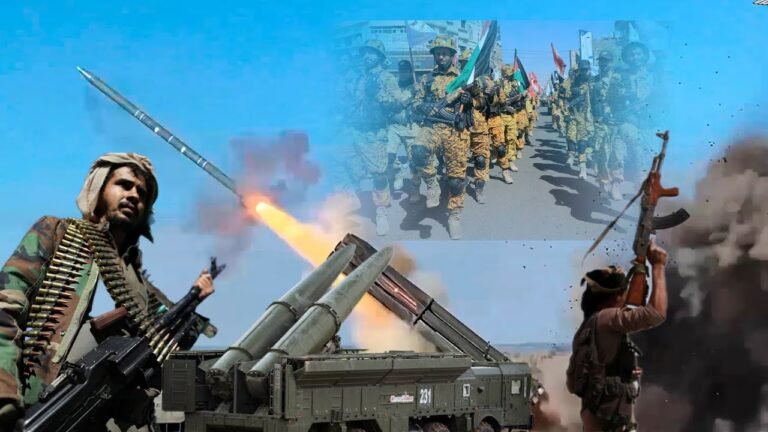
{DAAWO MUUQAALKA} Ruushka Oo Xuutiyiinta Yemen ka Caawiyo Gantaalo iyo Dayax gacmeedyo.

0

Jimco 24-Octo-2024 {HMC} Ruushka Oo Xuutiyiinta Yemen ka Caawiyo Gantaalo iyo Dayax gacmeedyo.

HOOS KA DAAWO MUQAALKA WARBIXINTA