


Talaado 27, May 2025 {HMC} Boqolaal qof oo cudurka daacuun caloolaha u geeriyooday
HOOS KA DAAWO MUQAALKA WARBIXINTA
Talaado 27, May 2025 {HMC} Boqolaal qof oo cudurka daacuun caloolaha u geeriyooday
HOOS KA DAAWO MUQAALKA WARBIXINTA
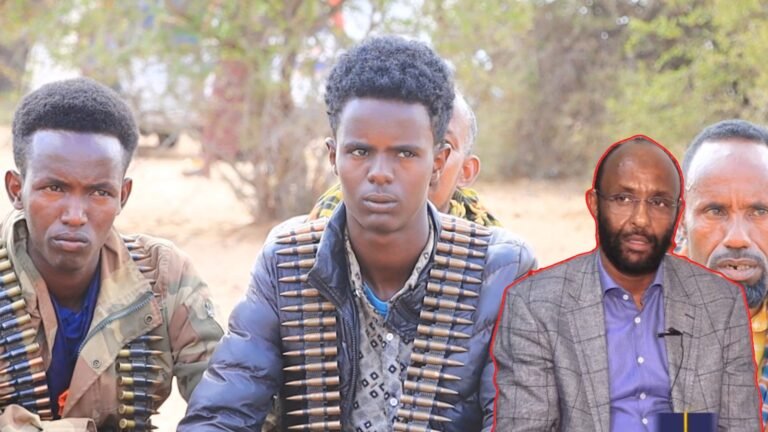
Talaado 27, May 2025 {HMC} Maxaa ka socda maanta farumaha dagaalka Hiiraan?
HOOS KA DAAWO MUQAALKA WARBIXINTA

Tuesday May 27, 2025
By Katharine Houreld and Mohamed Gobobe
Somalia’s government has increasingly turned to Turkey to repel al-Shabab, as America’s diminished focus on Africa scrambles global power dynamics.
As President Donald Trump overhauls U.S. policy in Africa — slashing foreign aid programs and paring back assistance for allied forces in the region — al-Shabab militants are on the march in Somalia.
One of al-Qaeda’s best-funded and most lethal global affiliates, al-Shabab has retaken important towns from Somali forces over the past three months. Its fighters previously launched an assault on a U.S. airfield in Kenya and plotted attacks on the U.S. mainland.
Under the second Trump administration, it’s unclear whether Washington believes that the battle against the group should still be a priority — or if the Somali government, long racked by corruption, is capable of leading the fight.
“The Trump administration is apparently not convinced that al-Shabab represents a direct threat to U.S. interests,” said Matt Bryden, founder of Sahan, a Nairobi-based think tank. But further gains by the group “would have far-reaching implications for U.S. policy in Africa and much of the Middle East,” he said.
During his first term, Trump ordered the U.S. military to leave Somalia and “commute to work” from neighboring countries, a strategy soldiers said was time-consuming and dangerous. Although U.S. troops are back, Washington has withdrawn support for Somali special forces and is reconsidering plans to deploy hundreds of American soldiers across the country. Most foreign trainers pulled out after cuts to security assistance, and morale among local troops is said to be waning. All the while, tensions between U.S. officials and Somali authorities appear to be nearing a boil.
“I sat down with people from the White House, and they asked: ‘What if we just let [Somalia] burn? Can we contain it?’” said a former senior State Department official. “I said ‘No!’”
Former U.S. officials interviewed for this report served under multiple presidents, including Trump, and spoke on the condition of anonymity for fear of professional retaliation or out of respect for ongoing policy deliberations. Current officials, diplomats and security contractors spoke on the condition of anonymity to share sensitive information.
A White House official acknowledged growing frustration with the Somali government: “We are concerned about President Hassan Sheikh Mohamud’s prioritization of internal politics over counterterrorism efforts, particularly in light of the growing threat from al-Shabab,” the official told The Washington Post. The State Department press office said the United States “will continue to work closely with Somali and African Union forces.”
Somalia’s fractious Mogadishu-based government, propped up by U.S. support and an extensive African Union peacekeeping mission, is increasingly turning to Turkey to help repel the long-running Islamist insurgency — a case study in how America’s diminished focus on Africa is compounding regional security challenges and scrambling global power dynamics.
The burgeoning relationship between Ankara and Mogadishu includes a newly disclosed oil exploration deal, recent deliveries of powerful Turkish drones and the arrival last month of hundreds of troops in the Somali capital — deepening Turkey’s foothold in the Horn of Africa while giving Somalia another security partner to hedge against American unpredictability.
Turkish officials did not respond to requests for comment.
The former senior State Department official said U.S. disengagement could fuel al-Shabab’s expansion into neighboring Kenya and Ethiopia and allow the Somali fighters to strengthen fledgling relations with Yemen’s Houthi rebels.
Two recent meetings between al-Shabab and the Houthis were documented by U.N. sanctions experts; the last involved the Houthis sending an explosives expert to Jilib, al-Shabab’s de facto capital, said the former State Department official, citing U.S. intelligence.
Any further American pullback, according to officials and diplomats, could exacerbate Somalia’s political divisions and imperil efforts to contain one of the continent’s most acute security threats.

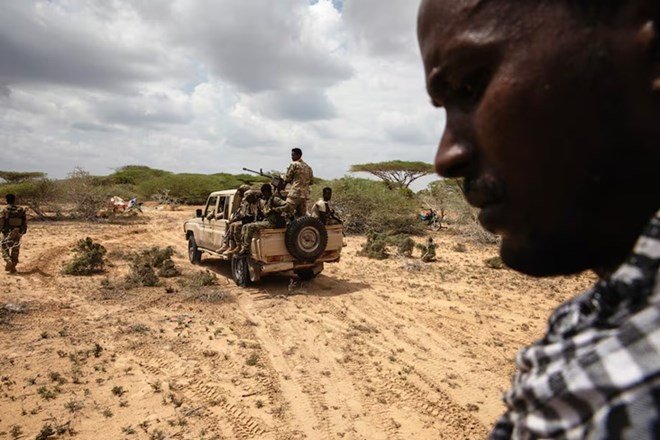
Somali soldiers outside the recaptured town of Masjid Ali Guduud in November 2022. (Malin Fezehai/For The Washington Post)
‘Our lead partner’
Since taking office in 2022, President Mohamud has frustrated his Western allies by insisting on a transition to one-person, one-vote elections — a strategy frequently used by Somali politicians to delay polls. He has also alienated some of the country’s most effective regional administrations by forcing through constitutional amendments aimed at expanding the powers of the presidency.
Electoral cycles in Somalia routinely interfere with operations against al-Shabab, which is skilled at exploiting clan divisions. In the past, U.S. leadership helped smooth over such clashes.
“Things always start off great with a new president, and then clan politics makes it all fall apart,” said former U.S. ambassador Larry Andre, who recalls coordinating outfits with the beleaguered prime minister in 2022 during a joint news conference. Their matching sky-blue running suits signaled they were united, Andre said, after political rivalries sparked deadly clan battles.
Hussein Sheikh Ali, Somalia’s national security adviser, said the U.S. helps organize Somalia’s seven core security partners, which include Britain, Turkey, the United Arab Emirates and the African Union. All are against al-Shabab, Ali said, but sometimes have competing agendas.
The African Union, traditionally the most powerful bulwark against the militants, has been drawing down its troops for years. AU soldiers haven’t been paid since January, and the force is $96 million in arrears.
“On areas of counterterrorism [the Americans] are our lead partner,” Ali said. Only this year, after coordination with U.S. officials and under the watch of a new director general of immigration, did Somalia begin using Interpol watch list data and sharing the details of passengers boarding international flights.
Now, amid a new round of political turmoil, the U.S.-Somalia relationship seems increasingly precarious.
American officials have “repeatedly urged” Mohamud “to refocus on security cooperation and regional inclusion, and are disappointed by the lack of progress,” the White House official told The Post. His emphasis on centralizing power “is hindering progress on counterterrorism,” the official added, “and we believe a shift in priorities is essential to address the escalating threat.”
Since February, insurgents have taken back dozens of villages, including the strategic town of Adan Yabaal, and regained the ability to operate in nearly a third of the territory they lost to federal forces in 2022, according to Aldebaran, a risk consultancy company. They have mortared Mogadishu’s international airport, and in March, they bombed the president’s motorcade. He survived, but four others were killed.
Al-Shabab’s Ramadan offensive in March coincided with reduced U.S. support for Somali special forces — a 2,500-strong unit known as the Danab brigade — which has traditionally led the fight against al-Shabab.
A U.S. government audit last year found that Danab had padded food and fuel requisitions. Food and fuel support stopped in April 2024 and March 2025, respectively; in February, the U.S. stopped paying stipends that boosted Danab members’ salaries to $400 per month — double what regular Somali soldiers receive.
It’s unclear whether the termination of the stipends was linked to the graft allegations or to the wider freeze on foreign assistance programs under Trump, which Secretary of State Marco Rubio has said will reduce government bloat and allow the administration to focus on domestic priorities.
Some former U.S. officials say the torrent of international security funds into Somalia only fuels the country’s deep-rooted corruption. Others contend that continued funding to a small, select unit working alongside U.S. soldiers is the best among bad options.
“If we don’t directly sustain the Danab, the Somali National Army is highly unlikely to sustain them to the degree required for them to be most effective,” said a former senior U.S. military official.
Morale within Danab is “not that high,” according to one Mogadishu-based security expert who works with the Somali military. When the stipends were cut, about 100 soldiers “went AWOL for a bit,” he said. Most of Danab’s foreign mentors also went home after the U.S. cuts, the security expert said.
Plans to deploy the roughly 500 U.S. forces in Somalia across the country to better support Danab are also under review now, according to U.S. security officials. Danab is the only Somali military unit that can request American airstrikes, and it benefited from dozens of U.S. interventions last year.
Under Trump, the U.S. has ramped up airstrikes on a fast-growing Islamic State affiliate in Puntland, a semiautonomous region in northern Somalia, and continued aerial operations against al-Shabab. An April 16 U.S. airstrike on two unflagged vessels off the Somali coast hit a shipment of surface-to-air missiles from Yemen, according to a senior Somali security official. U.S. Africa Command (AFRICOM) declined to provide details, but its news release said the boat carried “advanced conventional weapons.”
“Airstrikes are only useful if you have good ground troops to hold,” said one Western military official.
Although the fight in Somalia is a grinding and protracted one, AFRICOM has seen the spending and the risk to U.S. forces as an acceptable cost to contain a potential threat, said the former U.S. military official.
He noted that U.S. access to the Horn of Africa has decreased steadily over the past decade. Sudan and South Sudan are riven by conflict; Uganda is frosty; Djibouti is shared with the Chinese military; relations with Ethiopia cooled considerably after the recent war in Tigray.
“The accountant’s argument might be we hand [Somalia] off to the Turks and let them handle that security problem, but the cost of reentry is significant, and we lose influence over key geographic terrain,” said the former senior U.S. military official.
“When you sacrifice that and burden-shift it to an ally … it’s unlikely your interests and objectives will align.”
Turkish influence
Turkish ties with Mogadishu date back to 2011, when Ankara flew in food aid during a famine that killed some 260,000 people. Since then, Turkey has rehabilitated one of the capital’s main hospitals, taken over management of Mogadishu’s port and airport and built a military training academy.
Ankara has established its largest foreign military base in Mogadishu; trained two brigades of soldiers, around 6,000 in total; and carried out drone strikes at the request of Somalia’s National Intelligence and Security Agency.
“With traditional powers retreating from parts of Africa, Ankara sees an opportunity to step in,” said Berkay Mandiraci, a senior analyst for Turkey at the International Crisis Group. “Somalia holds strategic value for Ankara, sitting astride key shipping lanes and vital trade routes.”
Around 400 Turkish soldiers arrived in Mogadishu last month, the largest contingent yet. Earlier this month, Turkey delivered two Akinci drones, capable of carrying larger payloads than the smaller Turkish drones already in the country.
Turkey has a joint command with the Somalis, but other partners have said they are often not informed about Turkish operations.
“At times you had multiple UAVs over a target,” said one Mogadishu-based diplomat, using the abbreviation for unmanned aerial vehicles.
The new drones are a significant boost in airpower for the Somali government, although Turkish strikes from less-powerful drones have killed at least 40 civilians since late 2022, witnesses told The Post — so many that AFRICOM, which had previously faced outrage over civilian casualties, began announcing each U.S. strike to clarify responsibility.
A January 2023 strike on a gathering under a tree killed seven civilians, including an 8-year-old, in the town of Quracley, according to witnesses and a relative. Eight were killed on Sept. 9, 2022, when a strike hit a group of drivers and hawkers in the al-Shabab-controlled town of Mubarak, a local doctor said. Last March, two Turkish strikes killed 23 civilians — many of them young children — northeast of the capital as they broke their Ramadan fast.
“I couldn’t even wash my children’s bodies according to the Islamic custom,” said Mohamed Nur Ahmed, 50, who lost three sons and a nephew in the Quracley strike, because they were “ripped to pieces.”
As al-Shabab advances, Turkish strikes are likely to increase, which some fear could help fuel the insurgency.
“You’ve got the Somalis telling the Turks to … save Mogadishu at all costs,” said a Western diplomat. “This will inevitably lead to further civilian casualties, which can be exploited by al-Shabab.”
As security ties expand, Turkish companies have inked several lucrative contracts. Operation of the port and airport in Mogadishu brings in millions of dollars monthly; in April, details emerged of an oil exploration deal that gave Somalia rights to only 5 percent of production, angering opposition lawmakers. Turkish survey vessels are exploring fields offshore.
“Somalia is resource rich, but insecurity has prevented the commercialization of those resources,” said Andre, the former U.S. ambassador. “If we desert our partners, then others will replace us and reap the rewards when Somalia establishes peace and prosperity.”
Gobobe reported from Mogadishu.

Tuesday 27 May, 2025 {HMC} Kenya has reaffirmed her unwavering respect for the sovereignty, territorial integrity and political independence of Somalia, even as it maintains diplomatic and commercial engagements with Somalia’s sub-national regions – Jubaland and Somaliland.
In a statement on Monday, the Ministry of Foreign and Diaspora Affairs underscored Kenya’s recognition of the Federal Government of Somalia (FGS) in Mogadishu as “the sole and legitimate body responsible for administering the affairs of Somalia, including those pertaining to its regions.”
The reaffirmation is significant given the historical tensions between Nairobi and Mogadishu over issues such as border security, maritime boundaries and the status of Somalia’s federal member states.
Tension has particularly arisen over the maritime boundary dispute, which was adjudicated by the International Court of Justice in 2021, and over Kenya’s role in supporting regional administrations within Somalia.
Kenya’s engagement with Jubaland, a semi-autonomous region bordering Kenya, and Somaliland, a self-declared independent republic in northern Somalia, has occasionally drawn criticism from Mogadishu, which views such contacts as infringing on Somalia’s sovereignty.
The ministry, however, said Kenya is “firmly grounded in adherence to the principles enshrined in the Charter of the United Nations, the Constitutive Act of the African Union, the Treaty and Protocols of the East African Community as well as Kenya’s Foreign Policy.”
These instruments, the ministry notesd, “uphold the values of non-interference in the internal affairs of States and the peaceful resolution of disputes”.
The statement highlighted the longstanding relationship between Kenya and Somalia, describing it as “anchored on deep historical ties, shared cultural heritage, and enduring bonds of kinship.”
These foundations, it said, “continue to inform our collective aspirations for peace, security, and sustainable development in the region.”
In regarding Somalia as a strategic ally in advancing their shared objectives, Kenya reaffirmed her commitment to fostering bilateral relations “based on mutual trust, respect for sovereignty, and recognition of territorial integrity”.
Support for Somalia’s state-building agenda
As Somalia continues its state-building journey, the Foreign Affairs Ministry emphasised Kenya’s role as a neighbour, partner and regional power will remain crucial.
Kenya’s support to Somalia has included development aid, training, and diplomatic backing for Somalia’s federal institutions.
Besides, the country hosts a large Somali diaspora and has played a pivotal role in regional security, including contributing troops to the African Union Transition Mission in Somalia (ATMIS), formerly AMISOM, to combat al-Shabaab militants.
However, Nairobi’s contacts with Jubaland and Somaliland have sometimes been a source of friction.
Jubaland’s leader, Ahmed Madobe, has enjoyed close ties with Kenyan authorities, while Somaliland, though not internationally recognised, has sought to expand its diplomatic footprint in East Africa.
Kenya, however, sought to reaffirm its committment to supporting Somalia’s sovereignty.
“As Somalia continues to advance its state-building and institutional development agenda, the Government of Kenya stands ready to support these efforts through sustained dialogue, enhanced regional cooperation, and mutually beneficial partnerships,” the statement reads.
Continued engagement with Jubaland, Somaliland
The statement, however, added that Kenya will maintain contact and relations with sub-national governments in Jubaland and Somaliland to advance the partnership.
It statement said such engagement will be done in consultation with the Federal Government of Somalia “in line with the principles of mutual respect and good neighbourliness”.
The aim? “To establish contact and as well as diplomatic presence as may be agreed from time to time with the aim of supporting security cooperation and commercial interests and in line with the principles of mutual respect and good neighbourliness,” the ministry stated.
This nuanced approach reflects Kenya’s balancing act: supporting Somalia’s federal government while engaging with influential regional administrations to address security, trade, and humanitarian concerns.
The ministry concluded its statement by reaffirming Kenya’s readiness to “support these efforts through sustained dialogue, enhanced regional cooperation, and mutually beneficial partnerships”.

by EMMANUEL WANJALA
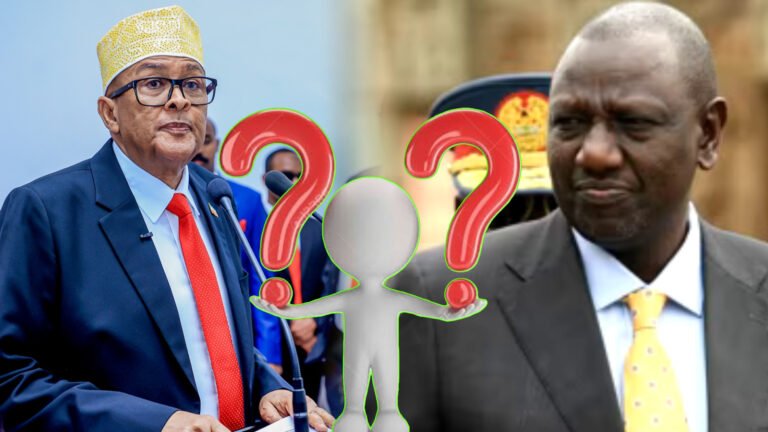
Talaado 27, May 2025 {HMC} Kenya oo diiday in Soomaaliland ay xafiis ka furato Nairobi.
HOOS KA DAAWO MUQAALKA WARBIXINTA
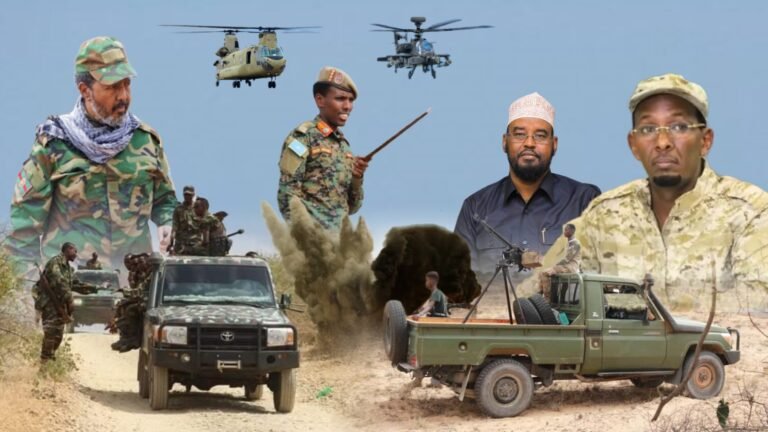
Talaado 27, May 2025 {HMC} Waxaan halkan idin kugu so gudbineynaa Wararka Ugu waa Weeyn Soomaaliya iyo Caalamka ee Warbaahinta Hiiraanweyn
HOOS KA DAAWO WARARKA UGU WAA WEYN
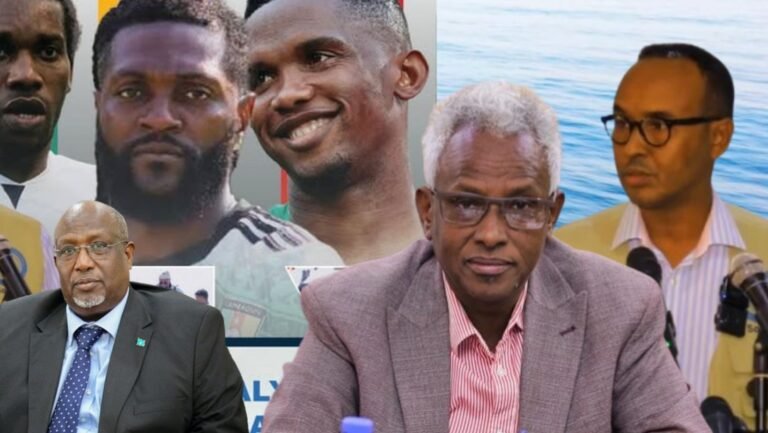
Talaado 27-May-2025 {HMC} – Dhageystayaal halkan waxa aan idiin kugu soo gudbi neynaa Warka Duhurnimo ee Warbaahinta Hiiraanweyn
Warka waxaa soo jeedinayo ::Mustaf Cali Cadoow & Sahro Gabre
Farsamadii ::Abdiqani osoble
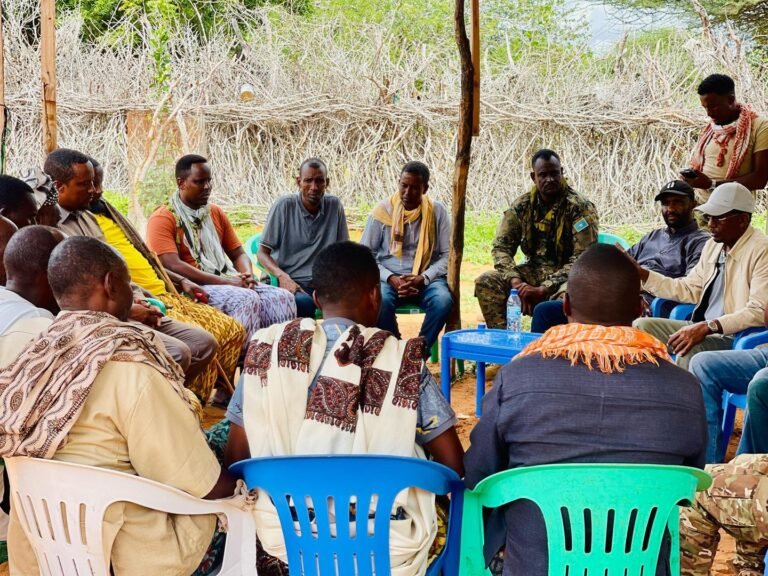
Talaado 27, May 2025 {HMC} Agaasimaha Hey’adda NISA Cabdullaahi Maxamed Cali (Sanbaloolshe) iyo Taliyaha Ciidanka Dhulka Xoogga Dalka Soomaliyeed, Sareeye Guuto Sahal Cabdullaahi Cumar ayaa kulan gaar ah la qaatay Odayaasha Dhaqanka ee magaalada Tardo
Kulankan ayaa diiradda lagu saaray dardargelinta dagaalka lagula jiro AS, iyadoo la doonayo in la xoojiyo iskaashiga ka dhexeeya dowladda iyo bulshada deegaanka.
Agaasimaha NISA iyo Taliyaha Ciidanka Dhulka ayaa ku bogaadiyay odayaasha dhaqanka doorka muhiimka ah ee ay ku leeyihiin taageeridda ciidamada qalabka sida, gaar ahaan kuwa ku sugan furimaha dagaalka ee deegaanadaas.
Agaasimaha Hey’adda NISA ayaa maalmihii u danbeeyay ku sugnaa Gobolka hiiraan isagoo halkaas ka waday abaabullo lagu dardargalinaayo dagaaladda ka dhanka ah Al-shabaab.
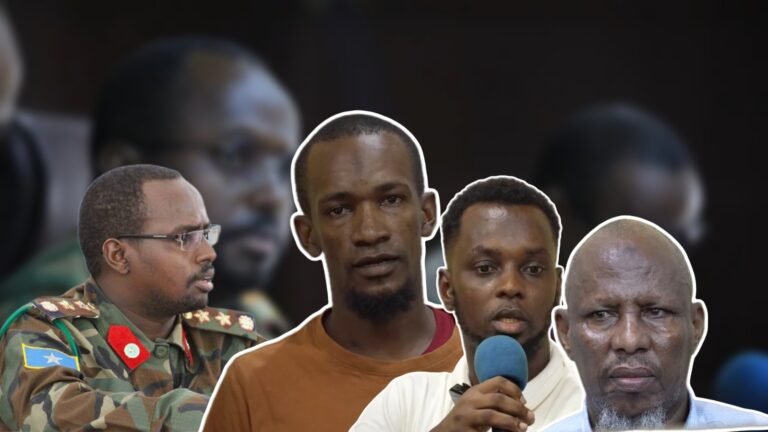
Talaado 27, May 2025 {HMC} Shabakad ku eedaysan Basaasida goobaha ganacsi ee lagu xiray CCTV Camera
HOOS KA DAAWO MUQAALKA WARBIXINTA

Talaado 27, May 2025 {HMC} Ciyaaryahanada halyeeyada Afrika oo soo gaaray Muqdisho.