



Arbaco 26, Feb 2025 {HMC} Waxaa halkan idin kugu soo gudbineynaa Wararkii ugu Dambeeyay Soomaaliya iyo Caalamka ee Warbaahinta Hiiraanweyn
HOOS KA DAAWO WARARKII UGU DAMBEEYAY
Arbaco 26, Feb 2025 {HMC} Waxaa halkan idin kugu soo gudbineynaa Wararkii ugu Dambeeyay Soomaaliya iyo Caalamka ee Warbaahinta Hiiraanweyn
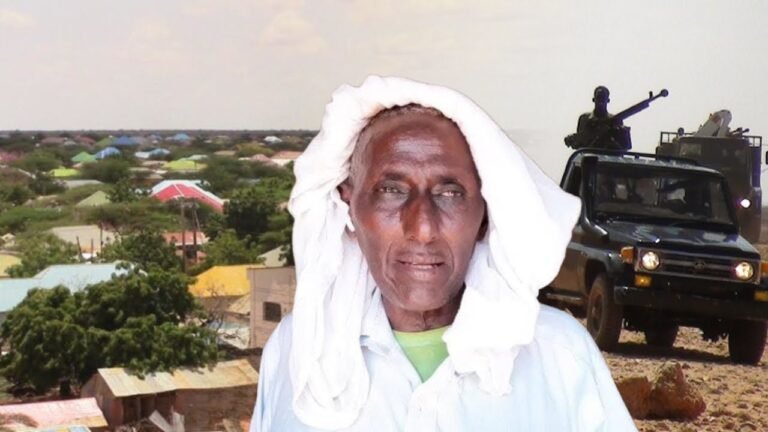
Arbaco 26, Feb 2025 {HMC} Gudoomiyihii hore ee Degmada Caabudwaaq oo la Dilay
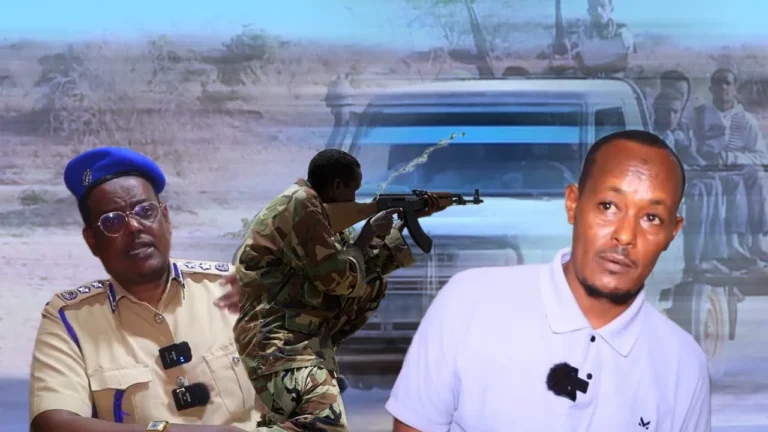
Arbaco 26, Feb 2025 {HMC} Anagoo shan Askari ah ayuu xoog nagu dhaxmaray, Baangad iyo tooreyna wuu watay, Xabada ku dhacdayna.

Wednesday 26,Febr-2025 {HMC} Somalia’s Parliament failed to hold a session on Wednesday due to a lack of quorum, delaying key legislative proceedings and fueling speculation over a possible no-confidence motion against Prime Minister Hamza Abdi Barre’s government.
Only 137 MPs attended, falling just two members short of the required quorum. Speaker Sheikh Adan Mohamed Nur Madobe condemned the absences, particularly those of lawmakers abroad, warning that repeated failures to attend sessions would result in public disclosure of absentee MPs.
“This is a national duty, and it is disgraceful for Parliament to be unable to convene because of a lack of quorum,” Madobe said. “Lawmakers must take their responsibilities seriously. Those absent today have effectively stalled this session, and if this continues, we will begin naming those who fail to show up.”
The collapse of the session comes as political tensions are rising, with reports indicating that opposition MPs had been preparing to table a motion of no confidence against Barre’s government before the meeting was derailed. While the motion has yet to be formally introduced, its looming presence has deepened concerns over Somalia’s fractious political environment.
The failure to meet quorum underscores broader instability within Somalia’s legislative process, which has been marred by absenteeism and partisan gridlock. Earlier this month, the speakers of both parliamentary houses urged lawmakers to return to Mogadishu ahead of the resumption of Parliament on February 22, warning that prolonged absences could disrupt critical legislative functions.
That warning came amid growing opposition frustration, with some MPs threatening to hold parallel sessions if parliamentary sittings were further delayed. Opposition lawmakers have accused President Hassan Sheikh Mohamud of overstepping his authority and undermining the legislative process, particularly in electoral and security matters.
The sixth session of Parliament, officially opened by President Mohamud on February 22, was expected to focus on Somalia’s security situation, counterterrorism efforts against Al-Shabaab and ISIS, and the transition to one-person, one-vote elections. In his address, Mohamud hailed recent military successes, the re-establishment of Somalia’s Air Force and Navy, and plans for the country’s first satellite launch center—a historic milestone for the Horn of Africa.
However, political disputes within Parliament have overshadowed these legislative priorities, particularly tensions between opposition lawmakers and the government. Somalia’s electoral roadmap, security funding, and constitutional amendments remain highly contentious issues that could further disrupt legislative proceedings.
With quorum challenges and internal divisions deepening, Parliament’s ability to function effectively remains in question, raising concerns over potential governance paralysis in the months ahead.

Wednesday 26,Febr-2025 {HMC} Somali intelligence forces destroyed a convoy of explosives-laden vehicles belonging to the Al-Shabab militant group in an air and ground operation in the Middle Shabelle region, authorities said Tuesday.
The National Intelligence and Security Agency (NISA), working with international partners, targeted the convoy in the Sigato and Labi Aw-Xasan areas between the Ruun-Nirgood and Al-Kowther districts.
The vehicles, which were reportedly preparing for an attack, were destroyed, and the militants escorting them were neutralized, according to a NISA statement.
Security officials said the extremists had planned to use one of the car bombs to target mosques in El Cali Axmed. Al-Shabab has previously attacked religious sites, including mosques in Daaru-Nimca, Buula-Burte, Baxdo, and Qaayib.
The operation is part of an ongoing counterterrorism campaign to dismantle militant networks and prevent attacks on civilian and religious sites. Somali security forces have intensified efforts to track and eliminate insurgent threats across the country.
The strike comes a day after Somali government forces killed more than 70 Al-Shabab militants, including senior commanders, in Middle Shabelle and Hiiraan regions. That operation, which involved airstrikes and ground assaults, targeted militant hideouts in Adow-Guray in Hiiraan, as well as El Cali Axmed and Al-Kowther in Middle Shabelle.

Wednesday 26,Febr-2025 {HMC} “ A former Minneapolis café owner testified Tuesday that Feeding Our Future founder Aimee Bock demanded a $1.5 million kickback in 2021 to approve a fraudulent invoice totalling $3.1 million—and terminated her contract when she refused.
It was the first direct accusation in the ongoing Feeding Our Future trial, where federal prosecutors allege Bock orchestrated a $250 million fraud scheme that funnelled pandemic relief funds meant to feed underprivileged children into personal enrichment for dozens of co-conspirators.
Hanna Marekegn, the 42-year-old former owner of Brava Café, was among the first defendants to plead guilty in 2022. She admitted embezzling $7.1 million by falsely claiming to serve 4,000 meals a day despite operating a café that barely saw ten customers daily.
“We knew everything was wrong, but we just kept doing it because we needed the money,” Marekegn told jurors through tears.
Marekegn testified that she initially joined the Federal Child Nutrition Program in 2020 under Feeding Our Future’s sponsorship after being recruited by an employee, Abdikerm Eidleh. She agreed to pay 5% of her reimbursements as kickbacks to Eidleh, who fled to Somalia in late 2021 before FBI raids.
After state regulators began scrutinizing Feeding Our Future’s operations, Bock led a legal fight against the Minnesota Department of Education (MDE). In April 2021, a judge ruled in her favour, forcing MDE to resume funding. Marekegn testified that Bock celebrated with supporters in a Minneapolis banquet hall.
“She was like a god to the East African community,” Marekegn said. “We all thought she was untouchable.”
Following the ruling, Feeding Our Future expanded its operations—but cracks began to show. Prosecutors argue that the nonprofit inflated meal counts, used shell companies, and submitted fraudulent invoices to divert federal funds.
The $3.1 Million Invoice and Alleged Kickback Demand
In August 2021, Marekegn, now a vendor supplying meals to House of Refuge Outreach Twin Cities, submitted a $3.1 million invoice—a figure far exceeding industry norms.
She testified that Bock questioned the invoice for the first time and later invited her to a private meeting at a Minneapolis coffee shop.
Bock allegedly instructed Marekegn to leave her phone and Apple Watch in her car before making a demand:
“She told me she would approve the invoice if I gave her half—$1.5 million in cash,” Marekegn testified.
Marekegn said she refused.
“That’s a lot of money to pay in cash,” she told Bock.
Days later, she said, Bock terminated her contract.
Marekegn continued her fraudulent activities under another sponsor, Partners in Nutrition, until the FBI raided Feeding Our Future’s offices and 24 other sites in early 2022.
FBI agents searching Bock’s home found large amounts of cash, designer handbags, luxury cars, and a gold necklace spelling out her name. Prosecutors say she lived lavishly while presenting herself as a humanitarian.
Bock’s attorney, Kenneth Udoibok, challenged Marekegn’s credibility, emphasizing that she continued defrauding the program even after Bock cut her off.
He argued that Bock was misled by “clever liars” and had no direct involvement in fraudulent claims. He also questioned why Bock would insist on a cash payment if she were running a highly sophisticated scheme.
However, prosecutors maintain that Bock orchestrated the largest pandemic-era fraud scheme in U.S. history.
Bock and co-defendant Salim Said, a Minneapolis restaurant owner, face multiple charges, including wire fraud, conspiracy to commit federal program bribery, and money laundering. If convicted, they could face decades in prison.
Now in its fourth week, the trial has featured testimony from multiple cooperating defendants who admitted to submitting inflated invoices and laundering millions in taxpayer funds.
Of the 70 individuals charged, 35 have pleaded guilty, while others await trial. Federal prosecutors say more arrests may follow as the investigation continues.

Wednesday 26,Febr-2025 {HMC} “Overall, the goal is to help them get out of danger and get back on their feet,” she said.
For example, some of them need to find an apartment, and Isuroon covers the security deposit and the first month’s rent, while others need a lawyer to represent them in court and help with legal paperwork. Still others need food, clothing and medical attention.
Some clients face a language barrier, so Isuroon connects them with language services as well.
The majority of Isuroon’s clients are Somali women and their families, but they also serve Afghan women.
Many Afghan women are new to the country and afraid to speak up about abuse, Fartun said. “We have had a number of domestic violence cases in the Afghan community, but those cases were solved internally,” she said.
‘He was powerful and aggressive’
While many Somali women are still ashamed to speak about domestic violence, Fatoun Ali, founder and executive director of the Somali Youth and Family Development Center (SOMFAM) was willing to share her story.
She married her ex-husband in San Diego, Calif., when she was 20 and he was 35. “He was powerful and aggressive to the point it felt like he was suffocating me,” Fatoun said.
She said her ex-husband did not want to get a proper job or provide adequate support for the family, resulting in constant problems in their marriage.
She said whenever she asked him to pay the rent, food and other necessities around the house, he would instantly get upset and aggressively come at her.
This included beating, yelling and threatening to kill her. She left the house and moved in with a friend temporarily while caring for a baby and pregnant with a second child, she said.
“I felt like our marriage was built on lies,” she said, referring to her ex-husband having three children with someone else without informing her before their marriage. He was also unemployed for years even though he claimed to have a job and owed thousands in child support money to the state.
She said he sometimes worked for temp agencies that would place him in temporary jobs that the state was unaware of to avoid having his wages garnished.
While living in her friend’s house, she got a job and rented an apartment, but once he learned that she had her own place, he moved in with her, but the abuse continued.
“He would do very weird things to make me scared, so I don’t leave or ask him anything,” She said. For example, he would take a pair of scissors and cut a handful of her hair, show it to her, and say “‘This time, it is your hair, but next time it would be your throat,’” she said.
As the abuse continued, she decided to get a divorce, sparking an argument between the two, where he beat her severely, leaving her unconscious. Relatives and community elders took over the case, convincing him to give her a divorce.
She finally moved from San Diego to Minneapolis, rebuilding her life from scratch with two young children.
Upon coming to Minneapolis, she got a job, rented an apartment, and enrolled in school while caring for her children. She earned a bachelor’s degree in business and founded SOMFAM along with a real estate business, Hayat Properties.
Fatoun remarried, had two more children, and is currently a mother of four.
‘Feelings of shame’
Sumeya, a domestic violence and legal advocate for SPIP, said she handles cases where victims are shot, stabbed or severely beaten.
Referrals come from the police, hospital or through direct calls to the agency. She is often accompanied by a law enforcement officer when she responds to calls, and asked to be identified by her first name alone for this story due to the sensitivity of her work.
“Among domestic violence victims, I’ve noticed that the younger Somali generation is hesitant to open up to a Somali advocate or Somali police officer because of feelings of shame,” she said. “This is due to the fear that their information may be disclosed to the community and portray them negatively.”
When working with Somali victims, it is important to acknowledge their concern about keeping their information confidential and maintaining their trust while also prioritizing safety over shame, she said.
“We want the victims, especially the newer immigrants, to understand that their information is safe with us, and nobody is going to make them do anything they don’t want to do,” said Cline, the SPIP executive director.
Najma said Isuroon often sees cases where the husband is physically abusing the wife and children, forcing them to leave the home and seek safety.
Fartun said when women leave their abusers, they become both the breadwinners of the family and the sole caregivers of a large number of children. That can lead children to show up at school without proper hygiene or enough to eat, triggering a child welfare check.
“We have a legal team that represents these women in court when both the husband and child protective services threaten to take the kids,” Fartun said.
When Somali women go to family shelters, they experience complete isolation because they don’t speak English, and as a result, they are unable to adapt to the environment, she said.
That has inspired Isuroon’s initiative to build an 87-unit shelter that can accommodate large families, she said.
Isuroon is still in the early stages of planning, but hopes to have the $30 million shelter completed within two years, with funding from the state and private donations, Fartun said.
The nonprofit is also creating a team of professionals that includes a legal team, social workers, health care personnel, and cultural brokers who assist families in resolving conflicts and provide sessions for young couples to teach them the importance of maintaining a successful marriage, she said.
“Our team will be ready to meet victims wherever they are,” Fartun said.
A Twin Cities nonprofit serving Somali and Afghan women is expanding its services for victims of domestic and sexual abuse.
Isuroon launched a hotline for victims last summer and is developing plans for a $30 million, 87-unit family shelter it hopes to open in the next two years.
The nonprofit has served hundreds of domestic violence victims since it was founded 15 years ago, said founder and CEO Fartun Weli.
But she said calls have escalated in the last four years — in part because women are more willing to speak out.
“In the Somali community, we are facing a cultural shift,” she said. In the past, divorce and separation were rare. Women stayed in their marriages because they had no outside source of income and because divorced women were shamed.
“Domestic abuse has always existed in our community, but the driving force in recent years is that more and more young women are speaking up,” Fartun said. She said the pandemic also highlighted family issues with more people trapped at home.
Isuroon is not the only local provider receiving more calls from immigrant women.
Shelley Cline, executive director of the St. Paul and Ramsey County Domestic Abuse Intervention Project, said SPIP is also handling more calls from new immigrants. In 2023, nearly one in five calls were from new immigrants or refugees.
SPIP has advocates who speak Spanish, Hmong, Karen, Somali and French, among other languages. That helps clients navigate a stressful situation. But more victims are also finding the courage to reach out, Cline said.
“Something that we noticed is that once victims understand their rights and options, they make good decisions for themselves and their families,” she said.
A generational change
In the early years of Isuroon, calls and clients’ needs were handled as they came in, but the domestic violence cases became more frequent, resulting in the launch of its domestic abuse hotline last June, Fartun said.
Isuroon also provides refugee assistance, doula care, youth mentoring, housing, and other essential services.
The creation of the hotline was funded by the National Organization of Sisters of Color Ending Sexual Assault, she said.
Fartun said during the 1990s and 2000s, many Somali refugees were brought to the United States and most of those families were women and children, while the men were subjected to extensive security screening due to the emerging militia groups and terrorist organizations in the country.
This led to many families being separated for a long time, resulting in children growing up without their fathers. When the fathers joined their families years later, the children who grew up in the United States, along with women who had been accustomed to an independent life, found it difficult to adapt to the father’s paternalistic mindset, she said.
“This is a situation where husbands are not financially supportive of the women and children. And women are putting the children in daycares and want to go to school, earn income, and get a better living, but apparently, husbands don’t want that, so there is a conflict between them,” Fartun said.
She said many of these women are looking for ways to get away from financial, emotional and physical abuse with their children, and they are in frantic mode, looking for public housing and other social assistance.
“Many of them do not know how to navigate the system, so we help them with whatever assistance they need,” Fartun said.
Najma Elmi, Isuroon’s crisis resource coordinator, said she handles three to five calls a week from women seeking help.
“Overall, the goal is to help them get out of danger and get back on their feet,” she said.
For example, some of them need to find an apartment, and Isuroon covers the security deposit and the first month’s rent, while others need a lawyer to represent them in court and help with legal paperwork. Still others need food, clothing and medical attention.
Some clients face a language barrier, so Isuroon connects them with language services as well.
The majority of Isuroon’s clients are Somali women and their families, but they also serve Afghan women.
Many Afghan women are new to the country and afraid to speak up about abuse, Fartun said. “We have had a number of domestic violence cases in the Afghan community, but those cases were solved internally,” she said.
‘He was powerful and aggressive’
While many Somali women are still ashamed to speak about domestic violence, Fatoun Ali, founder and executive director of the Somali Youth and Family Development Center (SOMFAM) was willing to share her story.
She married her ex-husband in San Diego, Calif., when she was 20 and he was 35. “He was powerful and aggressive to the point it felt like he was suffocating me,” Fatoun said.
She said her ex-husband did not want to get a proper job or provide adequate support for the family, resulting in constant problems in their marriage.
She said whenever she asked him to pay the rent, food and other necessities around the house, he would instantly get upset and aggressively come at her.
This included beating, yelling and threatening to kill her. She left the house and moved in with a friend temporarily while caring for a baby and pregnant with a second child, she said.
“I felt like our marriage was built on lies,” she said, referring to her ex-husband having three children with someone else without informing her before their marriage. He was also unemployed for years even though he claimed to have a job and owed thousands in child support money to the state.
She said he sometimes worked for temp agencies that would place him in temporary jobs that the state was unaware of to avoid having his wages garnished.
While living in her friend’s house, she got a job and rented an apartment, but once he learned that she had her own place, he moved in with her, but the abuse continued.
“He would do very weird things to make me scared, so I don’t leave or ask him anything,” She said. For example, he would take a pair of scissors and cut a handful of her hair, show it to her, and say “‘This time, it is your hair, but next time it would be your throat,’” she said.
As the abuse continued, she decided to get a divorce, sparking an argument between the two, where he beat her severely, leaving her unconscious. Relatives and community elders took over the case, convincing him to give her a divorce.
She finally moved from San Diego to Minneapolis, rebuilding her life from scratch with two young children.
Upon coming to Minneapolis, she got a job, rented an apartment, and enrolled in school while caring for her children. She earned a bachelor’s degree in business and founded SOMFAM along with a real estate business, Hayat Properties.
Fatoun remarried, had two more children, and is currently a mother of four.
‘Feelings of shame’
Sumeya, a domestic violence and legal advocate for SPIP, said she handles cases where victims are shot, stabbed or severely beaten.
Referrals come from the police, hospital or through direct calls to the agency. She is often accompanied by a law enforcement officer when she responds to calls, and asked to be identified by her first name alone for this story due to the sensitivity of her work.
“Among domestic violence victims, I’ve noticed that the younger Somali generation is hesitant to open up to a Somali advocate or Somali police officer because of feelings of shame,” she said. “This is due to the fear that their information may be disclosed to the community and portray them negatively.”
When working with Somali victims, it is important to acknowledge their concern about keeping their information confidential and maintaining their trust while also prioritizing safety over shame, she said.
“We want the victims, especially the newer immigrants, to understand that their information is safe with us, and nobody is going to make them do anything they don’t want to do,” said Cline, the SPIP executive director.
Najma said Isuroon often sees cases where the husband is physically abusing the wife and children, forcing them to leave the home and seek safety.
Fartun said when women leave their abusers, they become both the breadwinners of the family and the sole caregivers of a large number of children. That can lead children to show up at school without proper hygiene or enough to eat, triggering a child welfare check.
“We have a legal team that represents these women in court when both the husband and child protective services threaten to take the kids,” Fartun said.
When Somali women go to family shelters, they experience complete isolation because they don’t speak English, and as a result, they are unable to adapt to the environment, she said.
That has inspired Isuroon’s initiative to build an 87-unit shelter that can accommodate large families, she said.
Isuroon is still in the early stages of planning, but hopes to have the $30 million shelter completed within two years, with funding from the state and private donations, Fartun said.
The nonprofit is also creating a team of professionals that includes a legal team, social workers, health care personnel, and cultural brokers who assist families in resolving conflicts and provide sessions for young couples to teach them the importance of maintaining a successful marriage, she said.
“Our team will be ready to meet victims wherever they are,” Fartun said.
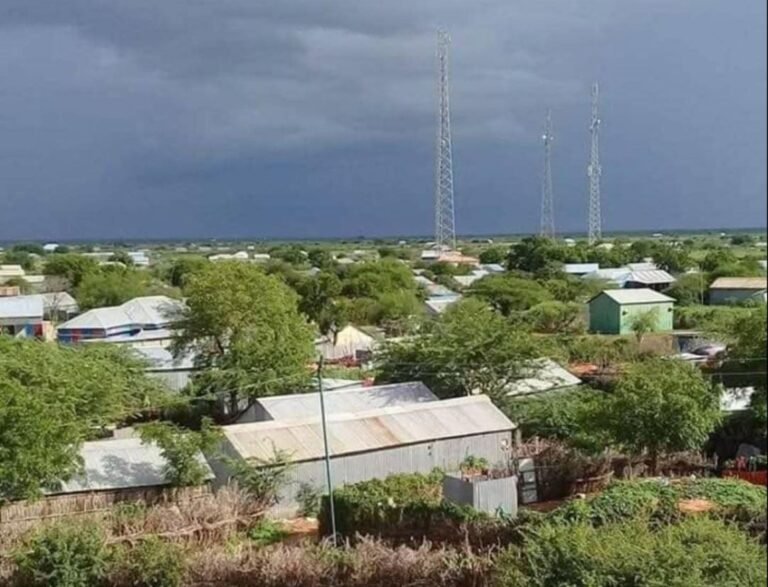
Arbaco, 26 Feb, 2025 {HMC} Wararka ka imaanayo deegaanka Ceelbaraf ee Gobolka Shabeellada Dhexe, ayaa sheegay in Ciidamada Xoogga Dalka Soomaaliyeed oo kaashanaya kuwa deegaanka ayaa weerar ku qaaday xubno ka tirsan Al-shabaab, kuwaas oo ku sugnaa duleedka deegaanka Ceelbaraf ee Gobolka Shabeellada Dhexe.
Wararka ayaa intaas ku daraya in dagaalka dhex maray Ciidamada Xoogga Dalka Soomaaliyeed iyo kuwa deegaanka, ay jiraan khasaaro isgu jiro Dhimasho iyo Dhaawac; iyada oo ay dagaalka qeyb ka ahaayeen ciidamada cirka oo duqeyn xagga cirka ah adeegsanayay.
Sidoo kale, illaa iyo hadda lama oga khasaaraha ka dhashay dagaalka balse wararka qaar ayaa sheegaya in khasaare xoog leh la gaarsiiyay Al-shabaab ee halkaas ku sugnaa.
Weerarka ay saakay Ciidamadu ku qaadeen waxaa lasoo sheegayaa in khasaare culus lagu gaarsiiyey Al-shabaab, iyada oo weli faahfaahin rasmi ah la haynin.

Arbaco 26, Feb 2025 {HMC} Wadamada Kamid Noqonaya Howlgalka cusub oo la shaaciyey.
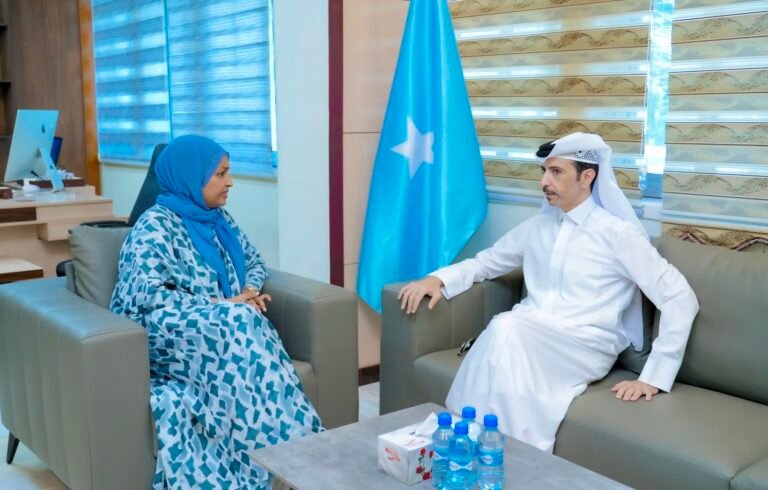
Arbaco, 26 Feb, 2025 {HMC} Wasiirka Wasaaradda Qoyska iyo Hormarinta Xuquuqul Insaanka XFS Amb Khadiija Maxamed Al-Makhzoumi ayaa maanta xafiiskeeda kusoo dhaweysay Safiirka Dowladda Qatar u fadhiya magaalada Muqdisho Amb Abdullah Salem Nasser Al Holi Al Nuaimi, waxaana ay Wasiirka iyo Safiirka kawada hadleen hawlaha hor yaala Wasaaradda, gaar ahaanna dhinacyada Xuquuqul Insaanka iyo hormarinta Qoyska.
Danjire Abdullah Salem Nasser Al Holi Al Nuaimi Safiirka Dowladda Qatar u fadhiya magaalada Muqdisho ayaa ugu horeyn Wasiirka Wasaaradda Qosyaka iyo Hormarinta Xuquuqul Insaanka Soomaaliya ku bogaadiyey dardarta shaqo ee ay la timid mudada kooban ee ay Wasaaradda hogaamineyso, waxaana uu ballan qaaday iney la shaqeyn doonaan.
Wasiirka Wasaaradda Qoyska iyo Hormarinta Xuquuqul Insaanka XFS Amb Khadiija Maxamed Al-Makhzoumi oo kulanka ka hadashay ayaa uga mahad celisay Safiirka Dowladda Qatar u fadhiya magaalada Muqdisho booqashadiisa iyo ballan qaadkooda wada shaqeyneyd waxaana ay faah faahin ka siisay hawlaha hortebinta u leh Wasaaradda Qoyska iyo Hormarinta Xuquuqul Isnaanka XFS.
Tan iyo intii ay si rasmi ah ula wareegtay hogaaminta Wasaaradda Qoyska iyo Hormarinta Xuquuqul Insaanka XFS Amb Khadiija Maxamed Al-Makhzoumi waxa ay kulammo kala duwan xarunta Wasaaradda kula qaadatay danjireyaasha iyo wakiillada beesha caalamka ee Soomaaliya, kulamadaasi oo aad muhiim ugu ah hirgelinta hiigsiga Wasaaradda Qoyska iyo Hormarinta Xuquuqul Insaanka Soomaaliya.