


Isniin 17-02-2025 {HMC} Dhageystayaal halkan waxa aan idiin kugu soo gudbi neynaa Warka Duhurnimo ee Warbaahinta Hiiraanweyn
Warka waxaa soo jeedinayo ::Shugri Baryare & Yaasiin Cali
Farsamadii ::Maxamed Xasan Cowsey
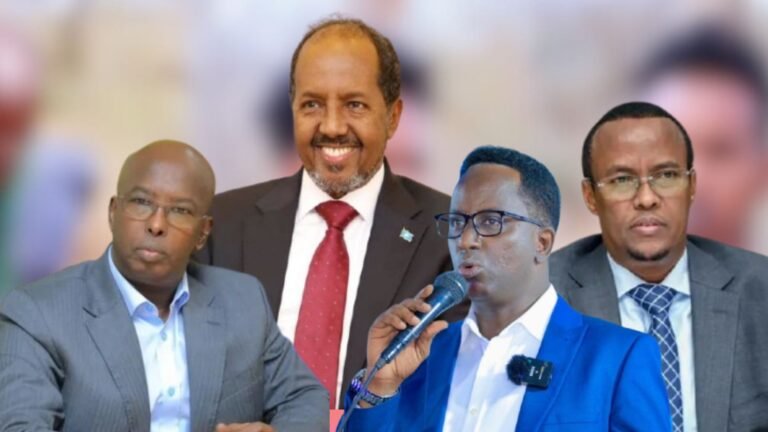
Isniin 17-02-2025 {HMC} Dhageystayaal halkan waxa aan idiin kugu soo gudbi neynaa Warka Duhurnimo ee Warbaahinta Hiiraanweyn
Warka waxaa soo jeedinayo ::Shugri Baryare & Yaasiin Cali
Farsamadii ::Maxamed Xasan Cowsey
Isniin 17 Feb 2025 {HMC} Wasiirka Wasaaradda Qorsheynta, Maalgashiga, iyo Horumarinta Dhaqaalaha Soomaaliya, Mudane Maxamuud Cabdiraxmaan Sheekh Faarax (Beenebeene),ayaa sheegay in dowladda iyo deeq bixiyaasha ay ka shaqeynayaan in la buuxiyo mashaariicdii ay hakisay USAID
Wasiirka oo ka qeyb galay dood Ku saabsan Siyaasadda Dibadda ee Maraykanka iyo Saamaynta Geeska Afrika ayaa tilmaamay wada shaqeynta dowladda mareekanka iyo soomaaliya gaar ahan dhanka mashariicda oo uu ka ammaanayo sida ay uga garab siiyaan dowladda soomaaliya.
Wasiir Beene Beene” Dowladda Soomaaliya iyo deeq bixiyaasha waxay ka shaqeynayaan in la buuxiyo mashaariicdii ay hakisay USAID.
Waxa uu wasiirka Qorsheynta intaa hadalkiisa ku daray in madaama Soomaliya oo ah goob Alle ku manneeystay kheyraad kala duwan loo baahanyahay in loo jiheeyo bulshada Soomaaliyeed sidii ay uga faa’ideysan lahaayeen,loogana maarmi lahaa caawinada dibadda ah.
Sidoo kale, Wasiirku wuxuu xusay in Wasaaradda Qorsheynta ay dadaal xooggan ku bixinayso hirgelinta istiraatiijiyado lagu dhiirrigelinayo iskaashi wax-ku-ool ah oo lala yeesho dalalka horumaray, si gaar ahna loo xoojiyo xiriirka Soomaaliya iyo Maraykanka.
Isniin17, Feb 2025 {HMC} Waxaa halkan idin kugu soo Gudbineynaa Wararka Ugu Waaweyn Soomaaliya iyo Caalamka ee Warbaahinta Hiiraanweyn
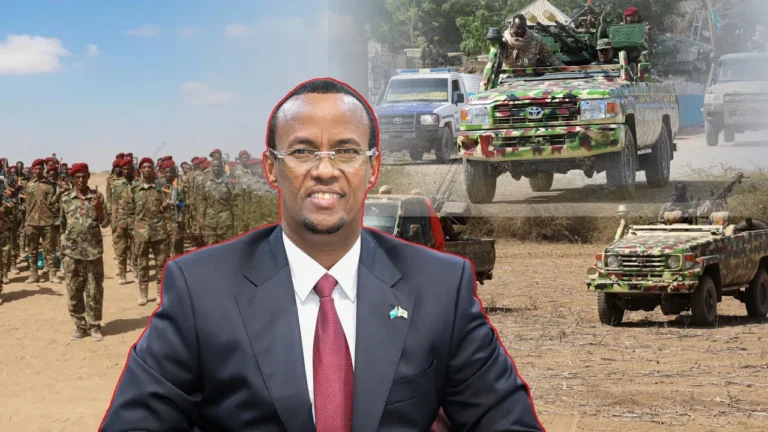
Isniin 17, Feb 2025 {HMC} Madaxweyne Cali Guudlaawe oo sagootityey Ciidamo loo Diyaariyey la dagaalanka AS.
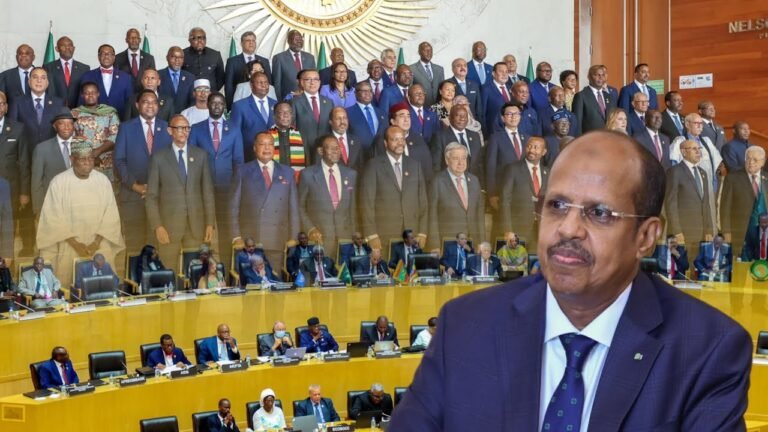
Isniin 17, Feb 2025 {HMC} Maxay Soomaaliya ka Faaideysaa Kursgiga ay ku Guuleeystay Jabuuti.?
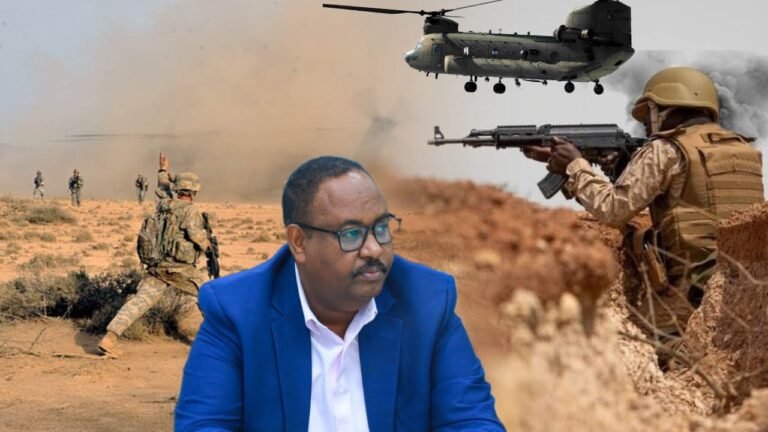
Isniin 17, Feb 2025 {HMC} Mareeykanka oo Shaaciyey Khasaaraha ka dhashay Duqeeyntii ka dhacday Puntland.
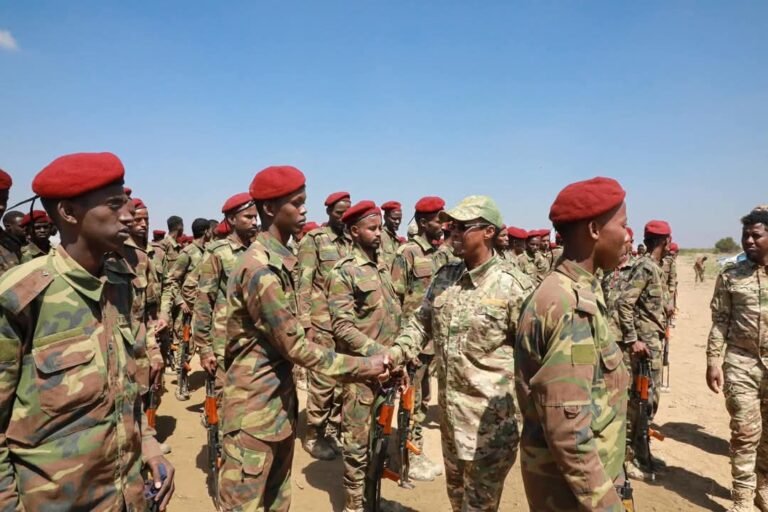
Monday 17,Febr,2025 {HMC} The President of Somalia’s Hirshabelle State, H.E Ali Abdullahi Hussein (Ali Guudlaawe), accompanied by the Chief of Police for Hirshabelle, Brigadier General Hassan Dhicisow Hassan, has called on the Hirshabelle Darawiishta forces, particularly the recently trained 5th battalion, to intensify efforts against terrorism.
During a recent meeting, the President emphasized the importance of the security forces’ commitment to eradicating the Khawarij militants. He expressed confidence in their capabilities to confront the threats posed by these groups.
Brigadier General Dhicisow stated that the time has come for the Darawiishta forces to showcase their strength and operational readiness. “Today, you are fully equipped, and I trust you will take decisive action against the Khawarij,” he remarked.
The President also expressed gratitude to the commanders who oversaw the training and equipping of the 5th battalion, highlighting the critical role they play in ensuring the security of the region.
Source SONNA

Monday 17,Febr,2025 {HMC} Saudi authorities executed a Somali national convicted of drug smuggling and a Saudi citizen found guilty of murder, the Ministry of Interior announced on Sunday.
The Somali national, identified as Mohamed Nur Hussein Ja’al, was arrested for attempting to smuggle hashish into Saudi Arabia. A specialized court found him guilty and sentenced him to death under tazir punishment, a discretionary ruling in Islamic law for severe crimes. After an appeal, the Supreme Court upheld the sentence, and a royal decree authorized the execution, which was carried out on Sunday in Najran, southern Saudi Arabia.
Hussein was beheaded in accordance with Saudi Arabia’s execution practices. His family, in an emotional statement to SMS Somalia TV, accused Saudi authorities of carrying out an unjust execution, claiming that their son did not receive a fair trial. The family further alleged that Hussein was denied due process and that they had little access to legal representation or opportunities for appeal.
Saudi Arabia enforces one of the world’s strictest legal systems, with capital punishment frequently applied for drug-related offences, murder, and terrorism charges. The Ministry of Interior said the executions reinforce the government’s stance against drug trafficking and violent crime, emphasizing that strict legal consequences await offenders.
This latest execution spotlights the broader plight of Somali migrants in Saudi Arabia, where at least 50 Somali nationals are currently on death row, primarily for drug-related offences. Many of them, rights groups say, were coerced or deceived into smuggling illicit substances under duress or false job offers.
The Somali government and diplomatic missions have been appealing for clemency on behalf of these prisoners. The Somali Consulate in Jeddah says it has been engaged in direct negotiations with Saudi officials, seeking to commute death sentences to lengthy prison terms. Families of those on death row have also called for stronger government intervention to prevent further executions.
Many Somali migrants in the Middle East and Gulf states face limited legal protections, often encountering language barriers, inadequate legal representation, and harsh judicial processes.
The Somali government has a complex stance on the death penalty. While Somalia itself enforces capital punishment, particularly for murder, treason, and terrorism-related crimes, its government has actively intervened on behalf of citizens facing execution abroad. However, critics argue that diplomatic efforts have been weak in preventing the execution of Somalis in countries with strict legal codes like Saudi Arabia.
Source Hiiraan online
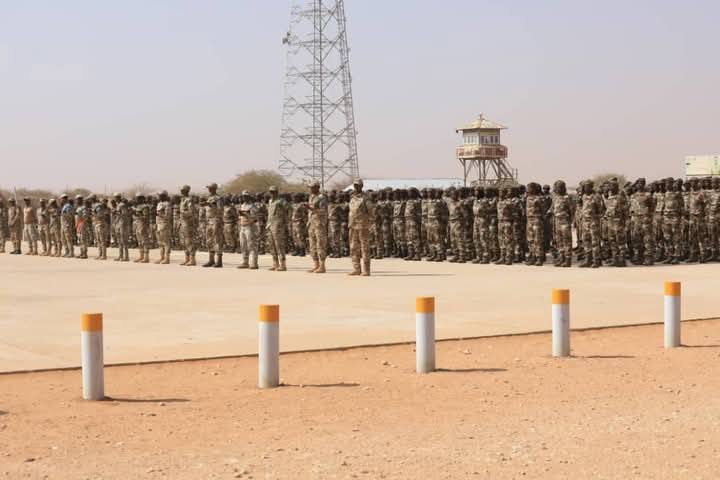
Monday 17,Febr,2025 {HMC} — President Donald Trump’s sweeping freeze on U.S. foreign assistance has threatened programs intended to counter al-Shabab bombmakers, contain the spread of al-Qaeda across West Africa and secure Islamic State prisoners in the Middle East, according to U.S. officials and aid workers.
Hours after taking office last month, Trump put a 90-day pause on foreign aid programs, signing an executive order that said the “foreign aid industry and bureaucracy are not aligned with American interests” and “serve to destabilize world peace.”
But four current and former U.S. officials, who, like others interviewed for this report, spoke on the condition of anonymity because they feared government retaliation, said that many of the affected programs were specifically designed to respond to national security threats, and that their suspension could endanger America and its international allies.
The White House did not immediately respond to a request for comment.
The United States spends nearly $10 billion annually on foreign security assistance. More than half goes to Israel, Egypt and Ukraine, all three of which received exemptions from the spending freeze. Meanwhile, other American security partners in Africa and the Middle East, which receive a much smaller share of the foreign aid budget, have seen vital security programs grind to a halt.
Of particular concern is the Anti Terrorism Assistance program, which the United States spent $264 million on in 2023 to improve the capacity of allies to respond to extremist threats. Other programs counter transnational organized crime and narcotics and strengthen local law enforcement. Almost all are now suspended.
“This is not ‘The Apprentice.’ You can’t just tell your partners: you’re fired,” wrote one former U.S. security official. “Everything we give them from training and equipment to general advice is, by definition, foreign assistance, most of which they have come to depend on to sustain operations that WE have imposed to ‘keep America safe!’”
Africa’s growing security vacuum
In Somalia, where Washington has supported the government in its long-running battle with al-Shabab, a powerful insurgent group aligned with al-Qaeda, a U.S. defense official said the sudden shutdown triggered security risks for some of the hundreds of American troops stationed there.
Contractors responsible for building and maintaining bases for U.S.-trained Somali special forces, known as Danab, left so abruptly that U.S. soldiers had to scramble to pick up the slack, he said. Nearly 400 Danab graduates were left outside an American military base with no provision for food, fuel or electricity.
Another private contractor, which conducts medevacs for wounded Somali soldiers, had personnel in a remote combat zone when the stop-work order came down, the U.S. defense official said. It was unclear if they would be reimbursed for the return flight or any subsequent medevacs.
The funding freeze has also hit U.S.-supported laboratories in Mogadishu and Garowe, Somalia, that analyze ballistics, DNA, bombs and other evidence. Lt. Col. Mohamed Mohamud Ahmed, head of the police forensics team in the criminal investigation division, said the Mogadishu lab provided fingerprints and other crime scene data to Interpol and the FBI.
Last year, the lab worked on about 120 terrorist cases, Ahmed said, “but all the activity has collapsed within one month. Our mentors have left, our IT licenses have expired.”
A security expert who has worked extensively in Somalia put it bluntly: “If all U.S. money stops forever, this war [against al-Shabab] is over very fast,” he said.
Al-Shabab militants have launched deadly attacks over the years in neighboring Kenya, another staunch U.S. ally. In 2020, gunmen overran a military base on Manda Island, killing three Americans. Hundreds of people were killed in 2013 during a days-long siege at the Westgate Mall in Nairobi; another 21 died in a 2019 attack on an upscale hotel in the capital.
In northern Somalia, where the Islamic State has built an operational and financial hub, local forces are locked in a bloody offensive aimed at dislodging the militants but have been unable to secure Western support.
A report this month from a U.N. panel of experts who study the Islamic State and al-Qaeda said the threat posed by the groups “remained undiminished,” and that both continued to shift their focus to Africa. The report also noted that al-Shabab was developing a “transactional or opportunistic” relationship with the Houthis in Yemen, whose fighters have targeted global shipping lanes.
Kenya is routinely the biggest recipient of anti-terrorism assistance in Africa. U.S. support helps Kenyan police secure the porous, 430-mile border with Somalia, counter the threat of improvised explosive devices (IEDs) — which have killed hundreds of security forces and civilians — and respond to terrorist attacks, said the former U.S. security official.
He pointed to one critical border program, now suspended, that uses U.S.-provided drones for surveillance, detection and interdiction of militants. The drones allowed Kenyan forces to discover caches of water in jerricans hidden in remote areas by al-Shabab, according to a Kenyan police report reviewed by The Washington Post. On another occasion, the report said, a patrol disrupted men trying to plant a bomb.
Also on hold now is a program to counter IEDs — including the creation of a database to detect patterns in bomb construction, forensically identify bombmakers and gather evidence for trials.
Kenyan security forces have a long record of human rights abuses. But American funding and guidance has made a real difference, current and former officials say, and U.S. funds support an independent police watchdog that prosecutes rogue officers.
Kenya’s abysmal performance during the four-day siege at Westgate — when inept security forces looted shops while victims lay dead, then attempted to destroy evidence — improved significantly during the 2019 hotel attack, when U.S.-trained teams secured the site within hours.
“U.S. and international involvement is a game changer as far as the local units are concerned,” said Sam Mattock, director of the Halliday Finch security company, who personally responded to the 2019 attack.
Few involved in foreign assistance take issue with the claim that the system needs reform. “I agree with Trump and wish my government had the balls to stop the foreign aid and focus on our people,” said the security expert who has worked extensively in Somalia. “But why not give everyone 90 days to plead their cases on an individual basis and if they cannot, then stop the money?”
‘The worst possible timing’
The funding freeze also has major implications for West Africa, which has become a global hot spot for extremism. Affiliates of al-Qaeda and the Islamic State have seized vast swaths of territory, killed thousands of civilians and repeatedly attacked government and military targets.
In the coastal nation of Benin, a historically strong democracy menaced by al-Qaeda-linked militants, a multiyear program to train the army for counterterrorism operations has been put on hold, according to a senior U.S. military official. The country is reeling from deadly and complex attacks, including a Jan. 8 assault on a military post that killed around 30 soldiers.
“It is the worst possible timing to pause,” said Aneliese Bernard, a former State Department adviser who now runs Strategic Stabilization Advisors, a private firm that works with the U.S. military’s civil affairs team in Benin. “It is hugely disruptive to the government’s ability to repel terrorist attacks.”
In Ivory Coast, seen as a bulwark of stability in the volatile region, two four-year programs for U.S. contractors to train local troops have also been paused. Both initiatives had just begun in January; one focused on casualty care and the other on pre-deployment training, said the senior military official.
The programs were part of a pivot in U.S. counterterrorism strategy in the region — from going after militants directly to trying to contain them — necessitated by a rapid reduction in America’s military footprint.
Last April, U.S. forces left Chad, the last semi-stable nation in the Sahel; four months later, coup leaders in Niger expelled U.S. troops from their newly built $100 million drone base and invited Russian military instructors to replace them.
American influence in the Sahel was largely confined to humanitarian initiatives through the U.S. Agency for International Development. Most of that work is also on hold now as Trump tries to dismantle USAID.
“When you take that away, our ability to shape the environment is gone,” said the senior military official. “And if nature abhors a vacuum, we know that predator nations will dive in.”
Elusive exemptions
There are similar fears of a security void in northeastern Syria, home to two camps that house around 41,000 relatives of suspected Islamic State militants — a vestige of the U.S.-led bombing campaign that destroyed the group’s self-declared caliphate.
The funding freeze led to a three-day stoppage in humanitarian aid to the al-Hol and Roj camps before temporary waivers were issued to organizations working there, said an aid worker with knowledge of the situation. The guards’ waivers need to be renewed every two weeks to avoid further disruption, and aid work across the rest of Syria remains paused.
“When people don’t have the water, the food, the things that they are relying on, they’re going to look for someplace else to find it,” the aid worker said. “The concern, especially in Syria with [the Islamic State] looking for opportunities to regroup, is that they will step into that vacuum.”
The freeze has forced the Iraqi government to suspend the repatriation of families from al-Hol. The camp in southern Iraq where returnees were being sent for rehabilitation has ceased operations due to lack of funding, according to Evan Jabro, the country’s migration and displacement minister.
Under Trump’s executive order, programs that deliver lifesaving assistance or are judged to be “mission-critical” are exempt from the freeze. But members of Congress are still in the dark about how the administration is granting exemptions, said a congressional aide familiar with discussions.
“We’ve not seen criteria for the waiver process … and the few publicized waivers are barely being implemented,” the aide said. “We see no evidence of a review process.”
The State Department has said it is terminating $1 billion worth of programs, he said, but Congress has “no way to assess the legal, financial, or national security risks.”
Chason reported from Dakar, George from Dubai and Salim from Baghdad. Louisa Loveluck in London and Karen DeYoung in Washington contributed to this report.
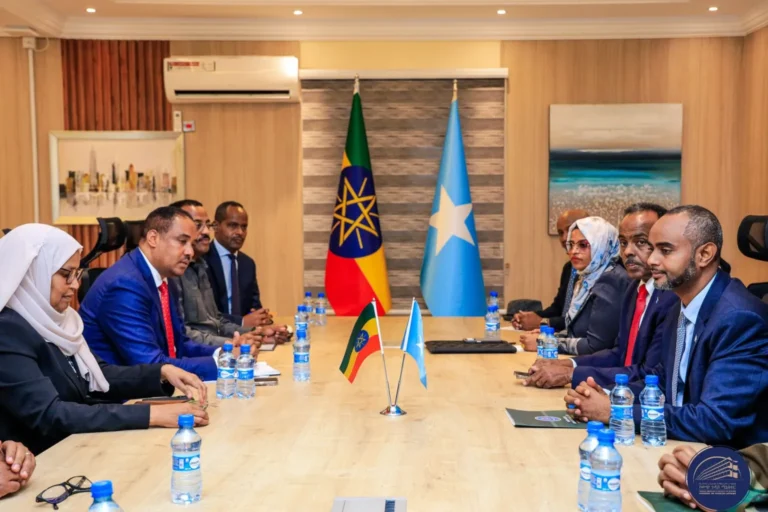
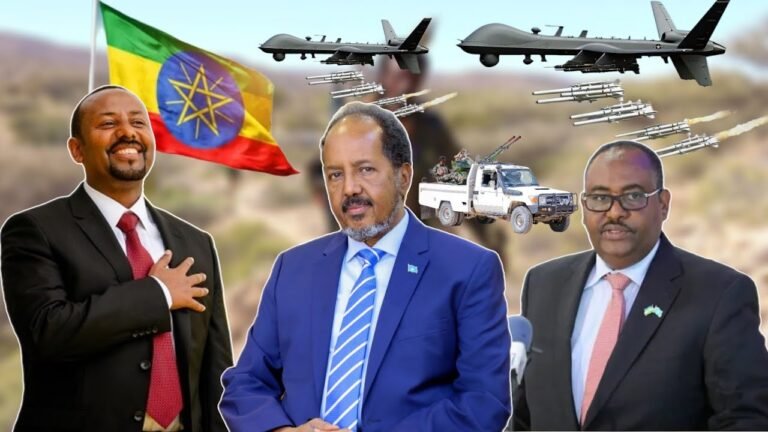
Monday 17,Febr,2025 {HMC} — A day after Somali President Hassan Sheikh Mohamud and Ethiopian Prime Minister Abiy Ahmed met to restore ties, officials from both nations have begun technical talks in Ankara to implement the Ankara Declaration and discuss Ethiopia’s bid for maritime access through Somali territory.
Somali Minister of Information Daud Aweis confirmed his participation in the discussions, stating that the delegation’s primary focus is on implementing agreements reached in previous diplomatic engagements.
“I have arrived in Ankara to join #Somalia delegation for the kick-off of the first round of technical discussions between Somalia and Ethiopia, aimed at exploring ways to implement the Ankara Declaration,” Aweis wrote on X.
“Somalia is committed to fostering peace, strengthening cooperation, and building diplomatic relations grounded in mutual understanding and respect,” he added.
The talks come as Ethiopia continues to push for a maritime trade corridor, a demand that has fueled geopolitical disputes in the Horn of Africa. On January 1, 2024, Ethiopia signed an MoU with Somaliland that proposed granting Addis Ababa access to a 19-kilometer stretch of coastline near Berbera for 50 years. The deal, which included potential Ethiopian recognition of Somaliland’s independence, triggered a strong rebuke from Somalia’s federal government, which denounced the agreement as an infringement on its sovereignty.
Somalia has insisted that any maritime agreement must be negotiated exclusively with the federal government in Mogadishu and must comply with international law. The technical committees, composed of representatives from both governments, are expected to assess the feasibility of a framework where Ethiopia could gain controlled access under Somali oversight.
Turkey, which maintains strong diplomatic and military ties with Somalia, has previously acted as a mediator in regional disputes. While Ankara played a key role in brokering the December 2024 Ankara Declaration, it remains unclear whether Turkey is actively facilitating these discussions or simply hosting the Somali delegation.
The outcome of these negotiations could reshape regional alliances and power dynamics in the Horn of Africa. A mutually beneficial agreement may enhance economic cooperation and regional stability. At the same time, failure to reach a consensus could escalate tensions and embolden insurgent groups such as al-Shabaab, which have historically exploited political disputes for recruitment and influence.
Source Hiiraan online