


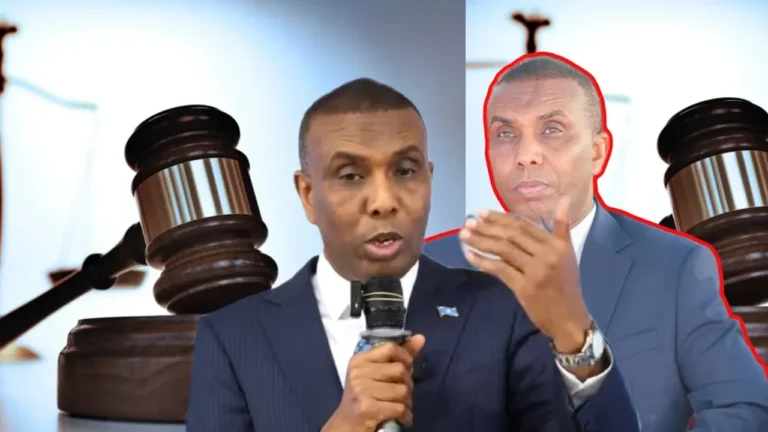
Khamiis 16, Jan 2025 {HMC} RW Xamse “Waa in aan Musliminaa Xeerka Ciqaabta Soomaaliyed”
{DAAWO MUQAALKA} DFS oo war ka soo saartay heshiiska xabbad joojinta ah ee XM iyo Israel.
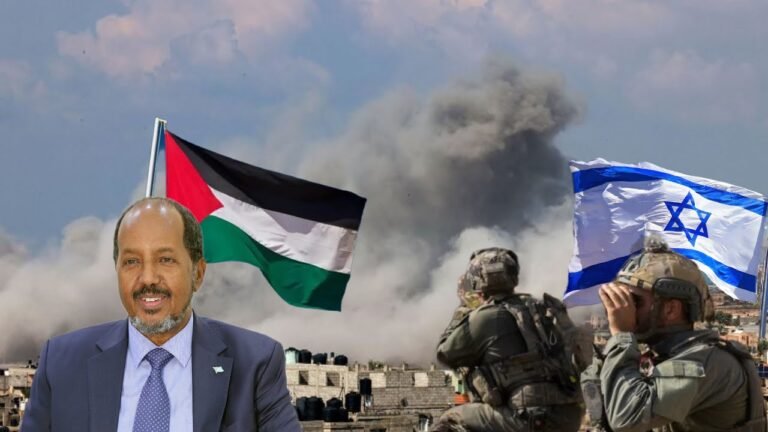
Khamiis 16, Jan 2025 {HMC} DFS oo war ka soo saartay heshiiska xabbad joojinta ah ee XM iyo Israel.
HOOS KA DAAWO MUQAALKA WARBIXINTA.
{DAAWO MUQAALKA} War-murtiyeed laga soo saaray Shirweynihii Garsoorka Dalka.
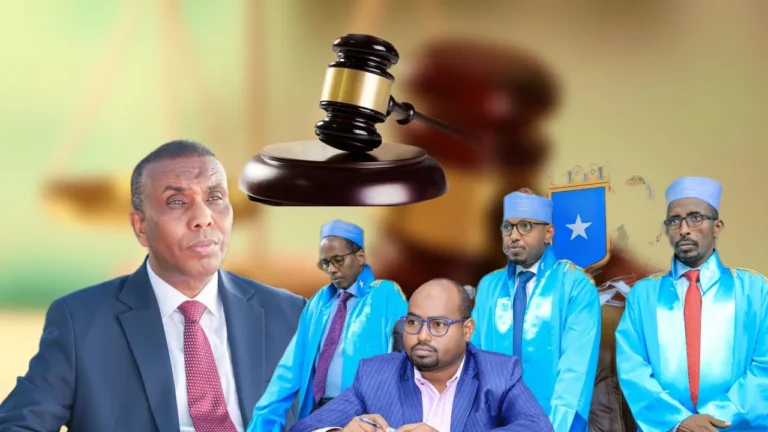
Khamiis 16, Jan 2025 {HMC} War-murtiyeed laga soo saaray Shirweynihii Garsoorka Dalka.
HOOS KA DAAWO MUQAALKA WARBIXINTA.
{DAAWO MUQAALKA} Puntland oo war cusub kasoo saartay howlgalka ka socda buuralayda Cal-miskaad ee Gobolka Bari.
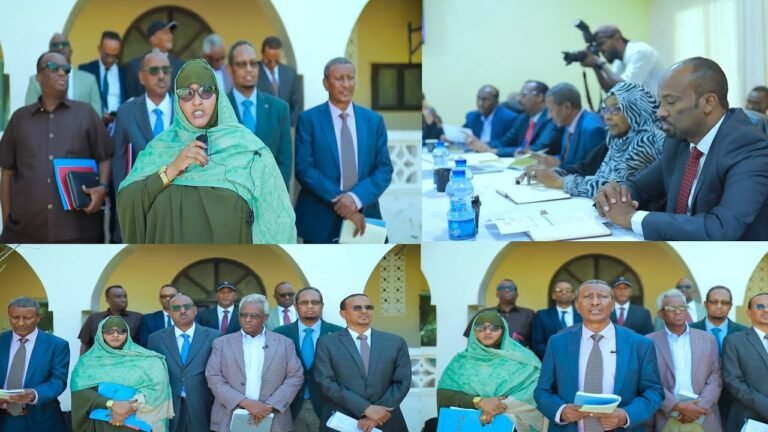
Khamiis 16, Jan 2025 {HMC} Puntland oo war cusub kasoo saartay howlgalka ka socda buuralayda Cal-miskaad ee Gobolka Bari.
HOOS KA DAAWO MUQAALKA WARBIXINTA.
{DAAWO MUQAALKA} Atooraha caanka ah ee Sayf Cali Khan oo Mindi lagu weeraray.
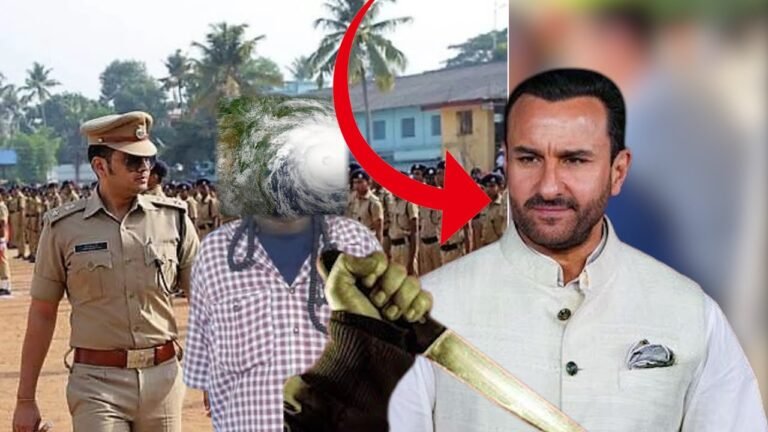
Khamiis 16, Jan 2025 {HMC} Atooraha caanka ah ee Sayf Cali Khan oo Mindi lagu weeraray.
HOOS KA DAAWO MUQAALKA WARBIXINTA.
{DAAWO MUQAALKA} Haweenka Puntland iyo Galmudug Oo War Kasoo Saaray Colaada Mudug.
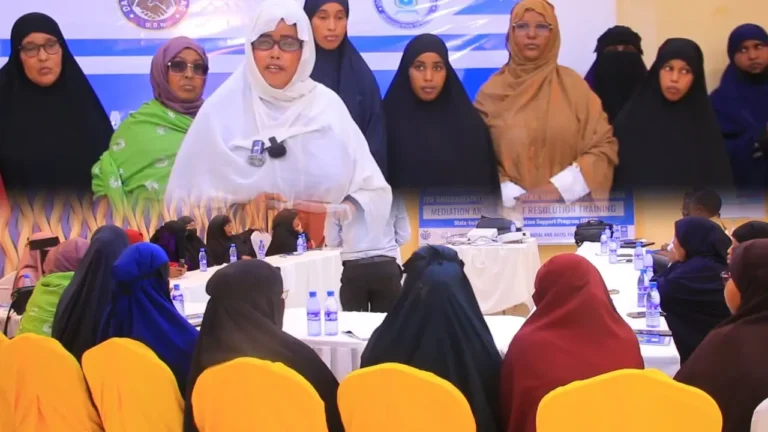
Khamiis 16, Jan 2025 {HMC} Haweenka Puntland iyo Galmudug Oo War Kasoo Saaray Colaada Mudug
HOOS KA DAAWO MUQAALKA WARBIXINTA.
Kenyan minister says son was abducted by intelligence service
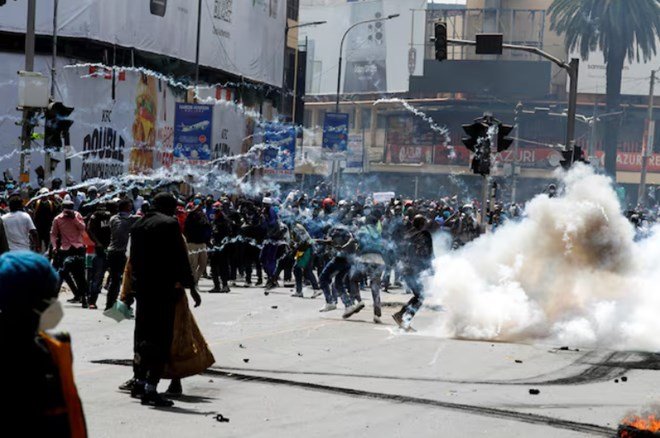
Thursday 16, Jan 2025 {HMC} A Kenyan cabinet minister said his son’s abduction during last year’s anti-government protests was carried out by the National Intelligence Service and that his son was released after President William Ruto personally intervened.
Minister of Public Service Justin Muturi’s allegation, made in an official written statement to the police on Tuesday, is the first direct information to indicate Ruto was made aware of who was behind at least some of the alleged abductions of dozens of anti-government activists that began last June.
In his statement to the police’s Directorate of Criminal Investigations, Muturi described driving to the presidential residence on June 23, 2024, to see Ruto after his son, Leslie, was taken by “armed, hooded gangsters”.
Muturi said Ruto then called National Intelligence Service (NIS) director-general Noordin Haji to order his son’s release.
Muturi confirmed to Reuters the authenticity of the statement after it had been circulating on social media, and said he had been invited by the directorate to make it.
Ruto’s office and Haji did not respond to requests for comment. The NIS, Kenya’s domestic and foreign intelligence agency, has no official contact details or spokesperson.
In public statements since June, Ruto had expressed concern about allegations by human rights groups of abductions by state agents, in which unidentified individuals have detained people and held them for days without charge in undisclosed locations.
He had said he had no knowledge of who might be responsible. In a Dec. 31 speech, however, he acknowledged “instances of excessive and extrajudicial actions by members of the security services”.
Silvanus Osoro Onyiego, the majority whip in parliament, from Ruto’s party, dismissed Muturi’s allegations. He said on Tuesday Muturi’s son had not been abducted in connection with the protests but was arrested in a bar “with substances for smoking”.
“You have three options,” he said, addressing Muturi. “First, resign. Second, apologise. And the third one is we impeach you. You cannot serve the government of Kenya that you criticise every day.”
PRESIDENT PHONE CALL
Young Kenyans led weeks of protests in June and July against proposed tax hikes and alleged corruption, forcing Ruto to scrap the tax legislation. More than 60 people were killed in the so-called Gen-Z protests, according to a government-funded rights body.
Several activists involved in the protests have described being taken by unidentified armed men, who questioned them about who was financing and organising the demonstrations.
The police told Reuters late last year that formal complaints would be investigated by the Independent Policing Oversight Authority watchdog, which investigates cases of police brutality.
Muturi was serving as the attorney general at the time of his son’s abduction. He said in his police statement that his son’s wife called him at 9:29 p.m. on June 22 to inform him that Leslie had been kidnapped in the capital Nairobi.
Muturi called senior police officials, who said they were not aware of the matter, before being told by a friend at the NIS that the service was holding Leslie, his statement said. He said he tried unsuccessfully to reach Haji over the phone.
The next day, Muturi said, he drove to Ruto’s official residence to inform him about the situation.
“The president joked, asking why anyone would want to arrest a young person over the Gen-Z demonstrations,” Muturi said, adding Ruto mentioned that other senior politicians’ children had also participated in the protests.
Muturi said he then asked Ruto to call Haji directly.
“Standing outside the pavilion, I heard the president ask Noordin Haji if he was holding my son, Noordin confirmed that indeed he was holding my son and the president instructed him to release Leslie immediately. Noordin responded that Leslie would be released within an hour,” he said.
It was not immediately clear how he heard both sides of the conversation.
Three Kenyan police officers and a Human Rights Watch researcher have told Reuters that some of the alleged abductions are linked to a low-profile unit of the Directorate of Criminal Investigations.
In a news conference on June 26, Kenya’s then-Deputy President Rigathi Gachagua had also blamed the NIS for Leslie Muturi’s abduction, without providing evidence.
Gachagua was impeached and removed from office by parliament in October on charges of undermining national cohesion and the independence of judges in other cases he had cited.
Editing by Alison Williams
SOURCE

By Aaron Ross and Edwin Okoth
Israeli attacks kill at least 80 in Gaza after ceasefire deal announced.
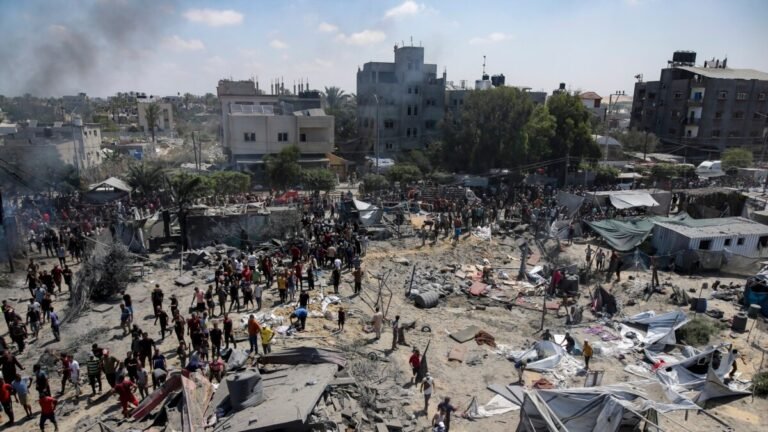
Thursday 16, Jan 2025 {HMC} Israeli forces have killed at least 82 people in Gaza, medical sources told Al Jazeera, including at least 30 people in Gaza City in the hours since Hamas and Israel announced they had reached a ceasefire agreement.
One attack on a house near the Engineers Union Building in Gaza City in the north of the Gaza Strip on Wednesday night killed at least 18 people, Al Jazeera Arabic’s correspondent reported.
The Palestinian Civil Defence also said it retrieved the bodies of 12 people from Gaza City’s Sheikh Radwan neighbourhood.
In central Gaza, five people were killed in an Israeli drone strike that targeted a gathering of people in the Karaj area in the Bureij camp.
The death toll, which was counted from dawn on Wednesday, continued to rise as Palestinians returned to shelter in their tents after briefly celebrating news of a ceasefire deal that was reached between Israel and Hamas on Wednesday evening.
“For a couple of hours, people turned this whole area into a stage of celebration, something we are not used to seeing here as this area used to be a stage for funerals for the victims of the war and a space filled with agony and sadness,” said Al Jazeera’s Hani Mahmoud, reporting from Deir el-Balah in central Gaza.
But the ceasefire does not start until Sunday and people in Gaza fear worse is to come before the Israeli bombing stops, Mahmoud said.
“We are expecting a surge in attacks by drones and heavy artillery, and that’s what caused people to end the celebrations after two hours,” he said.
Al Jazeera’s Anas al-Sharif, reporting from Gaza City, said intense Israeli attacks there had “extinguished” the joy people felt at the initial announcement of the ceasefire.
“Just hours ago there was an atmosphere of joy and relief among residents here when the ceasefire announcement was made from Doha, stating that it would take effect in the coming days,” al-Sharif said.
“However, immediately after the announcement, Israeli warplanes extinguished that joy for the people – striking hospitals, shelters and homes with direct air strikes.”
Both Israel and Hamas have publicly acknowledged a ceasefire and captive exchange deal has been reached, although Israel has said some final details are still to be hashed out before the agreement is sealed.
In a statement, the office of Israeli Prime Minister Benjamin Netanyahu said he had spoken with Israel’s negotiating team in Doha at dawn on Thursday, who briefed him on disagreements with Hamas related to which Palestinian prisoners will be released in exchange for captives during the first phase of the deal.
As of January 1, 2025 there are at least 10, 221 Palestinian prisoners in Israeli jails, excluding the unknown numbers of Palestinians taken from Gaza and detained by the military, including Dr Hussam Abu Safia, the director of north Gaza’s Kamal Adwan Hospital, which was destroyed by Israeli forces.
Izzat al-Risheq, a member of Hamas’s political bureau, earlier said the ceasefire deal met all of the Palestinian group’s conditions including the full withdrawal of Israeli forces from Gaza, the return of displaced people to their homes and a permanent end to war in the enclave.
The exact time the ceasefire is due to start on Sunday is not yet known, though the entire process will be implemented in three phases.
Source Al Jazeera
At least 70 Palestinians killed in Gaza airstrikes as Israeli cabinet delays meeting to agree ceasefire.
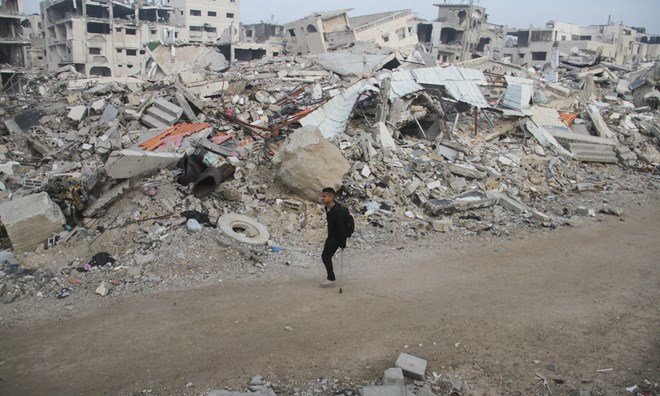
Thursday 16, Jan 2025 {HMC} At least 70 Palestinians killed by Israeli strikes amid ceasefire deal delay
Israel airstrikes killed at least 70 more people in Gaza overnight and during Thursday, Reuters reports residents and authorities in the territory said, hours after a prospective ceasefire and hostage release deal was announced to bring an end to 15 months of war betweenIsrael and Hamas which has devastated the Gaza Strip and triggered a humanitarian crisis.
The deal is yet to be formally agreed, with Israel’s security cabinet delaying a planned Thursday morning meeting.
Prime minister Benjamin Netanyahu’s office said “Hamas reneges on parts of the agreement reached with the mediators and Israel in an effort to extort last minute concessions.
The Israeli cabinet will not convene until the mediators notify Israel that Hamas has accepted all elements of the agreement.”
Hamas has said it is committed to the ceasefire agreement announced by mediators on Wednesday, with Reuters citing senior group official Izzat el-Reshiq making the comment on Thursday morning.
Protests were staged on Thursday morning in Jerusalem opposing the deal, with the families of Israeli soldiers killed during the conflict placing mock coffins draped in Israeli flags in the street.
With 98 Israeli hostages remaining in Gaza, phase one of the deal entails the release of 33 of them, including all women, children and men over 50.
An earlier report by Israel’s military of a falling projectile at a kibbutz close to the border with the Gaza Strip was later determined to be a false identification.
It has not been possible for journalists to independently verify the casualty figures being issued during the conflict.
The Times of Israel has published what it claims is the text of the agreement between Israel and Hamas.
It states that the agreement consists of Appendix I, which it says supplements the previously published proposed agreement framework of 27 May 2024.
The Times of Israel adds that:
Several additional appendixes that include maps and other details outlining the parameters of the deal were not included in copy of the text obtained by The Times of Israel, whose authenticity was confirmed by an Arab diplomat familiar with the negotiations.
The Guardian has not independently seen or verified the document. The Times of Israel report can be read here.
It sets out in eight sections where Israeli troops will withdraw to, the ratio of Palestinian detainees to be released per different category of hostage, the exit of wounded people through and the operation of the Rafah crossing, Israel withdrawing from the Philadelphi corridor within 50 days, and the provision of further humanitarian aid to the Gaza Strip.
SOURCE 
The would-be African nation in love with Donald Trump
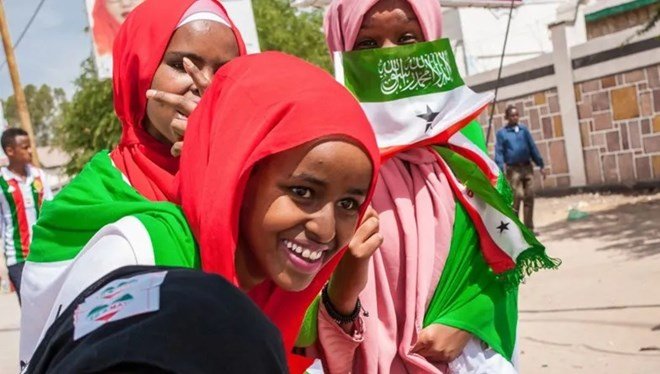
Thueday 16-jun 2025 {HMC} Many people in Somaliland are convinced that the United States, under the incoming presidency of Donald Trump, is poised to become the world’s first country to recognise the self-declared republic.
The territory declared independence 33 years ago after Somalia descended into civil war – and in many ways has functioned as a de facto nation-state ever since.
“Donald is our saviour. He is a wise and practical man. God bless America,” says university student Aisha Ismail, whose voice trembles with delight at the prospect.
She is speaking to me from Hargeisa, Somaliland’s capital – a city 850km (530 miles) north of Mogadishu, the seat of the Somali government.
For those in Mogadishu, Somaliland is an indivisible part of Somalia.
“I doubt Donald Trump knows what Somaliland is, never mind where it is,” says Abdi Mohamud, a data analyst in Mogadishu, whose voice starts to shake.
“I am spitting fire.”
He is so angry because Ms Ismail’s great expectation is not necessarily a pipe dream, at least in the long term.
Powerful and influential Republicans are pushing for the same thing, including Congressman Scott Perry who last month introduced a bill proposing formal US recognition for Somaliland.
It followed the publication in April 2023 of Project 2025, a roadmap for the second Trump presidency compiled by the prominent right-wing Heritage Foundation and more than 100 other conservative organisations
The document mentions only two African territories in its sub-Saharan Africa section – Somaliland and Djibouti – and proposes “the recognition of Somaliland statehood as a hedge against the US’s deteriorating position in Djibouti”.
However, the fact that sub-Saharan Africa takes up less than two pages in the 900-plus page plan suggests the continent is very low on the priority list.
Also, there is no guarantee the incoming administration will follow the blueprint, some of which Trump has already disavowed.
But one thing is clear. The US has already started to change its stance on Somaliland, moving away from its Mogadishu-focused approach, known as the “one-track” Somalia policy.
Somalia has cost the US dearly in financial, resource and human terms since the early 1990s when the bodies of 18 American servicemen were dragged through the streets of Mogadishu after US helicopters were shot down by Somali clan fighters.
The battle, known as “Black Hawk Down”, was America’s worst in terms of casualties since the Vietnam War.
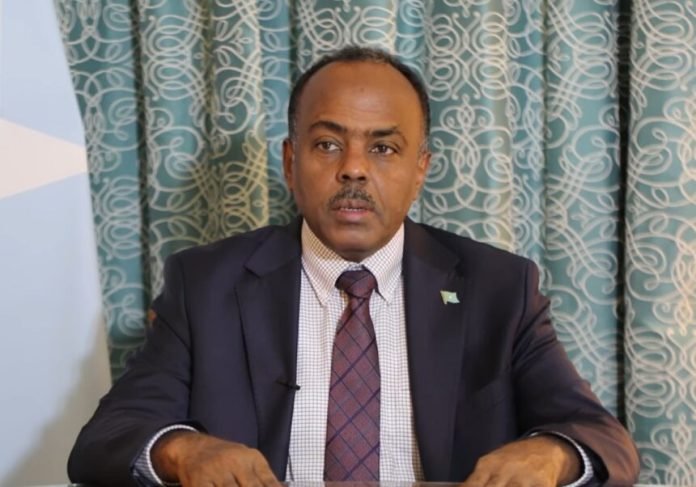
“Any move towards recognising Somaliland’s independence would not only contravene Somalia’s sovereignty but also destabilise the region by setting a dangerous precedent,” says Somali State Minister for Foreign Affairs Ali Mohamed Omar.
The African Union and other global powers believe territorial integrity is paramount. Recognising Somaliland could set off a chain reaction with separatists across the world demanding recognition for the territories they claim.
Omar also highlighted concerns about a possible repeat of the first Trump administration’s decision to withdraw from Somalia most American troops who have been fighting al-Shabab, regularly described as al-Qaeda’s most successful affiliate.
Under Joe Biden’s presidency about 500 US troops have been stationed in Somalia – carrying out special operations and training an elite Somali force, Danab, which means “Lightning” and has proved more effective than the regular Somali army at rooting out al-Shabab.
The Americans have an airbase at Baledogle, north-west of Mogadishu, and conduct regular airstrikes against Islamist insurgents.
“A withdrawal would create a significant security vacuum, emboldening terrorist groups and threatening the stability of not only Somalia but the broader Horn of Africa,” Omar warned.
The minister’s remarks are in a similar vein but more measured than Somalia’s response to a deal between Somaliland and Ethiopia whereby recognition would reportedly be granted in exchange for sea access.
I received late-night calls from Somalis who said they were unable to sleep over the controversial proposal.
Somalia’s then-Environment Minister Aden Ibrahim Aw Hirsi told me at the time: “You are always going on about ‘political bombshells’ in your reporting.
“People here are talking about a political earthquake. This is far more serious. It is a tsunami.”
Turkey has since mediated an end to the feud but the fact that Somalia recently signed a $600,000 (£492,000) a year deal with top Washington lobbying firm, the BGR Group, suggests it is worried about relations with the incoming Trump administration.
The US last month abstained from voting on a UN Security Council resolution to fund the latest incarnation of the African Union intervention force in Somalia.
A key architect of Republican Africa thinking, especially when it comes to Somali issues, is Joshua Meservey, who recently moved from the Heritage Foundation to the right-leaning Hudson Institute.
“The case for Somaliland in US terms is very compelling,” he argues. “I think the question of recognition will definitely be discussed, although the guiding north star is what is best for US national interests in practical terms.”
Senior Africa officials under Trump mark one, including the former Assistant Secretary of State for African Affairs, Tibor Nagy, and Africa envoy, Peter Pham, are energetic supporters of Somaliland’s independence.
Like many American Republicans, Somaliland’s Foreign Minister Abdirahman Dahir Adan sees the relationship in transactional terms.
“If the deal is good for us, we will take it. If the US wants a military base here we will give it to them.”
Recognition sympathisers argue that Somaliland is located at the site of several converging US interests – economic, military and strategic.
Mr Meservey adds that the territory should be “rewarded” for adhering to democratic principles, not relying on foreign aid and having a small government.
Its long coastline runs along one of the world’s busiest shipping lanes.
Yemen’s Iranian-backed Houthi rebels may have replaced Somali pirates as the main disruptor of traffic in the area but the attacks remain a major threat to global trade and draw the region closer to the war in the Middle East.
The scramble for foreign bases along the Horn of Africa’s coast is of concern to the US, which established its largest military facility on the continent in Djibouti in 2002.
Russia has its eyes on Port Sudan; the United Arab Emirates (UAE) used Eritrea’s Assab to fight the Houthis and Djibouti is chock-a-block with foreign forces, including the Chinese, who not only have a well-placed military facility but also run the huge port.
Turkey’s largest base on foreign soil stretches along Somalia’s coastline just south of Mogadishu.
Dealing with a rising China is a top Trump priority.
The US has accused the Chinese of interfering with its activities in Djibouti by shining lasers into the eyes of its air force pilots and is keen to move elsewhere.
It also wants to disrupt China’s Belt and Road Initiative, which is taking over much of Africa.
The Red Sea port of Berbera, whether you see it as part of Somaliland or Somalia, has much to offer as an alternative.
China is not there; indeed it is outraged that Taiwan in 2020 established diplomatic relations with the breakaway republic.
The UAE, a key US ally, runs the recently expanded port and hopes it will rival Djibouti.
During the Biden administration, top American officials, including the chief of US Africa Command (Africom), conducted site visits of Berbera, which has a 4km runway ironically constructed by the Soviet Union during the Cold War.
This was later identified by the US as an emergency landing site for space shuttles – interesting given Trump’s ally Elon Musk’s obsession with space.
In 2022, the US National Defence Authorisation Act was amended to include Somaliland, enhancing security co-operation and potentially paving the way for stronger diplomatic and economic ties.

Pro-recognition Republicans have presented Somaliland as a good business case, hoping to appeal to Trump’s deal-making approach. Project 2025 used the term “hedge”.
A US-based Somaliland diplomat said: “It depends how they sell it to him. They have to make it attractive; they have to seduce him.”
Whether he means it or not, bringing up the explosive issue of recognition would likely suit Trump the disruptor.
It would certainly bring him attention and he could boast about being first.
It would also enrage Somalia, a country he included in his reported 2018 list of “shithole” nations and a place to which he wants to deport undocumented Somalis, failed asylum seekers and criminals.
There is already talk in Somaliland that the territory will be used as a “dumping ground” for such people in exchange for US recognition.
US academic Ken Menkhaus, who has followed Somali issues for decades, brings much-needed balance to the debate.
“It is very likely we will see significant shifts in US policy towards Somaliland and Somalia,” he says.
“Mr Trump has a deep suspicion of foreign aid, is sceptical about state-building and is a neo-isolationist.”
The Horn of Africa needs to be braced for change.
SOURCE BBC