


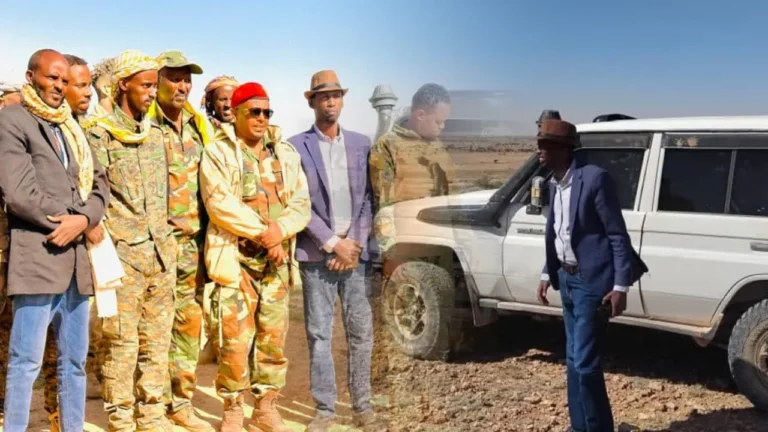
Arbaco 04 Dec 2024 {HMC} Masuul ka tirsan Soomaaliland oo isku dhiibay Maamulka SSC Khaatumo.
Somalia ‘kills 300 AS terrorists’ in two months

Wednesday 4,Dec,2024 {HMC} Somali security forces have killed at least 304 AS terrorists in an operation against the al-Qaeda-affiliated group in the last two months, according to officials on Tuesday.
The operations, mainly conducted by the National Intelligence and Security Agency (NISA), backed by the army and international security partners, were in the south and central provinces.
The spy agency said it conducted an operation with the army in the vicinity of the Yaaqle area of the Middle Shabelle region that targeted members of the terror group, killing at least 27 terrorists and wounding more than 30.
“This operation, which is one of the cleanings operations of the terrorists is still going on in that area, and it is targeting the remnants of the Khawarij members who have not given up on harassing the Somali people,” it said in a statement, which referred to AS .
Villages liberated
The agency said the civilians are being informed to stay away from places where the group operates in the area.
More than 100 AS terrorists were killed and many wounded in similar operations in Bida Isse and Geriile under the newly liberated town of Eeldheer in Galmudud in early October, according to the Somali defence chief.
Over 95 terrorists were killed and seven villages were liberated in the same month in operations in Middle Shabelle, Galgadud and the north-central province of Mudug.
More than 59 terrorists and four soldiers were killed in two military operations in Somalia in October and 50 al-Shabaab were killed between November 12 and December 3, totalling 304 terrorists that were killed.
Plagued by insecurity
Government soldiers, militias and international partners have been conducting regular operations against the militant group since 2022.
Somalia has been plagued by insecurity for years, with the main threats emanating from al-Shabaab and the Daesh/ISIS terror groups.
Since 2007, AS has been fighting the Somali government and the African Union Transition Mission in Somalia (ATMIS) – a multidimensional mission authorised by the African Union and mandated by the UN Security Council.
The terror group has stepped up attacks since Somali President Hassan Sheikh Mohamud declared an “all-out war” on the group.
{DAAWO MUQAALKA} Wareeysi Xàalada siyasadeed Dalka iyo xildhibaàn Dàahir Amiin Jeesow
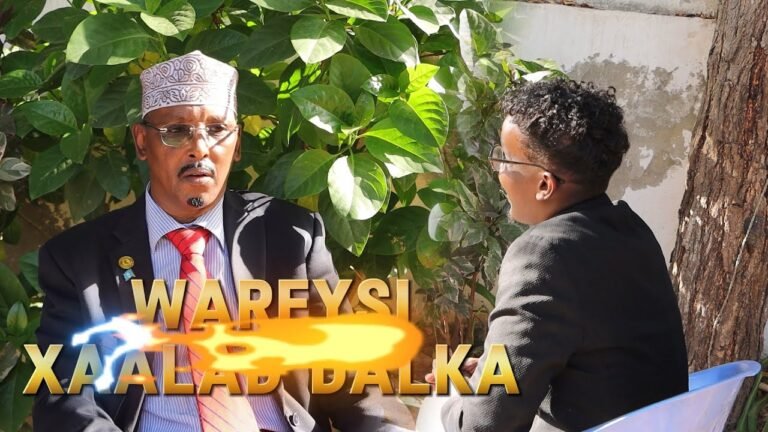
Arbaco 04 Dec 2024 {HMC} Wareeysi Xàalada siyasadeed Dalka iyo xildhibaàn Dàahir Amiin Jeesow
HOOS KA DAAWO MUQAALKA WARBIXINTA
{DAAWO MUQAALKA} CXS Wexeey Badalayaan Xeryihii ay ka Baxen ATMS.
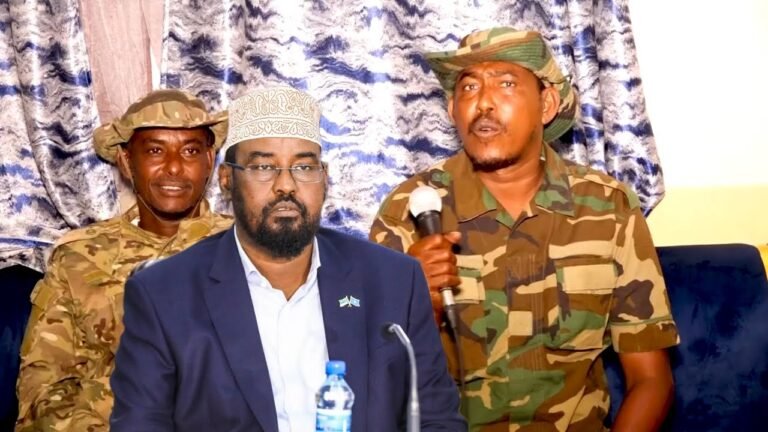
Arbaco 04 Dec 2024 {HMC} CXS Wexeey Badalayaan Xeryihii ay ka Baxen ATMS.
HOOS KA DAAWO MUQAALKA WARBIXINTA
Mucaaradka Soomaaaliya oo war culus kasoo saaray xaalada Dalka iyagoona ka horyimid…..
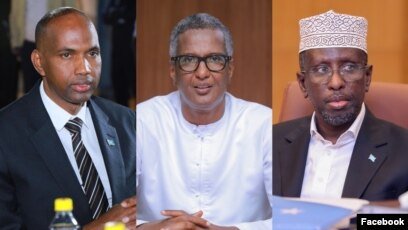
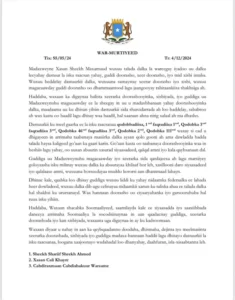
Arbaco 04, Dec 2024 {HMC} Warsaxaafadeed ay si wadajir ah usoo saareen madaxweynihii hore ee dowladdii KMG ahayd Sheekh Shariif Sheekh Axmed, Ra’iisul wasaarihii hore ee dalka, Xasan Cali Khayre iyo xildhibaan Cabdiraxmaan Cabdirashakuur Warsame ayaa waxaa looga hadlay xaaladda siyaasadeed ee dalka iyo doorashooyinka.
Siyaasiyiintan oo hadda mucaarad ah ayaa si weyn uga horyimid qorshaha madaxweyne Xasan Sheekh ee ku aadan qabashada doorashooyinka qof iyo codka ah ee ay haatan ku howlan tahay dowladda federaalka, iyaga oo mar kale ku celiyay go’aankooda diidmada ah.
Shariif, Khayre iyo Warsame ayaa sidoo kale madaxweynaha ku eedeeyay inuu beddalay dastuurkii heshiiska lagu ahaa, isla markaana uu sameystay xeerar doorasho oo u gaar ah.
Waxaa kale oo ay tilmaameen in guddiga doorashada la magacaabay lagu saleeyay rabitaanka shaqsiga ah ee madaxweynaha, sida ay hadalka u dhigeen.
“Madaxweyne Xasan wuxuu talada dalka la wareegay iyadoo uu dalku leeyahay dastuur la isku raacsan yahay, xeerka doorasho iyo xisbiyada, iyo guddi doorasho. Wuxuu beddelay dastuurkii dalka, wuxuu samaystay xeerar doorasho iyo kuwo xisbi, wuxuu magacawday guddi doorasho oo dhammaantood lagu jaangooyay rabitaankiisa shakhsiga ah.
Sidoo kale waxa ay qaadaceen gebi ahaan xeerarka doorashooyinka iyo guddiga la magacaabay ee uu ansixiyay baarlamaanka, iyaga oo go’aankooda la wadaagay beesha caalamka.
“Haddaba waxaan shacabka Soomaaliyeed, saamileyda kale ee siyaasaddda iyo saaxibada daneeya arrimaha Soomaaliya waxaan la socodsiineynaa in aan qaadacnay guddira, xeerarka doorashada iyo kan xisbiyada, waxaana uga digeynaa inay ku kadsoomaan” ayaa mar kale lagu yiri warsaxaafadeedka.
Arrintan ayaa kusoo aadeyso, iyada haatan ay guddoon cusub doorteen xubnaha guddiga doorashooyinka madaxa banaan oo dhawaan ay meel-mariyeen labada Gole.
SSC Khaatumo oo sheegtay in aysan wadahal la gali doonin maamulka Soomaaliland.
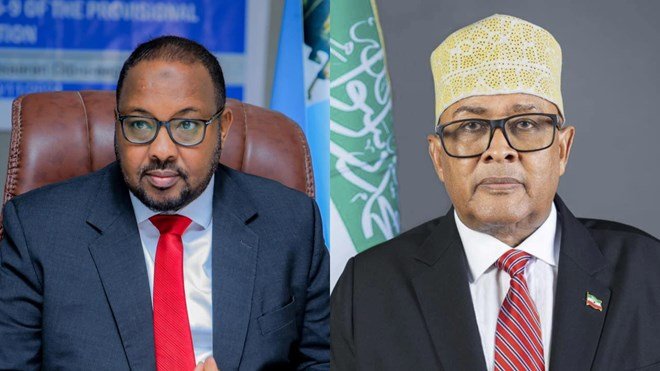
Arbaco 04, Dec 2024 {HMC} Maamulka SSC-Khaatumo ayaa si xooggan u beeniyey wararka ay saxaafadda faafiyeen, oo ku saabsanaa in hoggaamiyaha SSC-Khaatumo, Cabdiqaadir Firdhiye uu khadka taleefanka kula xidhiidhey madaxweynaha cusub ee Somaliland, Cabdiraxmaan Cirro si ay uga wada hadlaan xiisadda ka taagan magaalada Ceerigaabo.
Maamulka SSC-Khaatumo ayaa sheegay in warkan ay faafiyeen dad ay ugu yeereen cadawgooda, kuwaas oo doonaya inay khal-khal gelin ku sameeyaan nabadda iyo xasilloonida gobolka.
Maamulka SSC-Khaatumo wuxuu caddeeyey in arrintan ay ku wargaliyeen laamaha sharciga, si baaritaan iyo caddaalad loo marsiiyo cid kasta oo ku lug leh faafinta wararka been abuurka ah iyo dacaayadda lidka ku ah jiritaanka maamulka SSC-Khaatumo.
SSC-Khaatumo waxay sidoo kale caddeeyeen in aysan jiri doonin wax xiriir ah, toos ah ama dadban, oo dhex maraan maamulka SSC-Khaatumo iyo Somaliland, oo ay ku tilmaameen mid dhibaatooyin dagaal u geystay shacabka reer SSC-Khaatumo.
Hoggaamiyaha SSC-Khaatumo ayaa sheegay in aanay jirin wax suurtagal ah oo wadahadal ama gorgortan oo looga gali karo qayb kamid ah dhulka SSC-Khaatumo.
Why did South Korea’s leader declare martial law – and what now.?
Wednesday 4,Dec,2024 {HMC} South Korea’s president shocked the country on Tuesday night when, out of the blue, he declared martial law in the Asian democracy for the first time in nearly 50 years. Yoon Suk Yeol’s drastic decision – announced in a late-night TV broadcast – mentioned “anti-state forces” and the threat from North Korea.
But it soon became clear that it not been spurred by external threats but by his own desperate political troubles. Still, it prompted thousands of people to gather at parliament in protest, while opposition lawmakers rushed there to push through an emergency vote to remove the measure.
Defeated, Yoon emerged a few hours later to accept the parliament’s vote and lift the martial law order. Now, lawmakers will vote on whether to impeach him over what the country’s main opposition has called his “insurrectionary behaviour”.
Yoon has acted like a president under siege, observers say.In his address on Tuesday night, he recounted the political opposition’s attempts to undermine his government before saying he was declaring martial law to “crush anti-state forces that have been wreaking havoc”.
His decree temporarily put the military in charge – with helmeted troops and police deployed to the National Assembly parliament building where helicopters were seen landing on the roof.
Local media also showed scenes of masked, gun-toting troops entering the building while staffers tried to hold them off with fire extinguishers.
Around 23:00 local time on Tuesday (14:00 GMT), the military issued a decree banning protests and activity by parliament and political groups, and putting the media under government control.
But South Korean politicians immediately called Yoon’s declaration illegal and unconstitutional. The leader of his own party, the conservative People’s Power Party, also called Yoon’s act “the wrong move”.
Meanwhile, the leader of the country’s largest opposition party, Lee Jae-myung of the liberal Democratic Party, called on his MPs to converge on parliament to vote down the declaration. He also called on ordinary South Koreans to show up at parliament in protest.
“Tanks, armoured personnel carriers and soldiers with guns and knives will rule the country… My fellow citizens, please come to the National Assembly.”
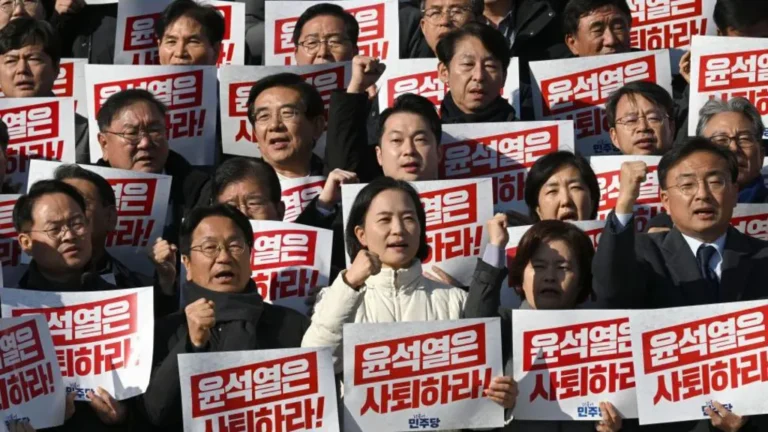
Thousands heeded the call, rushing to gather outside the now heavily guarded parliament. Protesters chanted: “No martial law!” and “strike down dictatorship”.
Local media broadcasting from the site showed some scuffles between protesters and police at the gates. But despite the military presence, tensions did not escalate into violence And lawmakers were also able to make their way around the barricades – even climbing fences to make it to the voting chamber.
Shortly after 01:00 on Wednesday, South Korea’s parliament, with 190 of its 300 members present, voted down the measure. President Yoon’s declaration of martial law was ruled invalid. Reuters South Korean President Yoon Suk YeolReuters
South Korean President Yoon Suk Yeol declaring martial law in a national address on Tuesday night
Martial law is temporary rule by military authorities in a time of emergency, when civil authorities are deemed unable to function. The last time it was declared in South Korea was in 1979, when the country’s then long-term military dictator Park Chung-hee was assassinated during a coup.
It has never been invoked since the country became a parliamentary democracy in 1987. But on Tuesday, Yoon pulled that trigger, saying in a national address he was trying to save South Korea from “anti-state forces”.
Yoon, who has taken a noticeably more hardline stance on North Korea than his predecessors, described the political opposition as North Korea sympathisers – without providing evidence. Under martial law, extra powers are given to the military and there is often a suspension of civil rights for citizens and rule of law standards and protections.
Despite the military announcing restrictions on political activity and the media, protesters and politicians defied those orders. And there was no sign of the government seizing control of free media – Yonhap, the national broadcaster, and other outlets kept reporting as normal.
Reuters Aerial view shows lawmakers seated in voting chamber at National Assembly voting to block President Yoon’s call for martial lawReuters
South Korea’s parliament met shortly after Yoon’s declaration to block the martial law measure
Yoon was voted into office in May 2022 as a hardline conservative, but has been a lame duck president since April when the opposition won a landslide in the country’s general election.
His government since then has not been able to pass the bills they wanted and have been reduced instead to vetoing bills passed by the liberal opposition.
He has also seen a fall in approval ratings – hovering around lows of 17% – as he has been mired in several corruption scandals this year, including one involving the First Lady accepting a Dior bag, and another around alleged stock manipulation.
Just last month he was forced to issue an apology on national TV, saying he was setting up an office overseeing the First Lady’s duties. But he rejected a wider investigation, which opposition parties had been calling for.
Then this week, the opposition proposed slashing a major government budget bill – which cannot be vetoed. At the same time, the opposition also moved to impeach cabinet members and several top prosecutors- including the head of the government’s audit agency – for failing to investigate the First Lady.
Reuters A crowd of protesters outside parliament chant ‘No Martial law’ and hold up the South Korean flag.Reuters
Many citizens turned out outside parliament on Tuesday night to protest against the sudden martial law declaration. Mass protests are a frequent and common political event in the country.
Reuters The leader of a key opposition party, the Democratic Party, stands with several other lawmakers while addressing media after parliament voted down martial law on Wednesday morningReuters The leader of a key opposition party, the Democratic Party, addressing media after parliament voted down martial law on Wednesday morning
What now? The opposition Democratic Party has moved to impeach Yoon.
Parliament will have to vote by Saturday on whether to do this.
The impeachment process is relatively straightforward in South Korea. To succeed, it would require support from more than two-thirds of the 300-member National Assembly – at least 200 votes.
Once an impeachment is approved, a trial is held before the Constitutional Court – a nine-member council that oversees South Korea’s branches of government.
If six of the court’s members vote to sustain the impeachment, the president is removed from office. If this happens, it wouldn’t be the first time that a South Korean president has been impeached. In 2016, then-President Park Geun-hye was impeached after being accused of helping a friend commit extortion.
In 2004 another president, Roh Moo-hyun, was impeached and suspended for two months. The Constitutional Court later restored him to office. Yoon’s rash action stunned the country – which views itself as a thriving, modern democracy that has come far since its dictatorship days.
Many see this week’s events as the biggest challenge to that democratic society in decades. Experts contend it may be more damaging to South Korea’s reputation as a democracy than even the 6 January riots in the US.
“Yoon’s declaration of martial law appeared to be both legal overreach and a political miscalculation, unnecessarily risking South Korea’s economy and security,” one expert, Leif-Eric Easley at Ewha University in Seoul said.
“He sounded like a politician under siege, making a desperate move against mounting scandals, institutional obstruction and calls for impeachment, all of which are now likely to intensify.”
Source BBC NEWS
Over decades, U.S. promises of security ring hollow in African ears.
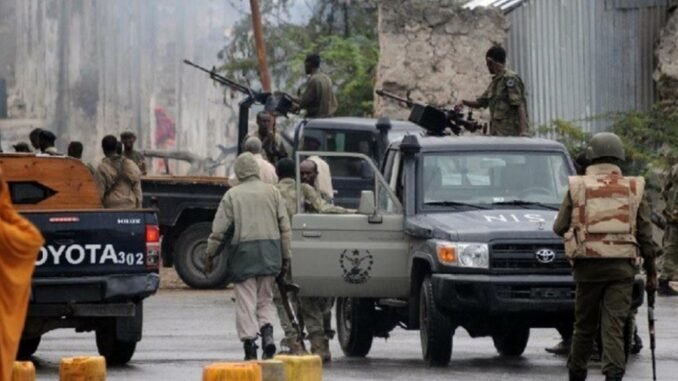
Wednesday 4,Dece, 2024 {HMC} Despite the release of U.S. Strategy Toward Sub-Saharan Africa in August 2022, the continent of about 1.4 billion people has reaped few tangible “security dividends” as promised. Instead, it witnessed a shift of the “global terrorism epicenter” into the Sahel region.
NAIROBI, Dec. 3 (Xinhua) — Rarely does a sitting president of the United States set foot on African soil. But it seems too late for Joe Biden to define an “all in on Africa’s future” legacy in his trip to Angola at the end of his presidency.
Despite the release of U.S. Strategy Toward Sub-Saharan Africa in August 2022, the continent of about 1.4 billion people has reaped few tangible “security dividends” as promised. Instead, it witnessed a shift of the “global terrorism epicenter” into the Sahel region.
The arid belt saw nearly 4,000 terrorism-related deaths in 2023, coinciding with an extensive wave of coups. What lies behind the spiral of terrorism as Washington’s self-proclaimed security aid expands? The question cannot be attributed to the current government alone.
Since the Sept. 11 attacks in 2001, successive U.S. administrations have prioritized short-term security measures, calculating the allocation of resources, and delivering them in their own interest. This approach has irritated Africans in their quest for long-awaited stability and prosperity.
“The most unfortunate development geopolitically is that the relationship between Africa and the United States or any other Western country has never changed over the past 20 years,” said Gibson Nyikadzino, a Zimbabwean journalist and international relations analyst.
“It is only based on exploitation, so there is a continuity of an unequal relationship,” he added.
IN NAME OF PEACE, PROSPERITY
The trauma of the Sept. 11 attacks alerted Washington to the potential for a porous Africa to turn into a new hotbed of terrorism.
But betraying the promise to develop an African continent that “lives in liberty, peace, and growing prosperity,” the United States opted for a military-first framework prioritizing short-term security over enduring stability.
Billions of U.S. dollars were poured into the transfer and sale of military equipment, the training of local forces, and the establishment of army bases, without addressing the underlying conditions that feed terrorism, such as Africa’s development deficit.
Former American University Professor David Vine estimated that the U.S. army had maintained a presence in at least 26 African countries by 2021, with Niger, Djibouti and Somalia serving as key hosts for large military facilities on the continent.
In Somalia alone, Oxford University Senior Research Fellow Eniola Anuoluwapo Soyemi calculated, more than 2.5 billion dollars were pumped into counterterrorism assistance between 2007 and 2020.
But the 2020 U.S. Lead Inspector General’s audit suggested that the United States failed to rein in the terrorist threat in Somalia, with al-Shabab remaining “adaptive, resilient and capable of attacking.”
In 2009, the Washington-initiated Trans-Sahara Counterterrorism Partnership pushed Burkina Faso — a West African country previously void of notable terrorist threats — into a toxic culture of military primacy.
As the U.S. security assistance soaring from 200,000 dollars per year to 18 million dollars in 2018, a sudden influx of training, weapons, and intelligence, local powers “see military solutions to any problem,” which resulted in Burkina Faso’s fall into one of the world’s worst-impacted regions by terrorism, former U.S. career diplomat Elizabeth Shackelford observed.
Washington’s move, in some experts’ eyes, resembles an act of adding more troops and armaments to the already escalating conflicts rather than seeking peaceful solutions.
“The huge resources dedicated to counterterrorism have been taken away from the enterprise of economic development, leaving many countries where the United States operates in dire need of development,” said Adhere Cavince, a Kenyan scholar on international relations. “Instead of focusing on investing in productive sectors that would get Africa’s youth away from terrorism, the United States is inadvertently fueling the vice that it aims to eradicate.”
As Cavince pointed out, young people who lack access to jobs often fall prey to recruitment by terrorist groups. “Similarly, the U.S. penchant for propagating regime change in Africa has created volatility that has only fueled the emergence of militant groups. This has resulted in ungovernable spaces in countries like Libya and Somalia, giving room for extremists and terrorist outfits to thrive.”
“The U.S. approach to security is creating turmoil in Africa. It is cutting economic activity and driving governance by guns,” Cavince said.
MILITARY-FIRST APPROACH BACKFIRES
According to Cavince, there are not enough international terrorist groups in Africa to pose a direct security threat to Washington, which makes “the overwhelming U.S. groud-based forces numbering over 6,500 and dozens of military bases therefore not warranted.”
Years of aid proved to no avail in helping African countries fend off terrorism, only to see the United States stamp its military marks across the continent.
The latest Global Terrorism Index report flagged a dramatic increase in terrorism-related deaths and a 1,266 percent jump in incidents in the Sahel from 2007 to 2023.
Boko Haram, a Nigeria-based militant group and a target of the U.S.-backed Multinational Joint Task Force, continued to thrive after turning violent in 2009.
Its insurgency not only resulted in tens of thousands of deaths, but also displaced nearly 2.4 million people in the Lake Chad Basin region. According to the United Nations High Commissioner for Refugees, some 12.5 million people remain in need of humanitarian assistance in the region, with 5.3 million people suffering food insecurity.
U.S. forces’ blemish on the human rights record has also come to light. For example, it launched about 300 drone strikes and commando raids in Somalia without apologizing to the families of the civilians killed, according to reports by U.S. news outlet The Intercept.
The rise of the “Coup Belt” in West and Central Africa added another layer of uncertainty, shaking the confidence of U.S. assistance boosters.
Following the 2020 military takeover in Mali, at least 10 coup attempts have been recorded in the region, with several successful in seizing power.
“Since 2020, Africa has seen more political unrest, violent extremism, and democratic reversals than any other region in the world,” said Emmanuel Yenshu Vubo, a professor of sociology at Cameroon’s University of Buea.
“U.S. engagement with Africa has long been de-prioritized, with successive administrations devoting negligible attention and resources to resolving conflicts and countering terrorism,” he added.
SHUT BARN DOOR AFTER HORSE HAS BOLTED
Compared to Asia and the Middle East, Africa has long been treated as a “lower-priority” pawn or a buffer zone for national security on Washington’s geopolitical chessboard.
Frustrated by Washington’s window-dressing assistance, several African countries, such as Niger and Chad, kicked U.S. forces out of the door. Protesters across the continent flooded the streets, chanting “U.S. Army: You leave, you move, you vanish.”
“Behind increasing disaffection of African countries is the view that America is perpetuating hegemonic relations with Africa, the kind that reeks of neocolonial tendencies, where the United States is all-powerful with military bases all around yet cannot work jointly with hosting governments to deliver sustainable development and security to the local population,” said Cavince.
Africa is yearning for transformative initiatives to boost investment, trade, infrastructure and technology development, the scholar explained, noting that many countries regard their partnership with Washington as “lost decades in terms of development.”
As self-inflicted great power competition exacerbates its fear of losing influence, Washington appears eager to rebuild ties with its African partners.
Last year, the United States dispatched high-level officials, including Vice President Kamala Harris and Assistant Secretary of State for African Affairs Molly Phee, to visit Africa in a bid to bridge the trust deficit.
In June, Chairman of the Joint Chiefs of Staff Charles Quinton Brown Jr. visited Botswana for an annual conference featuring U.S. and African military commanders, which marked the first year of Washington co-hosting the conference with an African country.
When Biden landed in the Angolan capital of Luanda on Monday, the 82-year-old became the first U.S. president to visit sub-Saharan Africa in nearly a decade.
However, Cavince held a cautious view of Biden’s “rushed attempt to fulfill a promise to visit Africa made over two years ago.”
“Angola is only a platform for him to project U.S. global economic visibility, rather than a desire to drive inclusive development in a manner that can safeguard the security and safety of ordinary people,” he said.
“Africa is the youngest continent by population and is home to huge deposits of natural resources. Any partner that ignores Africa risks its own future,” the scholar warned, calling on Washington to ditch a zero-sum mindset and engage Africa constructively.
Biden visits Angola on first trip to Africa as president.
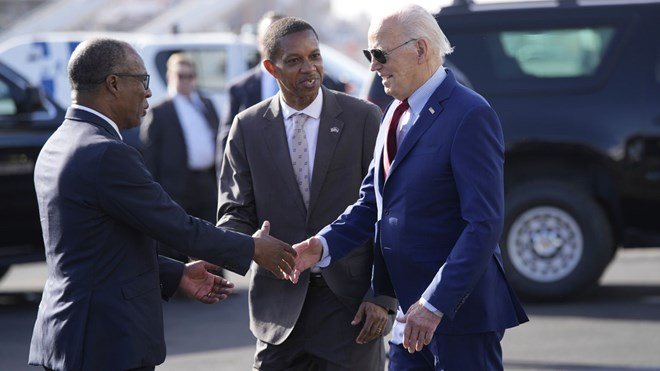
Wednesday 4,Dec,2024 {HMC} U.S. President Joe Biden received a warm welcome at Angola’s pink-hued Presidential Palace Tuesday as he made his first and almost certainly final visit to the African continent as president.
After a red-carpet promenade, renditions of national anthems by a military band, an inspection of troops and a 21-gun salute, he and Angolan President Joao Lourenco, both flanked by diplomats, got down to work.
“I’m very proud to be the first American president to visit Angola, and I’m deeply proud of everything we have done together to transform our partnership thus far,” Biden told Lourenco. “There is so much ahead of us, so much we can do.
His administration’s top Africa adviser told VOA that Biden sees Angola as “exhibit A” of a collaborative relationship with Washington.
His administration’s top Africa adviser told VOA that Biden sees Angola as “exhibit A” of a collaborative relationship with Washington.
“We, the United States, are working with Angola on a few really important things,” said Frances Brown, senior director for African Affairs at the National Security Council, speaking exclusively to VOA. “One is bolstering peace and security in the eastern Democratic Republic of Congo. Another is growing economic opportunities in the region. A third is technological and scientific cooperation.”
Unmentioned by Biden — publicly at least — was Angola’s poor human rights record. Rights group Amnesty International attempted to summarize the situation.
“Amnesty has repeatedly documented excessive and lethal force to disrupt peaceful demonstrations,” Kate Hixon, advocacy director for Africa at Amnesty International USA, told VOA via Zoom. “Not only is lethal force used in these demonstrations, but the victims’ families do not have recourse to access to justice. We’ve also seen several repressive laws passed since 2020. Since 2020 it’s been illegal to criticize the president. More recently, this year, we’ve seen two laws approved that further threaten the rights to freedom of expression, freedom of assembly and the media.”
Brown told VOA that the president always raises concerns about human rights, privately.
“He never shies away from talking about democracy and human rights issues with counterparts,” she told VOA. “And I think that’s pretty consistent with the way he’s been throughout his long, long career in public service.”
Angolan opposition groups told local media that Biden missed a “great opportunity” to listen to civil society groups about their concerns.
“The Lobito rail corridor … is the only concern of Biden’s visit to Angola,” said Ernesto Mulato of the opposition UNITA party.
Biden also took time to address the deep, painful blood ties between Angola and the Americas, after a short tour of the nation’s slavery museum. Angola was once the top source of slaves to the New World.
Biden, speaking at sunset in front of a glittering bay that opened before the white-washed museum, described slavery as his nation’s “original sin, one that haunted America and cast a long shadow ever since.”
But he painted an optimistic picture — and as he spoke, skies that had been clouded and stormy all day opened to reveal a rainbow.
“Although I don’t know exactly what the future will hold, I know the future runs through Angola, through Africa,” he said. “I mean it sincerely. I’m not kidding.”
Biden is set Wednesday to visit the port city of Lobito, where a new, U.S.-financed rail line brings raw materials from Africa’s interior to this bustling port.
Source VOA NEWS
Somaliland president-elect Irro pledges review of Ethiopia deal despite Somalia condemnation
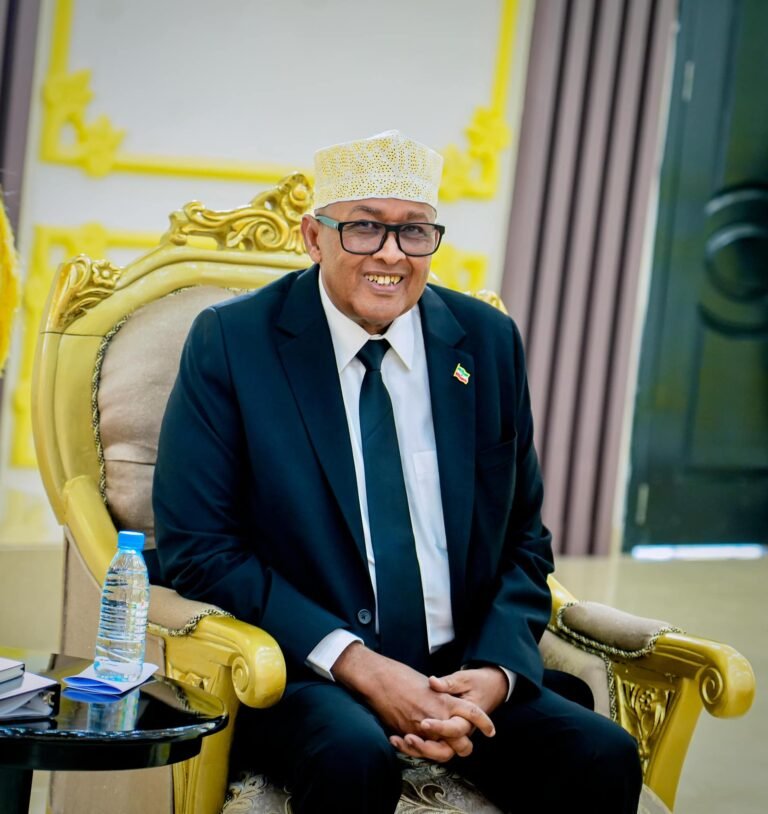
Wednesday 4,Dec,2024 {HMC} Somaliland’s President-elect Abdirahman Mohamed Abdullahi Irro has reportedly thrown his weight behind an ambitious agreement between Somaliland and Ethiopia.
Irro, who won a historic 64% of the vote in Somaliland’s November 13 election, has pledged to review the deal upon taking office on December 13.
Signed on January 1, 2024, the MoU grants Ethiopia a 50-year lease on a 20-kilometre stretch of Somaliland’s coastline in exchange for Ethiopian support for Somaliland’s bid for international recognition for its self-declared independence. However, the deal remains stalled nearly a year later, reflecting the political and logistical challenges of implementing such a high-stakes arrangement.
According to reports from Africa Confidential, Irro expressed unwavering support for the understanding, describing it as a critical step toward Somaliland’s decades-long quest for international recognition.
Irro, however, admitted he had yet to examine the agreement in detail, promising to do so upon taking office. In a recent meeting with outgoing President Muse Bihi, Irro discussed the contentious deal, signalling his intent to prioritize it during the early days of his administration.
The agreement has drawn sharp rebuke from Somalia, which considers it a violation of its territorial sovereignty. Mogadishu does not recognize Somaliland’s 1991 declaration of independence and has called the deal “a dangerous precedent.”
At the United Nations General Assembly in September, Somali Prime Minister Hamza Abdi Barre alleged that Ethiopia’s actions could embolden secessionist movements and destabilize the region, further complicating Somalia’s struggle to maintain unity.
The following month, Somalia expelled Ethiopian diplomat Ali Mohamed Adan, accusing him of engaging in activities incompatible with his diplomatic role. The Somali Ministry of Foreign Affairs declared Adan, who served as Counselor II at the Ethiopian embassy in Mogadishu, persona non grata and ordered him to leave the country within 72 hours.
Somali Ambassador to Tanzania Ilyas Ali Hassan reiterated Mogadishu’s stance this week, declaring the agreement “a reckless violation of Somalia’s territorial integrity.” Backed by allies like Egypt and Eritrea, Somalia has rallied international support to pressure Ethiopia into abandoning the pact.
Djibouti, Ethiopia’s primary trade partner and regional transit hub, has also opposed the agreement, with many analysts believing it could undermine its economic position. Ethiopia currently relies on Djibouti for more than 90% of its maritime trade, making any shift toward Somaliland a potentially seismic development in regional logistics.
For Ethiopia, the deal offers an opportunity to diversify its trade routes and reduce reliance on Djibouti’s ports.
Despite previously making bold statements about securing Red Sea port access by any means necessary, including military power, earlier this month, Ethiopia’s Prime Minister Abiy Ahmed said his country was committed to obtaining access to the Red Sea “through peaceful means.” Speaking to lawmakers in Ethiopia’s Parliament, Abiy reiterated his government’s “clear stance” on the issue, stressing that Ethiopia’s national interest lies in securing a maritime outlet.
Somaliland hopes the deal could mark a breakthrough in its long-standing diplomatic isolation. Yet, the agreement’s failure to progress beyond its initial signing highlights the complex web of domestic and international resistance.
Efforts at mediation have so far been inconclusive. Kenya, Uganda, and Turkey have attempted to broker talks, but entrenched positions on both sides have left the agreement unresolved. Ethiopia’s delay in implementing the deal is widely seen as a result of persistent lobbying and diplomatic pressure from Mogadishu.