


Arbaco 13 Nov 2024 {HMC} Dhageystayaal halkan waxa aan idiin kugu soo gudbi neynaa Warka Habenimo ee Warbaahinta Hiiraanweyn
Warka waxaa soo jeedinayo ::Abdirahman Muse
Farsamadii ::Mohamed Baryare Haamud

Arbaco 13 Nov 2024 {HMC} Dhageystayaal halkan waxa aan idiin kugu soo gudbi neynaa Warka Habenimo ee Warbaahinta Hiiraanweyn
Warka waxaa soo jeedinayo ::Abdirahman Muse
Farsamadii ::Mohamed Baryare Haamud
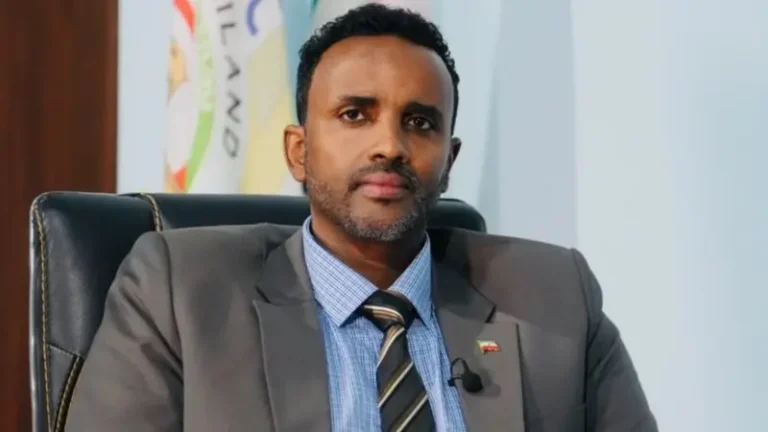
Arbaco 13, Nov 2024 {HMC} Guddoomiyaha Guddiga Doorashooyinka Somaliland Muuse Xasan Yuusuf oo goordhaweyd hadlay ayaa sheegay in sida uu qabo sharciga caawa bilaabaneyso.
“Sida sharciga uu dhigayo laga bilaabo caawa tirinta waxay ka bilaabanaysaa heer goobeed, sida u dhaqsiyaha badan marka ay dhammaato waxay u soo gudbeysaa heer degmo, tirinta waxa ay bilaabaneysaa marka ay goobta xiranto 6-da maqribnimo goobtaas haddii aysan jirin wax cilad ah oo ka yimid,” ayuu yiri
Waxa uu sheegay inay goobaha ay codbixinta iman karaan goobjoogeyaasha maxalliga ah iyo kuwa caalamiga ah.
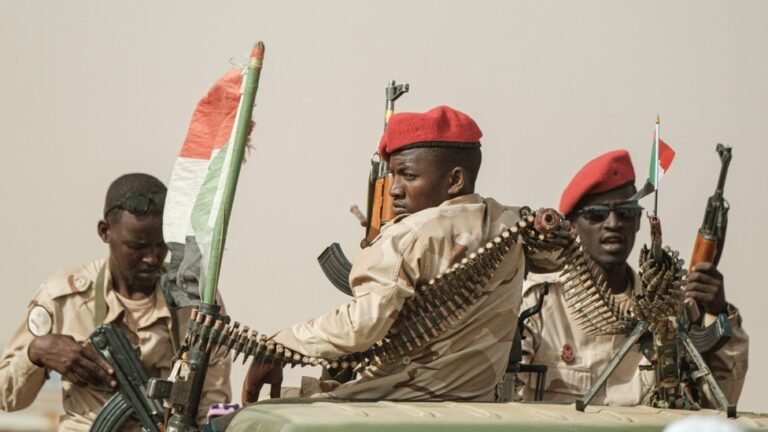
Arbaco 13, Nov 2024 {HMC} Mas’uuliyiinta Suudaan ayaa ku dhawaaqay in ay sii furnaan doonaan soohdimaha Adre ee ay la wadaagto dalka Chad si loogu oggolaado in la gaarsiiyo gargaarka bini’aadantinimo ee aadka loogu baahan yahay.
Isgoyska ayaa dib loo furay bishii Agoosto ka dib markii ay u ololeeyeen Qaramada Midoobay iyo hay’adaha gargaarka. Waxay ahayd in mar kale la xiro Jimcaha ina soo aaddan.
Ciidanka Sudan ayaa hore u xiray xadka Chad bishii Febaraayo ee sannadkan, iyaga oo ku eedeeyay in loo adeegsan jiray in hub looga soo daabulo Imaaraadka Carabta oo loo gudbiyo ciidamada RSF – Inkasta oo ay gaashaanka u daruureen eedeyntaasi. Isgoyska Adre ayaa ah wadada ugu dhaqsiyaha badan ee lagu gaaro meelaha macluushu ay halis gelisay ee gobolka Darfur.
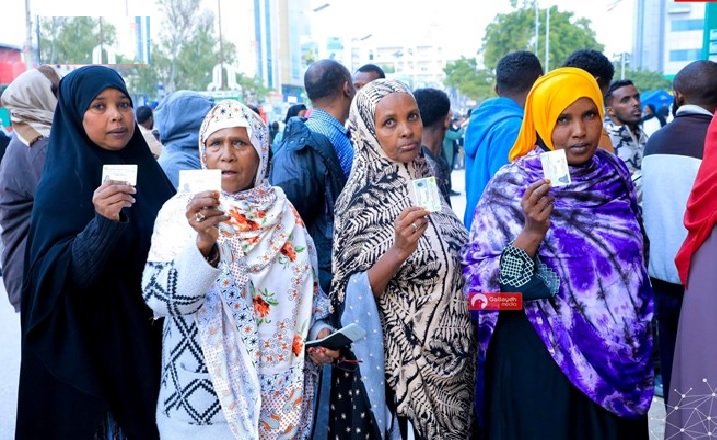
Wednesday 13, Nov, 2024 {HMC} Polling stations across Somalia’s breakaway region of Somaliland opened for a presidential election.
The incumbent, President Muse Bihi Abdi, of the ruling Kulmiye party and candidates Abdirahman Irro of the main opposition party Wadan and Faysal Ali Warabe, the leader of the opposition UCID party, are vying for the presidency.
Voters started arriving at the polling stations early in the morning to choose their president for the next five years. Polling started at 7 a.m. local time (0600 GMT) and will continue until 6 p.m on Wednesday.
The Somaliland National Electoral Commission said over 1 million registered voters are set to participate in the election.
The vote comes as regional tensions between Somalia and Ethiopia over Somaliland Red Sea access deal with Ethiopia still remain tense.
SOURCE 
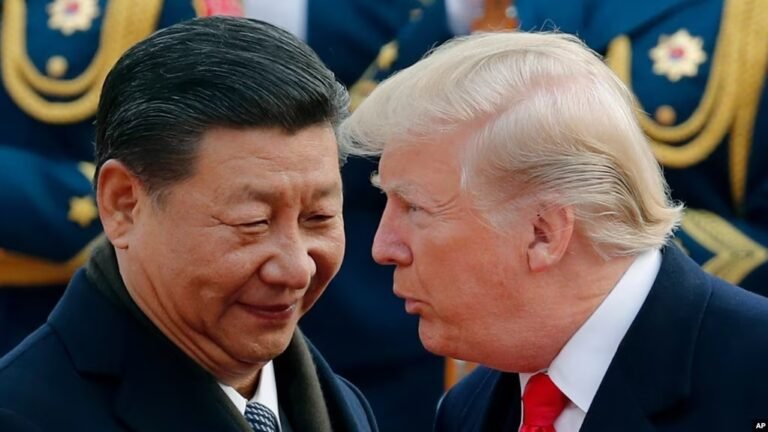
Wednesday 13, Nov, 2024 {HMC} President-elect Donald Trump talked tough on China during his campaign, vowing to impose higher and sweeping tariffs on imports from the Asian giant. Beijing will now also be closely watching the incoming administration’s movements further afield, in Africa, where U.S.-China rivalry is high.
Experts disagree on what a second Trump term will mean for Beijing’s ambitions on the continent, with some saying it could be a boon for China – Africa’s biggest trade partner – if the U.S. pursues an isolationist, “America First” agenda that mostly ignores the region.
But Tibor Nagy, who served as Trump’s Assistant Secretary of State for African Affairs from 2018 to 2021 has a different perspective. He said Trump grasped how powerful a player China had become on the continent.
“It was the Trump administration that was the first to kind of recognize the existential threat that China poses,” Nagy told VOA.
“We were on the front lines of that in Africa, and we saw what the Chinese were doing,” said Nagy, who also served as the U.S. ambassador to Guinea and Ethiopia during the administrations of presidents Bill Clinton and George W. Bush.
Nagy told VOA he does not think the incoming Republican administration will neglect Africa because it sees China as a threat to U.S interests there. He also said the continent is a major source of critical minerals attractive to both superpowers.
Nagy credits the first Trump administration with introducing policies on the continent intended to counter China’s influence.
“We had … the right focus because we made it about the youth. You know, our premise was that Africa is going to be undergoing a youth tsunami with the population doubling by 2050. And that more than anything, what the youth really wanted was jobs,” he said.
To this end, Nagy says, the first Trump administration set up Prosper Africa in 2018, an initiative designed to assist American companies doing business in Africa, and he expects the incoming administration will remain engaged there.
“Africa remains very much the front lines,” he said. “The United States is extremely concerned about our strategic minerals, and when a hostile power has a lock on strategic minerals, that’s really not very good when you need the strategic minerals for your top-end technology and for weapon systems.”
But Christian-Geraud Neema, Africa editor for the China-Global South Project, is skeptical and said a second term for Trump could be an opportunity for Beijing.
“Looking at his first term, Trump didn’t show much interest in Africa, which is likely to be the case still now,” he told VOA. “Only a few countries will matter — countries whose resources or position matter to the U.S. national security interests.”
“China will have room to maneuver and increase its influence in so many ways,” he added.
Yun Sun, director of the China program at the Stimson Center, echoed this.
“I doubt that Africa will be a featured priority for Trump,” she told VOA in an emailed response, adding that the United States’ absence on the continent “will boost the prominence of the Chinese position by its presence.”
Lobito corridor future
Views on how successfully President Joe Biden’s administration has engaged with Africa are also mixed. Many analysts said regardless of whether the Democrats or the Republicans are in office, the continent is usually an afterthought in U.S. foreign policy, which does not differ much from one administration to the next.
The current administration said it was “all in on Africa,” when Biden hosted dozens of heads of state at his first African Leaders Summit in 2022, an event seen as an attempt at reasserting U.S. influence in the face of a rising China.
Yet, “African leaders or the African Union were not consulted about the agenda of the 2022 US-Africa Leaders Summit. This was also the case with the US’s Africa strategy,” wrote Christopher Isike, the director of African Centre for the Study of the United States at the University of Pretoria, in an article co-signed by Samuel Oyewole, political science postdoctoral research fellow at the university
While Trump never traveled to Africa as president, top Biden administration officials did visit the continent, including the vice president. Biden is also expected to travel to Angola before the end of his term in December.
Under Biden, the U.S. agreed to develop the Lobito Corridor and Zambia-Lobito rail line, a project described by the State Department as “the most significant transport infrastructure that the United States has helped develop on the African continent in a generation.”
The rail line is seen as part of a transcontinental vision connecting the Atlantic and Indian oceans.
The undertaking is to be financed through a joint agreement calling for the U.S., African Development Bank, Africa Finance Corporation (AFC) and the European Union to support Angola, the Democratic Republic of Congo, and Zambia.
Observers see it as an attempt to compete with Chinese President Xi Jinping’s global infrastructure project the Belt and Road Initiative, which has built railways, ports and roads across Africa.
There is concern among some analysts that Trump could pull back from this.
“Existing bilateral and multilateral business partnerships … such as the Lobito Corridor … might wane significantly during the next Trump administration,” said Oluwole Ojewale, a Nigerian analyst with the Institute for Security Studies, in an email to VOA.
“When that happens China will gain significant mileage in areas where the US Government’s exit creates a vacuum on the continent,” he added.
But Nagy disagreed, saying the Lobito Corridor is the “kind of project which would have come right out of the Trump administration.”
Therefore, there’s likely to be continuity, he added, noting: “The deal is done. Again, I can’t speak for President Trump, or the people who are going to be coming in … but it’s logical.”
‘Other Friends’
When asked how African leaders will navigate the next Trump administration, Sun said they could play the U.S. and China against each other.
“Africa could highlight its role in the US-China great power competition in order to strengthen its position in the US grand strategy,” she said in an email to VOA.
But she is doubtful African leaders will take that route because it “will carry the effect of being forced to choose, which I doubt that Africa will want to do.”
However, at least one African politician has already alluded to this option.
Kenya’s Raila Odinga, who is in the running to take over as chair of the African Union Commission next year, was blunt in his assessment of how African governments would handle a more isolationist U.S. under Trump.
“If he does not want to work with Africa,” Odinga told Agence France-Presse last week, “Africa has got other friends.”
SOURCE VOA
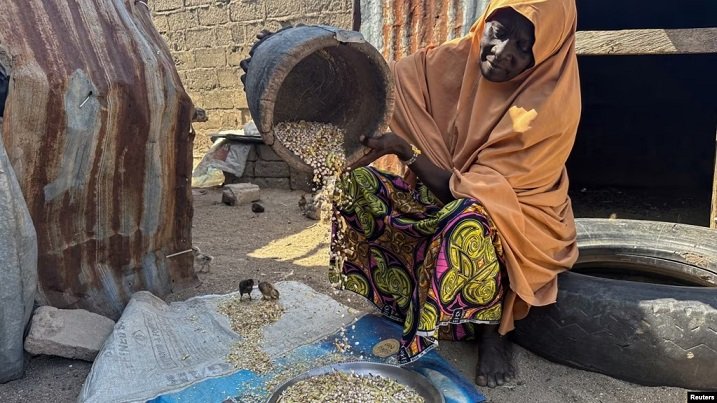
Wednesday 13, Nov, 2024 {HMC} Unrelenting price rises and a brutal insurgency had already made it hard for Nigerians in northeastern Borno State to feed their families. When a dam collapsed in September, flooding the state capital and surrounding farmland, many people ran out of options.
Now they queue for handouts in camps for those displaced by fighting between extremist Boko Haram rebels and the military. When those run out, they seek work on local farms where they risk being killed or raped by local bandits.
“I can’t even cry anymore. I’m too tired,” said Indo Usman, who tried to start again in the state capital Maiduguri, rearing animals for the two annual Muslim holy days, after years of repeatedly fleeing rebel attacks in rural Borno.
The flood washed that all away, driving her, her husband and their six children to a bare room at Gubio, an unfinished housing project about 96 km northwest of Maiduguri that has become a displacement camp.
Torrential rains and floods in 29 of Nigeria’s 36 states this year have destroyed more than 1.5 million hectares of cropland, affecting more than 9 million people, according to the Food and Agriculture Organization of the United Nations.
Climate change is a factor, as is Nigeria’s poorly maintained or non-existent infrastructure as well as vulnerabilities caused by the weakening Naira currency and the scrapping of a government fuel subsidy.
The cost of staples like rice and beans has doubled, tripled or even quadrupled in a year, depending on location — an unmanageable shock for millions of poor families.
Mass kidnappings for ransom in the northwest and conflict between farmers and pastoralists in the central belt, traditionally the nation’s bread basket, have also disrupted agriculture and squeezed food supplies.
‘Hungriest of the hungry’
Roughly 40% of Nigeria’s more than 200 million people live below the international poverty line of $2.15 per person per day, the World Bank estimates.
Already, 25 million people live in acute food and nutrition insecurity – putting their lives or livelihoods in immediate danger, according to a joint analysis by the government and U.N. agencies. That number is expected to rise to 33 million by next June-August.
“The food crisis in Nigeria is immense because what we are seeing is a crisis within a crisis within a crisis,” said Trust Mlambo, head of program for the northeast at the World Food Program, in an interview with Reuters in Maiduguri.
With international donors focused on emergencies in Gaza, Ukraine and Sudan, Mlambo said there was not enough funding to fully meet Nigeria’s growing need for food aid.
“We are really prioritizing the hungriest of the hungry,” he said.
In Borno, the Alau dam, upriver from Maiduguri, gave way on Sept. 9, four days after state officials had told the public it was secure. Local residents and engineers had been warning that it was under strain.
Hundreds of people were killed in the resulting flood, according to aid workers who did not wish to be identified for fear of offending the state government. A spokesperson for the state government did not respond to requests for comment.
Zainab Abubakar, a self-employed tailor in the city who lived in relative comfort with her husband and six children in a house with a refrigerator, was awoken at midnight by water rushing into her bedroom.
They ran for their lives while the flood destroyed their house and carried everything away, including her sewing machine. Now, they are sheltering at Gubio and collecting rice from aid agencies in a plastic bucket.
“There is no alternative,” she said.
In Banki, on Nigeria’s border with Cameroon about 133 km southeast of Maiduguri, Mariam Hassan lost crops of maize, pepper and then okra in repeated flooding of her subsistence farm this year, leaving her with nothing to eat or sell.
“I beg the neighbors or relatives to give me food, not even for me but for my children, for us to survive,” said Hassan, who has eight children. “The situation has turned me into a beggar.”
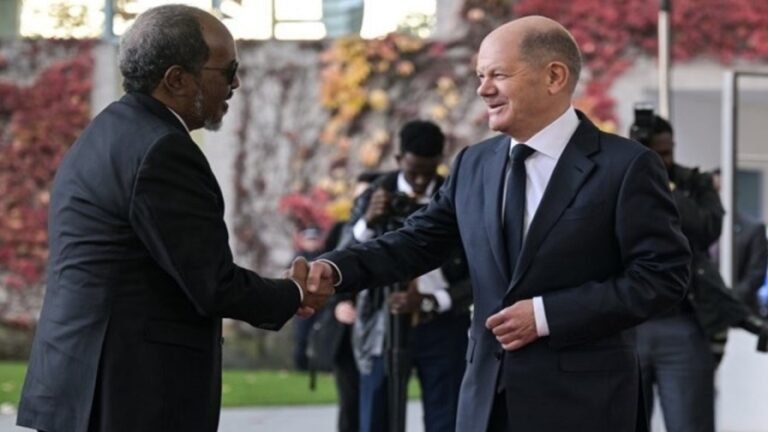
Wednesday 13, Nov, 2024 {HMC} An agreement between Germany and Somalia announced last week is receiving mixed responses. Similar deals to send migrants back have proved difficult and ineffective, says a researcher.
German Chancellor Olaf Scholz and President Hassan Sheikh Mohamud of Somalia said after meeting in Berlin last Wednesday (November 6), that there would be more returns to Somalia of people without a right to remain in Germany.
Since then questions have arisen about that agreement, with the two leaders seeming to hold different views about whether they meant Somalis would be forcibly sent home.
In a joint press conference Scholz said “only a small number (of Somalis) are not permitted to remain (in Germany) but of course the rule that they have to be repatriated applies to them.”
But a statement attributed to Hassan Sheikh Mohamud later suggested that the agreement did not mean Somalis should be deported but applied to those who want to return home voluntarily.
Posted on the X platform by Somali government spokesperson Farhan Jimale it said: “There is no need for forced repatriation; however, for individuals who, under the law, no longer hold the right to asylum, exhausted all their options and wish to return voluntarily, our doors are always open.”
One social media user pointed out that this contradicted the way the deal had been reported in Germany, while others responded angrily and accused the president of lying and failing to provide solutions to those displaced within Somalia.
Another person asked on X. “How about the 10 million dollars he got from this sordid deal?”
The comments show the problems that poorer countries in Africa often face when negotiating repatriation agreements with governments in the EU, highlighting the unequal power relations that usually underpin such deals.
Return cooperation ‘bargaining chip’
Increasingly, Europe is demanding that countries in Africa reduce migrant departures and agree to take back their nationals, in exchange for continued financial support.
Somalia, as a country that is emerging slowly from conflict and instability, relies heavily on the EU and Germany for aid and development funds. This makes cooperation on repatriations one of the president’s strongest barganing chips, says Judith Altrogge, a researcher at Germany’s Osnabrück University.
At the same time, leaders like Hassan Sheikh Mohamud risk facing anger at home if migration cooperation deals fail to deliver for their own people.
“There are good reasons to be highly sceptical whether Somalia has the capacity to care for (returnees) now or in the near future,” says Altrogge.
“Somalia faces severe challenges to provide social and economic security for its citizens even without the extra challenges that deported migrants bring.”
A specialist on return migration in Gambia, Altrogge pointed out that a return cooperation process, begun with the EU in 2017 after the removal of dictator Yahya Jammeh, backfired badly on the transitional government when people blamed their leaders for failing to meet the needs of the vulnerable deportees. “In their eyes, the government’s engagement in the cooperation agreement adhered more to the interests of the destination country than their own citizens.”
Public opposition in Gambia posed such a threat to the government’s survival that it put a freeze on further deportations from EU countries. The ban would not last for long, however. Just like Somalia, Gambia’s number one partner in development cooperation is the EU.
No increase in deportations
When it comes to bilateral migration partnerships, the agreement between Germany and Somalia follows similar deals with Kenya, Morocco and Georgia. In each case, the number of potential returnees is relatively small.
The main reason that countries of origin engage in such deals is generally something else, like developing pathways for more legal migration in the case of Kenya, or increasing diplomatic leverage and access to aid funds, as in the case of Morocco.
The German government has focused on the necessity of reaching agreements with origin countries to boost deportations. Yet in most cases, with the exception of Gambia, these partnerships have not led to higher numbers of returnees, says Altrogge.
As the partnership agreements are also non-binding, she suggests the Somalia deal should be seen as a starting point for further negotiations, not only between Somalia and Germany, but also between the government and civil society in Somalia, creating further challenges for the building of trust after years of conflict.
 Marion MacGregor
Arbaco 13 Nov, 2024 {HMC} Qaar kamid ah Wadayaasha Mooto Bajaajka Baladweyne oo Bilaabay in in ay Hubkooda qaataan

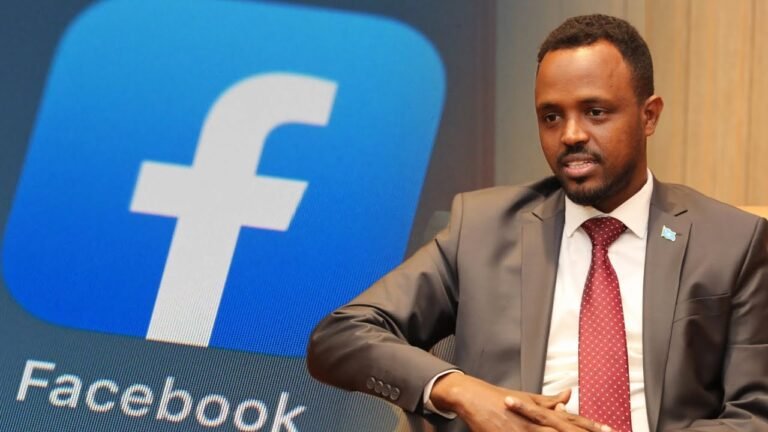
Arbaco 13 Nov, 2024 {HMC} Dowladda Soomaaliya oo War ka so saartay Facebookyadii laga Xiray Dadka Caanka.
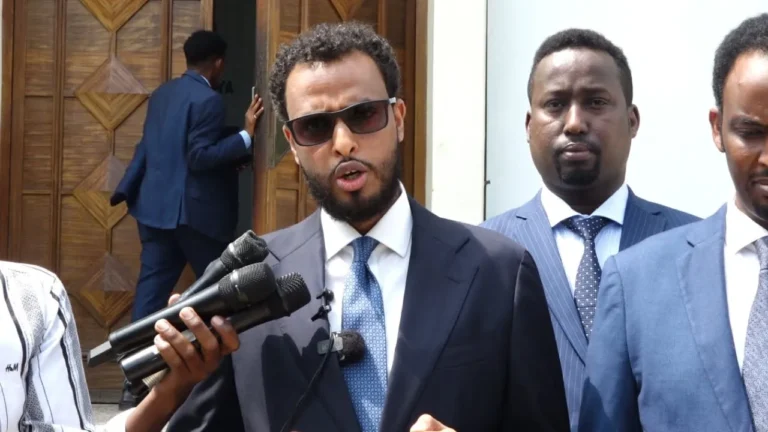
Arbaco 13 Nov, 2024 {HMC} Xildhibaan Axmed Diiriye oo ka tirsan BFS Muxuu ka yiri Doorashada Soomaaliland?