Home Blog Page 1680

President Ilham Aliyev received credentials of incoming ambassador of Somalia to Azerbaijan

0

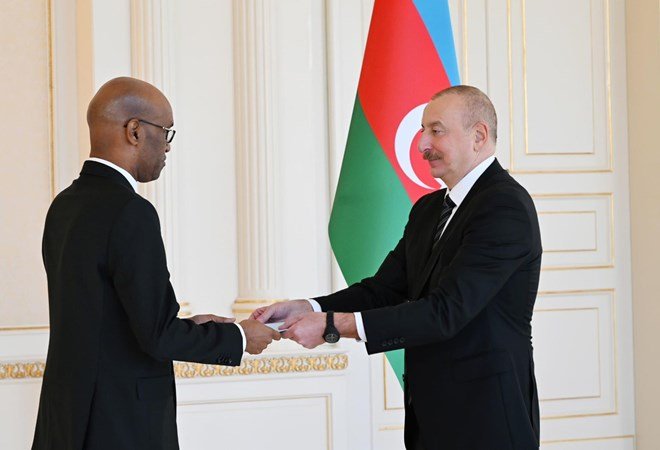
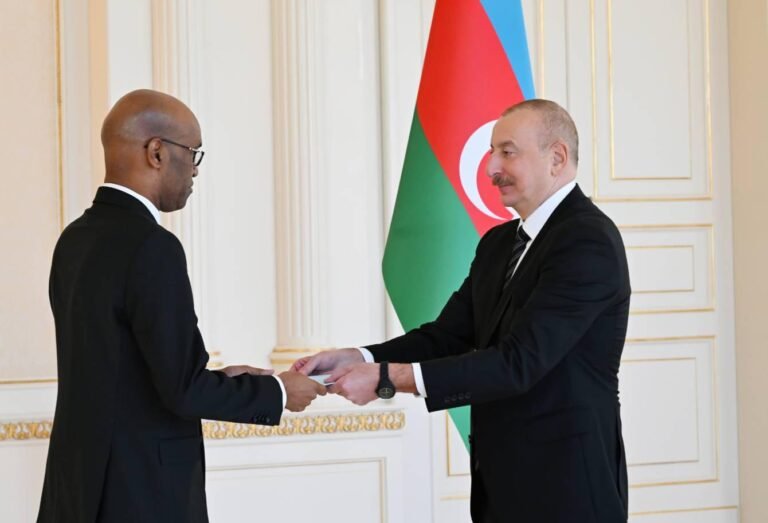
Friday 1-Nov 2024 {HMC} President of the Republic of Azerbaijan Ilham Aliyev received the credentials of Fathudin Ali Mohamed, the newly appointed Ambassador Extraordinary and Plenipotentiary of the Federal Republic of Somalia.

The ambassador presented his credentials to the head of state.

President Ilham Aliyev had a conversation with the ambassador.

Congratulating Azerbaijan on hosting COP29, Fathudin Ali Mohamed noted that the President of Somalia would participate in this event, emphasizing that the upcoming meeting between the Presidents of Azerbaijan and Somalia during COP29 would provide an additional impetus to the development of bilateral relations.

The ambassador mentioned that bilateral cooperation is becoming stronger day by day. He touched upon collaboration in the fields of science and education, noting that many students from Somalia studied in Azerbaijan during the Soviet era and expressing interest in continuing these traditions.

President Ilham Aliyev acknowledged the significant potential for expanding cooperation in trade, economy, and other sectors.

During the conversation, they stressed the importance of contacts at various levels and praised the cooperation between the two countries within international organizations, including the Organization of Islamic Cooperation.

SOURCE  AZERTAC

Ethiopia ‘not interested in war’ over Somalia dispute, PM says.

0

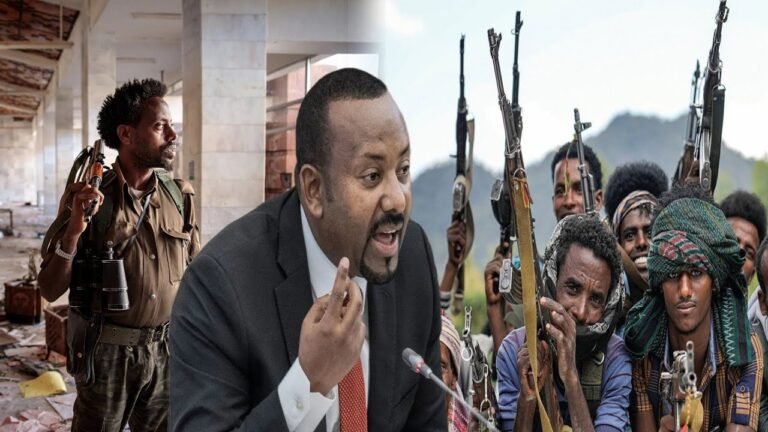
Friday 1-Nov 2024 {HMC} Ethiopia’s Prime Minister Abiy Ahmed said Thursday he had “no interest in getting involved in a war” as tensions mount over his deal with a breakaway Somali region.

In January, land-locked Ethiopia signed an agreement with the separatist region of Somaliland to lease a stretch of its coastline for 50 years.

The deal sparked outrage in Somalia, which has refused to accept Somaliland’s independence since it was declared in 1991.

Speaking to his parliament on Thursday, Abiy described the deal as a “development agreement” based on its long-standing need for maritime access.

“We have demanded access to the sea and that is what it is all about. We will not take offensive action, but we will defend ourselves effectively if something happens,” he said.

Somalia has described Ethiopia’s deal with Somaliland as “illegal” and a violation of its sovereignty.

It expelled Ethiopia’s ambassador in April and said that Ethiopian troops will be excluded from a new African Union peacekeeping force against Islamist Al-Shabaab insurgents that is due to be deployed on January 1.

Somalia has also built closer military ties with Egypt, another rival of Ethiopia — raising fears of conflict in the already unstable Horn of Africa region.

Ethiopia, which has the second largest population in Africa with 120 million people, lost access to the sea when Eritrea gained independence in 1993.

SOURCE 

Botswana ruling party rejected after 58 years in power.

0

Friday 1-Nov 2024 {HMC} Voters in Botswana have rejected the country’s long-serving governing party in a result that marks a political earthquake in the diamond-rich southern African nation.

The Botswana Democratic Party (BDP) – in power since independence in 1966 – has won only four parliamentary seats as of Friday afternoon. It will be replaced by the Umbrella for Democratic Change (UDC).

In a phone call to UDC leader Duma Boko, President Mokgweetsi Masisi conceded and congratulated his opponent.

Despite overseeing a dramatic change in Botswana, recent poor economic growth and high unemployment dented the BDP’s popularity.

The party “had got it wrong big time”, Masisi told a press conference.

“I will respectfully step aside and participate in a smooth transition process ahead of inauguration. I am proud of our democratic processes and I respect the will of the people.”

He has urged his supporters to remain calm and rally behind the new government.

Speaking to Boko on the phone, the outgoing president said: “You can count on me to always be there to provide whatever guidance you might want.”

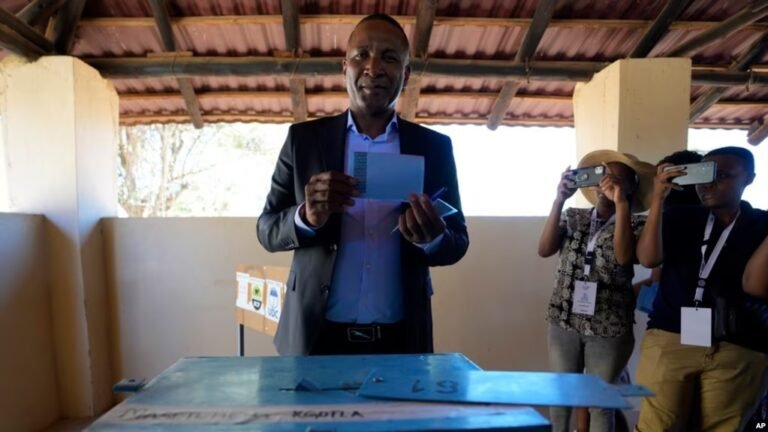
In his first comments to the media since the outcome was clear, Boko, a 54-year-old former human rights lawyer, said: “What has happened today takes our democracy to a higher level. It now means we’ve seen a successful, peaceful, orderly democratic transition.”

“It’s a shock to me in terms of the numbers. I’m humbled and I can only pledge to [the people of Botswana] that we’ll do the very best,” he added.

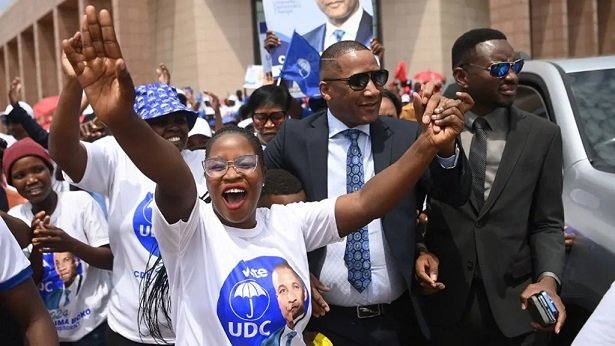
UDC and other opposition party supporters have been celebrating in the capital, Gaborone, and elsewhere in the country.

“I did not ever think I would witness this change in my life,” 23-year-old student Mpho Mogorosi, who had gone on to the streets of Gaborone, told the Reuters news agency.

“The BDP had stayed too long in power and I am proud to be part of the people that removed them for a better Botswana,” she said.

The UDC has won 35 seats, according to the latest tally, which means that it has an outright majority in parliament.

It has pledged to adopt a new economic strategy that creates well-paying jobs and distributes wealth that empowers all citizens.

Kgoberego Nkawana, just elected as an MP, told the BBC’s Newsday programme that many young people in Botswana remained jobless despite huge deposits of diamonds and a fairly thriving tourism industry in the country.

“The unemployment rate is very very high and people are living literally on handouts from government because there are no jobs. So it’s really bad,” Nkawana said.

The party has committed to creating 450,000 to 500,000 jobs within five years.

The Botswana Patriotic Front (BPF), supported by former President Ian Khama who split from the BDP, has so far secured five seats while the Botswana Congress Party (BCP) has got 14 seats as things stand.

Political analyst Lesole Machacha said the way that the change in government has been accepted was very impressive.

“It’s very rare [on the continent] for a smooth transition to occur,” he told the BBC. “This has been very peaceful.”

Masisi – in office since 2018 – led the BDP’s failed campaign.

The president ran on a message that his party could bring about “change”, but not enough voters were convinced the BDP could do what was needed for the country.

Official results are expected to be announced by the electoral commission later Friday.

SOURCE BBC

Clan battles over resources force hundreds to flee in Galgadud.

0

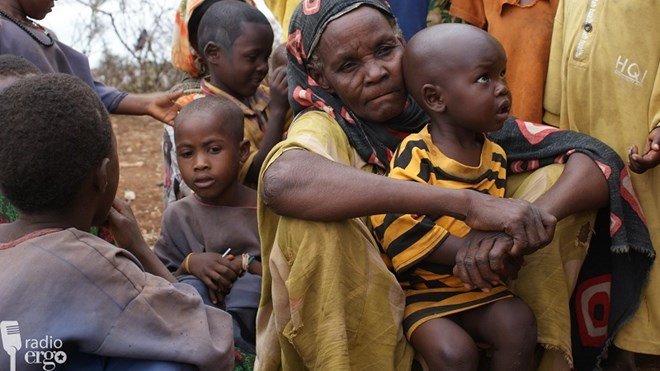
Friday 1-Nov 2024 {HMC} Hundreds of families have been forced to abandon their homes, property and jobs in Herale district in central Somalia’s Galgadud region where clan conflict over resources has caused chaos.

Most of these families are pastoralists, who left behind their livestock and small businesses as they fled from the villages of Jabsiile, Qalanqale, and Landher, seeking refuge in the village of Mirjiley.

Deqo Mohamed Ibrahim eventually reached Mirjiley on 22 September after her family walked for 12 hours because they couldn’t afford transport. They left behind their house, belongings they couldn’t carry, and the 10 goats they relied on for food.

“When the fighting broke out, it was unexpected. We were just lying down early in the morning when the gunfire erupted. The intensity was so overwhelming that we couldn’t even figure out where to run,” Deqo recalled.

“Eventually, we fled into the wilderness. Some families became separated, with parents and children losing track of each other in the chaos.”

Her husband worked on construction sites to supplement their income. In Mirjiley, empty handed, they are forced to ask neighbours to share them what little that can spare. There’s no food at home. Whatever we eat for the day is given to us by a local family, sometimes cooked, sometimes raw. We don’t have a reliable source. When someone gives us a few kilograms of food, we use it sparingly. On a good day, we cook only once in the evening, which is difficult especially for the children,” Deqo said.

Having fled with only the clothes on their backs, Deqo and her eight children are sleeping outdoors, seeking shade under trees during the day and shivering at night. Her biggest concern is the uncertainty of how long they can endure this, with no end in sight to the conflict.

More than 700 families have arrived in Mirjiley, running away from the battles between clans raging around their homes. All are relying now on other locals who live from pastoralism.

Nasteho Ali Isse said that while her family had received 36 kilograms of flour, rice, and sugar collected by the community in Mirjiley, they were fast running out of food.

“We came here only for safety from the violence, but we have nothing here. We are faced with hardships, and although the people have been kind to us, it’s not enough. We didn’t bring food, and even before the conflict, we had little in reserve,” Nasteho explained.

She described the struggles her 10 children face living in a makeshift structure made from sticks and cloth. She feared the approaching rainy season, as their shelter will not withstand the downpours.

Although Mirjiley is just 12 kilometres from where they were living in Landher, Nasteho’s family had to walk for more than 16 hours, taking a much longer route to avoid the dangers of the fighting.

Her four children, who were studying Koranic classes at home, are now out of school, adding to the family’s instability.

Access to water is challenging. Nasteho walks 30 minutes to fetch water from a crowded water well. Although the water is free, the amount she can carry back is far too little for her family’s daily needs.

“I carry a 20-litre container and a smaller 5-litre one, but even then the water doesn’t last us the day. If only our village were safe, I would go back immediately. I don’t belong here, and we have nothing here,” she told Radio Ergo.

Nasteho’s family have experienced nothing but crisis in the past several years.

In 2021, they moved to Landher from the rural areas after severe drought killed most of their livestock. Since then, they relied on her husband’s labour, breaking quarry stones for a living.

The recent violence, sparked by disputes over grazing land, caught the area off guard during a dry season when resources were already limited.

The head of social affairs in Mirjiley, Mursal Hirsi Abdi, confirmed the urgency of the situation.

“We have submitted multiple reports on the displaced families’ needs. The director of the Galmudug relief ministry visited, but so far we’ve received no aid,” he said.

Mursal noted that land disputes over wells, grazing fields, and other resources often led to cycles of violence, intensified by the availability of weapons among clans. For local authorities, this makes conflict management challenging.

“Land, wells, and grazing areas are common causes of these clashes, which have taken countless lives and assets. Clans often have more power than the local administration, making conflict resolution difficult,” he told Radio Ergo.

SOURCE 

{DAAWO SAWIRADA} Saraakiil Mareykankan ah oo booqaday Taliska Ilaalada Xeebaha Soomaaliya.

0

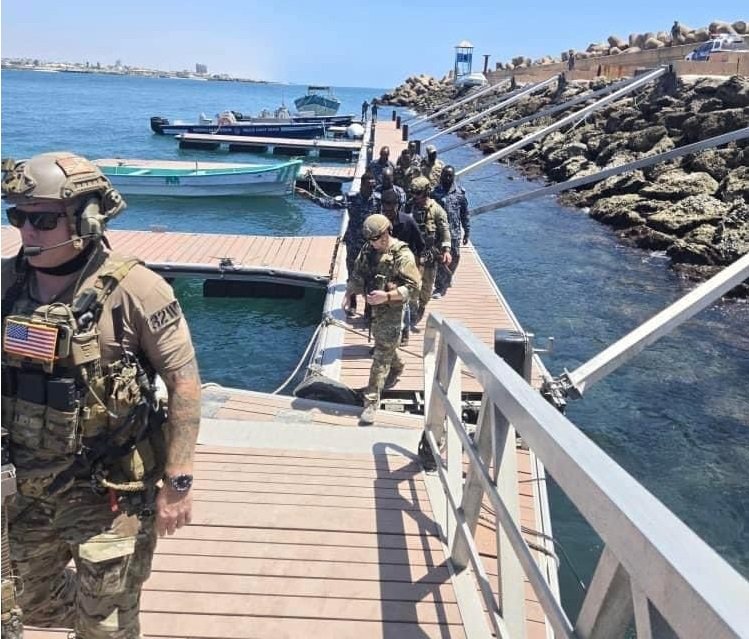
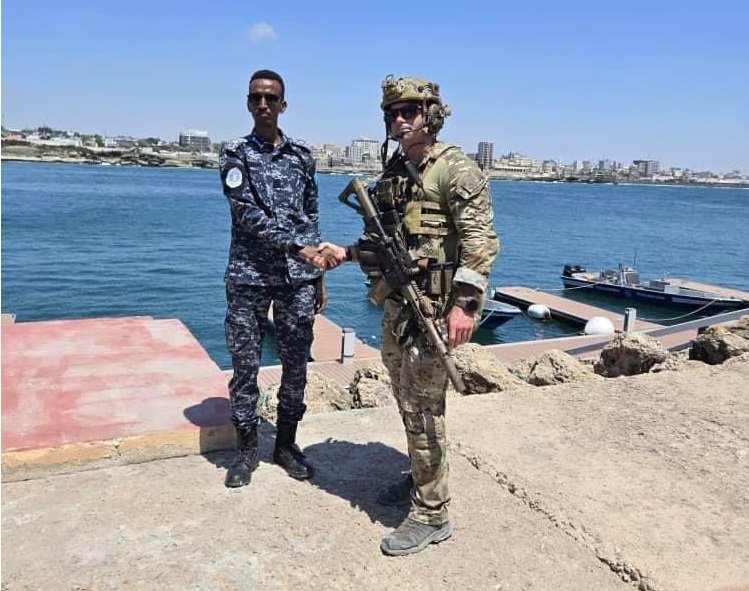
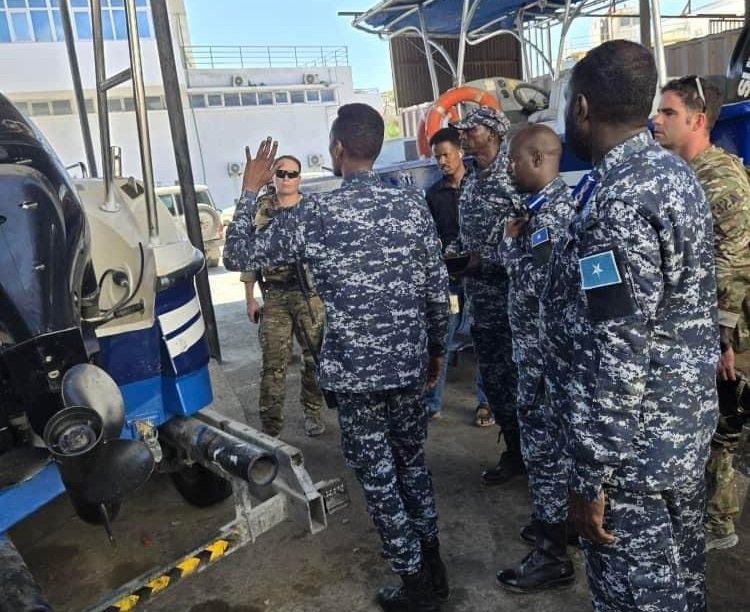
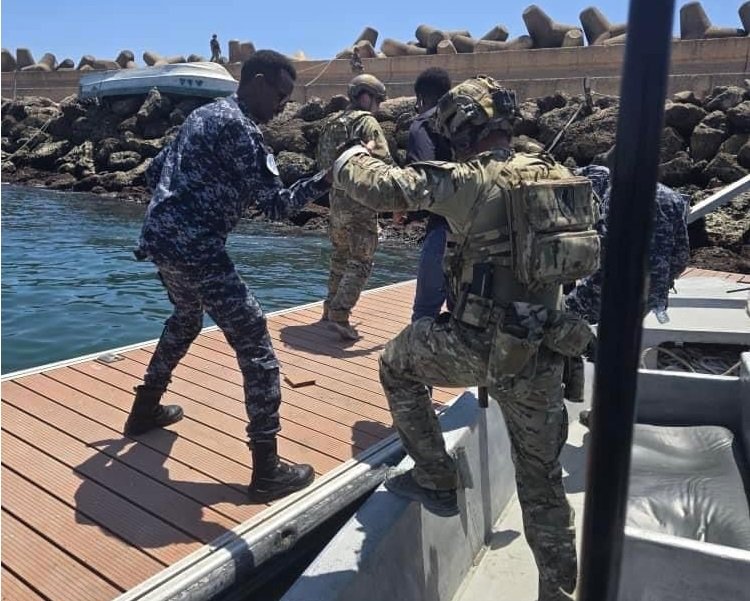
Jimco 1, Nov 2024 {HMC} Saraakiil ka socotay Dowladda Mareykanka ayaa maanta waxa ay booqasho ku tageenTaliska Ilaalada Xeebaha ee Ciidanka Booliiska Soomaaliyeed.

Saraakishan waxaa xaruntaan ku soo dhaweeyey Taliyaha Ciidanka Ilaalada Xeebaha ee Booliska Soomaaliyeed G/Sare Bashiir Cabdiqaasim.

Labada dhinac ayaa kawada hadlay sidii loo xoojin lahaa iskaashiga dhinaca amniga ee xeebaha Soomaaliya iyo sidii kor loogu qaadi lahaa awoodda iyo tayada hawlgallada Ilaalada Xeebaha Booliiska Soomaaliyeed.

Women raped in war-hit Sudan die by suicide, activists say

0

Friday 1-Nov 2024 {HMC} Warning: This story contains details some may find distressing.

Several women have taken their lives in Sudan’s central Gezira state after being raped by paramilitary fighters in the brutal civil war raging in the country, rights groups and activists have said.

The reports come after the paramilitary Rapid Support Forces (RSF) was accused by the UN of “atrocious crimes”, including mass killings, in the state last week.

With RSF fighters continuing to advance, one rights group has told the BBC it is in contact with six women who are contemplating taking their own lives as they fear being sexually assaulted.

But the RSF has dismissed a recent UN report blaming a rise in sexual violence on its combatants, telling the BBC the accusations “were not based on evidence”.

The vicious struggle for power between the army and RSF has killed tens of thousands of people and forced more than 11 million people from their homes since the conflict began in April 2023.

The head of the UN World Food Programme, Cindy McCain, visited the aid hub of Port Sudan this week, and told the BBC that the country could see the world’s largest-ever humanitarian crisis if a ceasefire is not reached.

She warned that millions of people could die from starvation.

Reports of paramilitary fighters on the rampage in Gezira follow the recent defection to the army of Abu Aqla Kayka, the RSF’s top commander in the state.

“The RSF started a revenge campaign in areas under the control of Abu Kayka. They looted, killed civilians who were resisting and raped women and little girls,” Hala al-Karib, head of the Strategic Initiative for Women in the Horn of Africa (Siha), told the BBC.

Siha, which has been documenting gender-based violence in Sudan during the war, had confirmed three cases of suicide by women over the last week in Gezira state, she said.

Ms Karib said that two were in the village of Al Seriha and a third in the town of Ruffa.

The sister of a woman who took her own life in the village told Siha it happened after she was raped by RSF soldiers in front of her father and brother. The two men were later killed.

A series of videos have been shared online over the last week that appear to show dozens of bodies wrapped in blankets from an alleged RSF massacre in Al Seriha.

BBC Verify has been able to match the location of this footage to the courtyard of a mosque in Al Seriha.

The evidence of suicides came from only two areas out of the 50 or so villages that have recently come under attack, Ms Karib said, adding that the figure could be higher as mobile communications were patchy.

A female activist from Gezira, who asked to remain anonymous as she feared for her life, told the BBC she had confirmed accounts of women taking their lives after their husbands had been killed by the RSF.

She had seen WhatsApp messages from one woman who described how her sister had taken her own life after being raped by RSF militiamen, who had also killed five of her brothers and some of her uncles also in Al Seriha.

But like Siha, she said it was impossible to verify accounts on social media of reported mass suicides of women fearing rape given the communication problems.

On Tuesday, an 80-page UN report said that since the conflict began, at least 400 survivors of conflict-related sexual violence have been documented up to July 2024, with the actual figure suspected to be much higher.

“The sheer scale of sexual violence we have documented in Sudan is staggering,” said Mohamed Chande Othman, the UN chair of the panel that compiled the report.

Victims it documented have ranged from between eight and 75 years – with many of them needing medical treatment, but most hospitals and clinics have been destroyed in the fighting, the UN said.

RSF spokesperson Nizar Sayed Ahmed told the BBC: “These accusations are false and not based on evidence.

“To find out the facts on the ground, the UN must send a fact-finding team to Sudan,” he said.

Ms Karib told the BBC Siha was trying to keep in touch with the six women who were fearful of the RSF’s advance and contemplating taking their own lives.

She said Siha was giving them psychological support as activists tried to work out how they could move them to more secure locations.

She also said they were trying to help a 13-year-old girl who had been gang-raped by RSF fighters in Gezira and was in urgent need of medical care.

The girl was currently on the road from her home village north of Ruffa to the town of New Halfa, and was bleeding profusely, she said.

SOURCE BBC

Kenya’s new deputy president sworn in

0

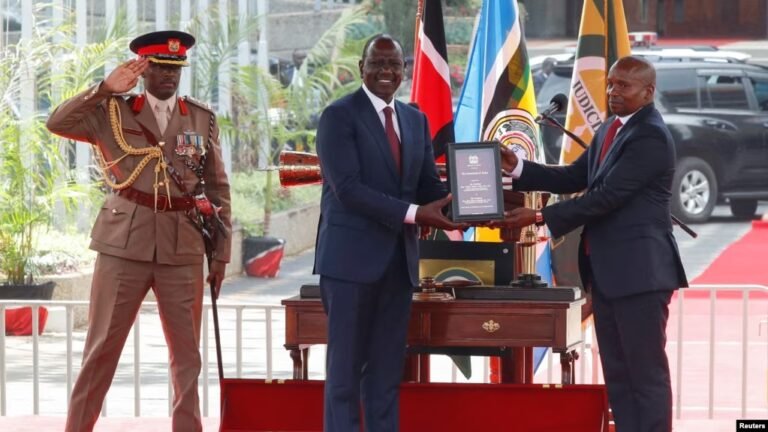
Friday 1-Nov 2024 {HMC} Kithure Kindiki was sworn in as Kenya’s deputy president Friday, less than 24 hours after a court lifted orders blocking his nomination to replace impeached DP Rigathi Gachagua, who has filed lawsuits to regain his position.

In a televised ceremony at Nairobi’s Kenyatta International Convention Center, Kindiki said he will always serve his country and will not let down President William Ruto, who appointed him.

Ruto told attendees he knows his former interior minister as “a dedicated professional,” and “a patriot whose dedication to cohesion, national unity and inclusivity is beyond reproach.”

Kindiki has been part of Ruto’s cabinet for two years and came under fire for supporting alleged police brutality during anti-government protests earlier this year.

He also faced criticism when Kenya decided to send police forces to Haiti, a deployment he and his boss vehemently defended.

The swearing in ceremony took place 24 hours after a court lifted orders blocking Kindiki’s nomination, dealing a blow to former DP Gachagua, who was impeached and removed from office in mid-October amid accusations of gross misconduct and undermining the president.

Gachagua’s lawyers filed about 30 court cases arguing against the decision in the last two weeks.

A three-judge bench appointed to hear the case made the highly anticipated announcement Thursday.

“Public interest in this matter favors giving way to the constitution, which in any event is the will of the people,” said Judge Antony Mrima, who heard the case along with Eric Ogola and Freda Mugambi.

“We choose to abide by that calling, as such public interest demands that the office of the deputy president should not remain vacant.”

President Ruto took less than a day to nominate Kindiki, after Gachagua’s removal from office. The selection was approved by lawmakers in the National Assembly a few hours later.

However, the court suspended any further action until it could hear the case. Since then, the three-judge bench has faced questions and petitions from Gachagua’s lawyers contesting the validity of their appointment and their own impartiality. Those challenges were rejected.

Gachagua was convicted on five of 11 charges against him, which included accusations of gross misconduct, irregular acquisition of wealth and undermining the president. Gachagua has denied all the charges.

SOURCE VOA

Seismic change in Botswana as party that ruled for 58 years loses power

0

Friday 1-Nov 2024 {HMC} Botswana’s President Mokgweetsi Masisi conceded defeat in the general election Friday, in a seismic moment of change for the county that ended the ruling party’s 58 years in power since independence from Britain in the 1960s.

Masisi’s concession came before final results were announced, with his Botswana Democratic Party trailing in fourth place in the parliamentary elections in what appeared to be a humbling rejection by voters.

The main opposition Umbrella for Democratic Change held a strong lead in the partial results, making its candidate, Duma Boko, the favorite to become president of a southern African country that is one of the world’s biggest producers of mined diamonds.

Masisi said he had called Boko to inform him he was conceding defeat and said that Boko was now effectively the president-elect.

Final results were expected to be announced later Friday.

“I concede the election,” Masisi said in an early-morning press conference two days after the vote. “I am proud of our democratic processes. Although I wanted a second term, I will respectfully step aside and participate in a smooth transition process.”

“I look forward to attending the coming inauguration and cheering on my successor. He will enjoy my support.”

Masisi’s BDP dominated politics in Botswana for nearly six decades, since independence in 1966. The nation of just 2.5 million people will now be governed by another party for the first time in its democratic history.

So far, the Umbrella for Democratic Change has won 25 out of the 61 parliamentary seats decided by voters, according to the official partial count. It needs 31 to clinch a majority. The Botswana Congress Party has seven seats, the Botswana Patriotic Front five seats, and the ruling BDP just three.

“We lost this election massively,” Masisi said.

Botswana has been held up as one of Africa’s most stable democracies, with its economy largely relying on diamonds. Botswana is the world’s second biggest natural diamond producer behind Russia.

But the mood for change was evident as a downturn in the global demand for diamonds badly impacted Botswana’s economy, with unemployment rising to more than 27% this year, and significantly higher for young people, as the government saw a sharp decrease in revenue from diamonds. Masisi and his party had faced criticism for not having done enough to diversify the economy and the nation has been forced to adopt recent austerity measures.

Even the BDP conceded throughout its campaign that policy change was needed and tried to convince voters it was capable of leading the country out of its economic troubles. Diamonds account for more than 80% of Botswana’s exports and a quarter of its GDP, according to the World Bank.

Masisi said the country had hardly sold any diamonds since April through its Debswana company, which the government jointly owns with diamond miner De Beers.

Botswana’s general elections decide the makeup of its Parliament, and lawmakers then choose the president. The party that gains a majority is in position to choose its candidate as president. All five of Botswana’s post-independence presidents have been from the BDP.

Doko is a 54-year-old lawyer who also contested elections in 2014 and 2019. He posted on his official page on X: “Botswana First” with a picture of a UDC campaign poster with the words “Change is Here.”

The BDP was one of the longest-serving parties in Africa still in power and its sharp defeat came as a surprise after what was expected to be a tight race.

Masisi, a 63-year-old former high school teacher and UNICEF employee, said he had not expected the results and had “not packed a shoe.”

SOURCE VOA

{DHAGEYSO} Warka Duhurnimo ee Warbaahinta Hiiraanweyn {31.10.2024}

Jimco 01- November-2024 {HMC} Dhageystayaal halkan waxa aan idiin kugu soo gudbi neynaa Warka Duhurnimo ee Warbaahinta Hiiraanweyn
Warka waxaa soo jeedinayo ::Abdirahman Macalin Muse

Farsamadii ::Abdiqani Osoble

HOOS KA DHAGEYSO WARKA DUHURNIMO

Madaxweynaha Azerbaijan oo warqadaha aqoonsi safiirnimo ka Gudoomay Danjiraha Soomaaliya ee Dalkas

Jimco 01-November-2024 {HMC} Madaxweynaha Azerbaijan Ilham Aliyev ayaa warqadaha aqoonsiga danjirenimo ka guddoomay Safiirka Soomaaliya ee Turkiga Fatxudiin Cali oo sidoo kale noqonaya Danjiraha Jamhuuriyadda Federaalka Soomaaliya ee Azerbaijan.

Dalkaan Azerbaijan waxa uu kamid yahay Dalalka Safaaradda Soomaaliya ee Turkiga hoostagaya ee ku yaalla Aasiyada Dhexe, Danjire Fatxudiin ayaa howlaha safiirnimo ee Dalalkaan qabanaya isaga oo xooggiisa jooga Turkiga.

Dowladda Federaalka Soomaaliya ayaa muddooyinkii dambe xoojisay kordhinta cilaaqaadka kala dhaxeeya Dalalka Xubnaha ay kawada yihiin Ururrada Caalamiga ah sida Qaramada Midoobay, Midowga Afrika, Jaamacadda Carabta & Ururka iskaashiga Islaamka.

Wasaaradda Arrimaha Dibadda iyo Iskaashiga Caalamiga ah ee Xukuumadda Jamhuuriyadda Federaalka Soomaaliya ayaa horay u sameysay qorshe lagu soo yareynayo safaaradaha badan iyada oo Dalalka isku dhow hal danjire uu ka howlgallayo.