Home Blog Page 752

Ceasefire between Israel and Iran appears to hold as Trump vents frustration with both sides

0

Wednesday 25,June ,2025 {HMC}  A fragile ceasefire between Iran and Israel appeared to hold Tuesday after initially faltering, and U.S. President Donald Trump expressed frustration with both sides, saying they had fought “for so long and so hard” that they do not know what they are doing.

But even as Israeli Prime Minister Benjamin Netanyahu claimed Israel had brought Iran’s nuclear program “to ruin,” a new U.S. intelligence report found that the program has been set back only a few months after U.S. strikes over the weekend, according to two people familiar with the assessment.

The early report issued Monday by the Defense Intelligence Agency was described to The Associated Press by two people familiar with it. They were not authorized to address the matter publicly and spoke on condition of anonymity.

The report also contradicts statements from Trump, who has said the Iranian nuclear program was “completely and fully obliterated.” The White House called the assessment “flat-out wrong.”

After the truce was supposed to take effect, Israel accused Iran of launching missiles into its airspace, and the Israeli finance minister vowed that “Tehran will tremble.”

The Iranian military denied firing on Israel, state media reported, but explosions boomed and sirens sounded across northern Israel in the morning, and an Israeli military official said two Iranian missiles were intercepted.

Trump told reporters at the White House before departing for a NATO summit that, in his view, both sides had violated the nascent agreement. He had particularly strong words for Israel, a close ally, while suggesting Iran may have fired on the country by mistake.

But later he said the deal was saved.

“ISRAEL is not going to attack Iran. All planes will turn around and head home, while doing a friendly “Plane Wave” to Iran. Nobody will be hurt, the Ceasefire is in effect!” Trump said in his Truth Social post.

Indeed, Netanyahu’s office said he held off on tougher strikes against Iran after speaking to Trump.

Iran’s U.N. Ambassador Amir Saeid Iravani told the U.N. Security Council on Tuesday the Islamic Republic emerged “proud and steadfast” from the aggression by Israel and the United States.

“This proves one simple truth more clearly than ever: diplomacy and dialogue are the only path to resolving the unnecessary crisis over Iran’s peaceful program,” he said.

A dozen tense days
The conflict, now in its 12th day, began with Israel targeting Iranian nuclear and military sites, saying it could not allow Tehran to develop atomic weapons and that it feared the Islamic Republic was close. Iran has long maintained that its program is peaceful.

If the truce holds, it will provide a global sense of relief after the U.S. intervened by dropping bunker-buster bombs on nuclear sites — a move that risked further destabilizing the volatile region.

Trump phoned Netanyahu after the American bombing on Sunday and told him not to expect additional U.S. military attacks and that he should seek a diplomatic solution with Iran, a senior White House official said.

Trump’s position was that the U.S. had removed any imminent threat posed by Iran, according to the official, who was not authorized to comment publicly about sensitive diplomatic talks and spoke on condition of anonymity.

Israel followed up the U.S. air attacks by expanding the kinds of targets it was hitting.

After Tehran launched a limited retaliatory strike Monday on a U.S. military base in Qatar, Trump announced the ceasefire.

A protracted conflict could have a broad economic impact if Iran closed the Strait of Hormuz, a major shipping channel.

China, which is Iran’s largest trading partner and only remaining oil customer, condemned the U.S. attacks and said it was concerned about a “spiral of escalations” without a ceasefire. Trump suggested the ceasefire would allow Iranian oil to continue to flow, saying on social media that China could keep purchasing crude from Iran.

Israel accuses Iran of violating the truce. Iran denies allegation
The deal got off to a rocky start.

An Israeli military official who spoke on the condition of anonymity in line with military regulations said Iran launched two missiles at Israel hours into the tenuous ceasefire. Both were intercepted, the official said.

Iranian state television reported that the military denied firing missiles after the start of the ceasefire — while condemning Israel for predawn strikes of its own.

One of those attacks killed a high-profile nuclear scientist, Mohammad Reza Sedighi Saber, at his father-in-law’s residence in northern Iran, Iranian state TV reported.

Trump’s frustration with the early morning strikes was palpable as he spoke to reporters before departing for the Hague. He said both sides had violated the agreement and used an expletive to hammer home his point.

“We basically have two countries that have been fighting so long and so hard that they don’t know what the f—- they’re doing,” he said.

Breakthrough announced after hostilities spread

Netanyahu said Israel agreed to the ceasefire with Iran, in coordination with Trump, after the country achieved all of its war goals, including removing the threat of Iran’s nuclear and ballistic missile programs.

In a televised statement, Netanyahu said late Tuesday that Israel took out top generals and nuclear scientists and destroyed nuclear facilities in Natanz, Isfahan and the Arak heavy water reactor. He thanked Trump for his help.

It’s unclear what role Ayatollah Ali Khamenei, Iran’s leader, played in the talks. He said earlier on social media that he would not surrender.

Trump said Tuesday that he wasn’t seeking regime change in Iran, two days after floating the idea himself in a social media post.

“I don’t want it,” Trump told reporters on Air Force One. “Regime change takes chaos and, ideally, we don’t want to see much chaos.”

Trump’s special envoy Steve Witkoff told Fox News that the U.S. and Iran are already in early discussions about resuming negotiations over Iran’s nuclear program. He called the direct talks and discussions through intermediaries “promising.”

Before the ceasefire was announced, Israel’s military said Iran launched 20 missiles toward Israel. Police said they damaged at least three densely packed residential buildings in the city of Beersheba. First responders said they retrieved four bodies from one building and were searching for more. At least 20 people were injured.

Outside, the shells of burned out cars littered the streets. Broken glass and rubble covered the area. Police said some people were injured while inside their apartments’ reinforced safe rooms, which are meant to withstand rockets but not direct hits from ballistic missiles.

The attack followed a limited Iranian missile assault Monday on a U.S. military base in Qatar in retaliation for earlier American bombing of its nuclear sites. The U.S. was warned by Iran in advance, and there were no casualties.

Elsewhere, U.S. forces shot down drones attacking the Ain al-Assad base in the desert in western Iraq and a base next to the Baghdad airport, while another one crashed, according to a senior U.S. military official, who spoke on condition of anonymity because he was not authorized to comment publicly.

No casualties were reported, and no group claimed responsibility for the attacks in Iraq. Some Iran-backed Iraqi militias had previously threatened to target U.S. bases if the U.S. attacked Iran.

Conflict has killed hundreds
In Israel, at least 28 people have been killed and more than 1,000 wounded in the war. Israeli strikes on Iran have killed at least 974 people and wounded 3,458 others, according to the Washington-based group Human Rights Activists.

The group, which has provided detailed casualty figures from Iranian unrest, said of those killed, it identified 387 civilians and 268 security force personnel.

The U.S. has evacuated some 250 American citizens and their immediate family members from Israel by government, military and charter flights that began over the weekend, a State Department official said.

There are roughly 700,000 American citizens, most of them dual U.S.-Israeli citizens, believed to be in Israel.

___

Lidman reported from Tel Aviv, Israel. Associated Press writers Gabe Levin in Dubai; Josef Federman in Jerusalem; Sam Mednick in Beersheba, Israel; Amir Vahdat in Iran; Michelle Price, Mary Clare Jalonick, Darlene Superville, Aamer Madhani, Josh Boak and Matthew Lee in Washington; and Seung Min Kim in Noordwijkerhout, Netherlands, contributed to this report.


Source AP
Kenyans brace for protests one year after storming parliament.

0

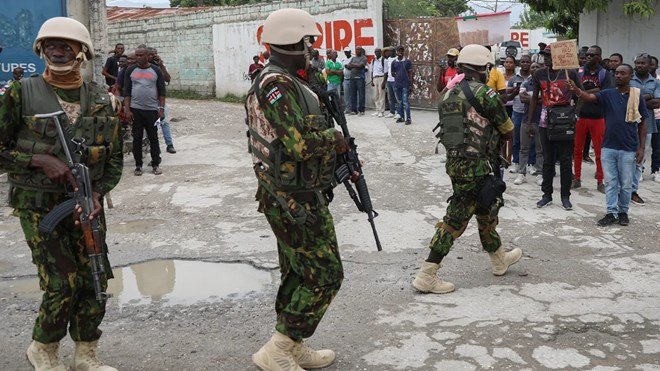
Wednesday 25,June ,2025 {HMC} Kenyans are expected to take to the streets in large numbers on Wednesday to mark the one-year anniversary of anti-government protests that culminated in the storming of parliament and several deaths as police opened fire on demonstrators.

Although the protests eventually faded after President William Ruto withdrew proposed tax hikes that had initially sparked the rallies, public anger over the use of force by security agencies has not abated, with fresh demonstrations erupting this month over the death of a blogger in police custody.

Six people, including three police officers, were charged with murder on Tuesday over the killing of 31-year-old blogger and teacher, Albert Ojwang. All have pleaded not guilty.
The death of Ojwang has become a lightning rod for Kenyans still mourning the deaths of more than 60 people killed during last year’s demonstrations and blaming security forces for the fatalities and dozens of unexplained abductions.

Police sources told Reuters that a heavy security presence would be deployed around downtown Nairobi, particularly near the presidency, parliament and the central business district.

The interior ministry in a post on X on Tuesday warned protesters not to “provoke police” or “attempt to breach protected areas”.

The unprecedented scenes on June 25, 2024, showing police firing at demonstrators as they broke through barriers to enter parliament, created the biggest crisis of Ruto’s presidency and sparked alarm among Kenya’s international allies.

On Tuesday, the embassies of the United States, Britain, Canada, and other Western nations released a joint statement on X urging all involved to “facilitate peaceful demonstrations and to refrain from violence.”

“The use of plain clothed officers in unmarked vehicles erodes public trust,” the statement said. Rights campaigners condemned the presence of unidentified police officers at protests last year.

The embassies also said they were troubled by the use of hired “goons” to disrupt peaceful demonstrations, after Reuters reporters saw groups of men beating protesters with sticks and whips last week.

The counter-protesters have defended their actions, telling Reuters that they are not goons but rather patriots protecting property from looters.

Two police officers were arrested last week over the shooting of an unarmed civilian during a protest in Nairobi over the death of Ojwang, the blogger.

Kenya’s police chief initially implied that Ojwang had died by suicide but later apologised after an autopsy found that his wounds pointed to assault as the cause of death.

President Ruto said that Ojwang had died “at the hands of the police”, which he said was “heartbreaking and unacceptable”.

Reporting by Nairobi newsroom; Writing by Ammu Kannampilly; Editing by Alexandra Hudson

Source: Al Jazeera

Kenya holds forum to promote Sino-African agricultural, industrial cooperation

0

Wednesday 25,June ,2025 {HMC} The inaugural Africa-China Forum on Agri-Tech and Industrial Cooperation took place on Tuesday in the Kenyan capital, Nairobi.

The day-long conference was hosted by Nairobi-based Alliance for a Green Revolution in Africa (AGRA), Beijing Jingwa Agricultural Science and Technology Innovation Center, the International Livestock Research Institute and the Finance Center for South-South Cooperation.

Ibrahim Mayaki, African Union special envoy for food systems, said the continent stands to gain from emulating China’s model of agricultural transformation, driven by forward-looking policies, technology and innovations.

“We can leverage China’s successes in agricultural modernization, rural transformation and poverty alleviation as reference points for Africa’s own agricultural renaissance, while recognizing the specificity of African ecosystems and cultures,” Mayaki said.

Mayaki stressed that joint research between China and Africa in climate-smart farming practices, development of high-yielding crops, modern irrigation technologies and digital extension services could offer lasting solution to hunger, rural poverty and malnutrition affecting the world’s second-largest continent.

Hamadi Boga, vice president of AGRA, noted that China has set the pace in technology- and innovation-led agricultural modernization, inspiring African nations to follow suit, feed their growing population and leapfrog into an industrial era.

The Sino-African agricultural cooperation, according to Boga, has rapidly evolved as witnessed by technology transfer, establishment of demonstration zones, exchange visits and institutional collaboration, boosting crop yield, agro-processing and exports.

Boga also called on African research institutions to forge long-term partnership with their Chinese counterparts to accelerate an inclusive food systems transformation, rooted in improved soil health, climate resilience, access to finance, technologies and markets.

Chinese Ambassador to Kenya Guo Haiyan said China is keen to share with Africa’s bilateral partners its home-grown technologies, innovations, experience and best practices, which could hasten the continent’s agricultural modernization to realize food security and boost export competitiveness.

Guo noted that China-Africa agricultural cooperation has prioritized technology transfer, facilitating trade in agricultural commodities and upgrading value chains for farm produce.

In addition, China has partnered with African countries to enhance response to crop pests and diseases, capacity building for extension workers and farmers, deployment of technologies for scaling up agro-processing and value addition, Guo added.

Somali President meets EU delegation to strengthen bilateral cooperation

0

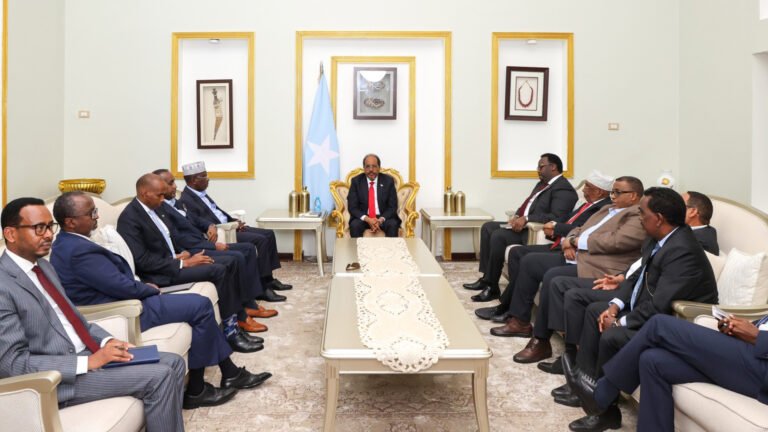
Wednesday 25,June ,2025 {HMC} President Hassan Sheikh Mohamud met Tuesday with a delegation from the European External Action Service (EEAS), led by Director for Africa Jonas Jonsson, at the Villa Somalia Presidential Palace in Mogadishu.

The meeting focused on strengthening the broad-based cooperation between Somalia and the European Union, including areas such as security, development, governance, and humanitarian assistance.

President Mohamud expressed his appreciation for the EU’s continued commitment to Somalia’s peace, stability, and inclusive development.
“The European Union has long stood with Somalia through difficult times, and we are grateful for its unwavering support in our journey toward lasting peace and prosperity,” he said during the meeting.

EU Ambassador to Somalia Karin Johansson accompanied the visiting delegation.

The European Union remains one of Somalia’s largest international partners, supporting a wide range of initiatives in state-building, security sector reform, education, and economic development.

Source Hiiraan online

Somali Defense Minister, Chinese Ambassador discuss military cooperation.

0

Wednesday 25,June ,2025 {HMC} Somali Minister of Defense Ahmed Macalin Fiqi met Tuesday with Chinese Ambassador to Somalia Wang Yu in Mogadishu to discuss strengthening defense cooperation and enhancing efforts to combat al-Shabab.

The meeting focused on advancing military collaboration between the two governments, particularly in equipping and training Somali armed forces to improve national security.

Ambassador Wang reaffirmed China’s commitment to supporting Somalia’s defense sector, pledging to assist in building the capacity of Somali forces as they lead operations against the al-Qaida-linked militant group al-Shabab.
Minister Fiqi expressed his gratitude for China’s ongoing support, especially in the areas of security, development, and bilateral cooperation.

“Somalia values its strong and growing partnership with China, particularly in building a stable and secure nation,” Fiqi said.

The meeting reflects the deepening diplomatic ties between Somalia and China, which continue to collaborate on key issues such as national sovereignty, security, and economic development.

Source Hiiraan online

Under Trump, US strikes on Somalia have doubled since last year. Why.?

0

Wednesday 25,June ,2025 {HMC} Ending the United States’ “forever wars” was a major slogan of Donald Trump’s 2024 election campaign, during which he and many of his supporters spoke out against American resources and lives being put to waste in conflicts across the globe.

But on February 1, a mere 10 days after being inaugurated for a second time, President Trump announced that the US had carried out air strikes targeting senior leadership of ISIL (ISIS) in Somalia. “These killers, who we found hiding in caves, threatened the United States,” his post on X read. This marked Trump’s first military action overseas, but it wouldn’t be his last.

In the time since, the US has provided weapons and support to Israel in its wars in Gaza and across the Middle East; it has launched strikes on Yemen; and even attacked Iran’s nuclear facilities. At the same time, in the Horn of Africa, US strikes have more than “doubled” since last year, according to US Africa Command (AFRICOM).

AFRICOM, which oversees US military operations on the continent, has carried out at least 43 air strikes in Somalia in 2025, according to think tank New America, which tracks strikes using AFRICOM data. More than half of those, which are conducted in coordination with Somalia’s federal government, targeted IS-Somalia, the ISIL affiliate in northeast Puntland state, while the remainder targeted al-Shabab.

The uptick in US air strikes targeting IS-Somalia appears to be linked to growing concerns that the group has become a hub for regional and global ISIL affiliates in terms of financing and attacks, according to US officials.

At the same time, experts also note the recent worrying gains being made by al-Shabab in Somalia.

But why is this a war the “Make America Great Again” Trump administration has an increasing hand in – especially given that decades of US policy in Somalia have been marred by controversy, disaster and failure?

American intervention in Somalia: A failure since the start?
“Ever since Black Hawk Down, Somalia was a no-go zone for the US,” said Abukar Arman, a Somali analyst and former special envoy to the US, referring to the failed 1993 US military intervention in Somalia during which 18 US troops and thousands of Somali civilians were killed.

“That changed after 9/11 when Somalia became one of the key theatres of so-called GWOT [global war on terror]. That political facade has three objectives: It justifies US sustained lethal drone attacks in the public psyche; it enables the US to guard its geopolitical interests in the Horn of Africa; [and] it enables American predatory capitalists to engage in economic exploitation,” Arman told Al Jazeera.

In 2007, Somalia became the first country on the African continent to fall victim to a US air strike in the post 9/11 era as part of its so-called “war on terror”. In the decades that followed, US aerial bombardment of the country has not only persisted but intensified.

During the combined 16 years under former presidents George W Bush and Barack Obama, there were more than 50 US air strikes on Somalia, while Trump’s first term alone saw a staggering 219 strikes, according to New America. With dozens more strikes just five months into his second term, analysts say if it continues at this rate, Trump is sure to surpass the 51 strikes the Biden administration conducted during its entire four years in office.

Jethro Norman, a senior researcher with the Danish Institute for International Studies, suggests that in Somalia, Trump has made an ideal stage on which to remotely project US power capabilities – as it combines high firepower, low oversight and little US domestic political risk.

“By loosening Obama-era restrictions, he enabled a surge in preemptive strikes with minimal vetting or accountability. The logic wasn’t just strategic; it was theatrical: a way to perform toughness, signal contrast with previous administrations, and claim counterterrorism ‘wins’ without entanglement,” Norman told Al Jazeera.

“So, what you see now is a spike in drone activity, but without any corresponding investment in long-term peacebuilding or governance support,” he explained.

Norman also highlighted how infighting within the Trump White House on policy direction in Somalia played a role in the massive uptick in US strikes.

“There were also competing camps within his [Trump’s] administration. Some pushed hard for kinetic engagement in Somalia and Yemen, while others argued that counterterrorism was a distraction from great-power rivalry with China.

“That policy push and pull [between spectacle and strategy] helps explain why air strikes surged even as Trump talked about ending forever wars,” he said.

Al-Shabab gains

Some analysts suggest that another reason for the uptick in US strikes could be al-Shabab’s unprecedented counteroffensive this year. In it, the armed group reversed most of the Somali government’s territorial gains and seized dozens of towns and villages in the Middle Shabelle region of the semi-autonomous Hirshabelle state – the home base of President Hassan Sheikh Mohamud.

Complicating matters further is that during this counteroffensive, al-Shabab was able to advance on the capital and set up checkpoints on main roads leading in and out of Mogadishu. This shows not only the deep structural weakness within the Somali security forces but also the resilience of the armed group as they inched closer to the seat of power in Mogadishu, experts say.

“These [recent US strikes] appear to relate more closely to conditions on the battlefield – and in particular, the perceived threat from an al-Shabab offensive that has reversed some of the gains of prior Somali government offensives,” said David Sterman, the deputy director of the Future Security programme at New America.

“There may also be other factors, including a greater interest in targeting senior al-Shabab leaders,” he added.

As the Trump administration continues its bombing campaign, some argue this will likely only empower the same armed groups it claims to be fighting.

“The current drone diplomacy would continue to help al-Shabab. These attacks kill civilians, destroy properties and livestock. Ensuing grievances are utilised by armed groups that take advantage of these sentiments,” said Arman, the Somali analyst, who also noted a “lack of a comprehensive US-Somalia policy that is based on a strategic partnership that keeps the interest of both countries at heart”.

“It is foolish to think that all problems could be solved with a hammer,” he added, referring to drones and military might.

Civilian deaths, ‘lack of accountability’

During Trump’s first term as president, rights groups and media outlets alike reported numerous civilian casualties from US strikes on Somalia. This was further compounded when AFRICOM admitted that civilians died in strikes it carried out.

The situation hit its climax in 2019 when Amnesty International accused the US of committing “possible war crimes” in Somalia as a result of its drone war. None of the victims of US drone strikes were ever compensated despite calls for accountability by rights groups and US lawmakers.

“The consistent lack of accountability for civilian victims of US air strikes, particularly under the previous [Trump] administration, speaks volumes. It reveals a profound lack of transparency that is deeply concerning,” said Eva Buzo, the executive director of Victims Advocacy International, an organisation seeking accountability for victims of human rights abuses in conflict zones across the globe.

“The US acknowledges harm to civilians and has allocated funds yet continues to avoid making these crucial payments,” she said, adding that what’s needed is willingness to “genuinely communicate with impacted communities, to better understand the true consequences drone strikes have on their lives, and what can be done to acknowledge this impact tangibly”.

Meanwhile, adding to the complexity in the battle space in Somalia is that groups like al-Shabab often live and operate among the civilian population. This provides concealment but also means those at war with the armed groups rarely differentiate between civilians and fighters when striking targets.

US strikes often rely on patchy human intelligence in the rural countryside where al-Shabab is most present and where clan rivalries, informal economies and shifting loyalties are all factors that tend to be overlooked by the US. Experts say this not only complicates accurate targeting but also increases the chance of harming non-combatants.

While there isn’t an official death toll from US strikes, the years of attacks are believed to have killed anywhere from 33 to 167 civilians in Somalia, according to separate tallies by New America and the nonprofit conflict watchdog, Airwars.

These civilian deaths from US air strikes erode US credibility in the region and feed into the narrative that armed groups like al-Shabab thrive on: one of foreign aggression and Somali betrayal, said Norman of the Danish Institute.

“These incidents don’t just cause resentment; they offer propaganda gold. When civilians are killed or even just displaced, al-Shabab exploits the aftermath. They move quickly to frame themselves as defenders of Somali lives and sovereignty against a foreign aggressor and a weak federal government,” he said.

“Drone strikes without accountability can actually create the conditions for the very insurgencies they’re meant to eliminate to thrive,” he added.

Adding fuel to the fire?

After nearly two decades of US aerial bombardment, many analysts agree that air strikes alone cannot defeat an armed movement embedded in the fabric of Somali society, its social networks and those who thrive off consecutive foreign interventions. This makes the prospects of taming these armed groups, let alone defeating them, difficult.

“There are interesting parallels to Afghanistan; local forces struggle to hold territory, US strikes fill the vacuum temporarily, but the long-term trajectory remains bleak. Airpower can suppress, but it does not transform,” said Norman.

“That gap between US rhetoric and Somali reality is precisely where al-Shabab thrives. The group actively weaponises these moments, portraying itself as the only actor willing to stand up for Somali lives.

“In this sense, the loss of legitimacy is not abstract; it shapes local decisions, fuels recruitment, and weakens prospects for genuine partnership between Somali civilians and international actors.”

If the Trump administration continues its aerial bombardment of Somalia, analysts say it will only add fuel to the fire by empowering the same foe it claims to be fighting. At the same time, they say, the cost of drones and missiles to fight a boogeyman halfway across the globe is a waste of US taxpayer money.

Experts on US military and counterterrorism policies say the likelihood of a military solution to armed groups in Somalia is slim.

“It is unlikely that the US and its Somali partners can fully eliminate al-Shabab given its demonstration of resilience over time, and doing so would require a different approach than what these strikes appear to be. IS-Somalia does not have quite the same record of resilience,” said Sterman, the New America deputy director.

“There is, of course, the question of what defeat and destruction actually means for a non-state group,” he noted.

“That said, US objectives are likely more limited than the defeat or destruction of these groups – focusing [more] on containment or the elimination of specific capabilities or network connections.”

In the meantime, what is for sure, experts say, is that the more the US leans on drones without investing in local legitimacy and supporting grassroots reconciliation, the more groups like al-Shabab and IS-Somalia will thrive and grow among a new generation of disenfranchised Somalis.

Source: Al Jazeera

{DHAGEYSO} Warka Duhurnimo ee Radio Hiiraanweyn 24 06 2025

Arbaco 25, June 2025 {HMC} Dhageystayaal halkan waxa aan idiin kugu soo gudbi neynaa Warka Duhurnimo ee Warbaahinta Hiiraanweyn

Warka waxaa soo jeedinayo ::Abdiqani Osoble  & Shugri Baryare

Farsamadii ::Ismail abdiqadir

{DAAWO MUUQAALKA} Shirka Madaxweyne Xasan shiikh iyo Mucaaradka Soomaaliya oo Muqdisho ka furmay

0

Arbaco , 25 Juun 2025 {HMC} Shirka Madaxweyne Xasan shiikh iyo Mucaaradka Soomaaliya oo Muqdisho ka furmay


HOOS KA DAAWO MUQAALKA WARBIXINTA

Maxeey Ku Hishiisheeyn Puntland iyo Jubbaland?

Arbaco 25 June 2025 {HMC} Iyada oo maalmihii la soo dhaafay kulamo magaalada Garoowe uga socdeen Madaxda maamulada Puntland iyo Jubbaland ayaa la filayaa in laga soo saaro War-murtiyeed la xiriira qoddobada ay isla meel dhigeen.

Axmed Madoobe iyo Deni ayaa ka wada hadlayay arrimo ay kamid yihiin xiriirkooda iyo sidii ay u mideyn lahaayeen Mowqifkooda Xaaladda Siyaasadeed ee dalka.

Labada mas’uul ayaa ku kala arragti fogaa arrimo badan oo la xiriira xaaladda siyaasadeed ee dalka, tan iyo sannadkii 2022 markaasi oo la doortay Madaxweyne Xasan Shiikh Maxamuud.

Ilo xog ogaal ah oo ku dhow kulamada ka socda Garoowe ayaa sheegay in Deni iyo Axmed Madoobe isku soo dhawaansho ka gaareen qoddobada ay isku hayeen.

Waxaa la filayaa in ay soo saaraan War-murtiyeed la xiriira xaaladda dalka iyo go’aankooda la xiriira wada-tashiyada ay ku baaqday Dowladda Federaalka Soomaaliya.

{DAAWO MUUQAALKA} Sare ukac laga dareemayo Qiimaha shidaalka Suuqyada Magaalada Baladweyne

0

Arbaco , 25 Juun 2025 {HMC}  Sare ukac laga dareemayo Qiimaha shidaalka Suuqyada Magaalada Baladweyne

HOOS KA DAAWO MUQAALKA WARBIXINTA