Home Blog Page 773

Soomaaliya oo ka qeyb gashay shirkii ugu horreeyay ee Daryeelka Duurjoogta.

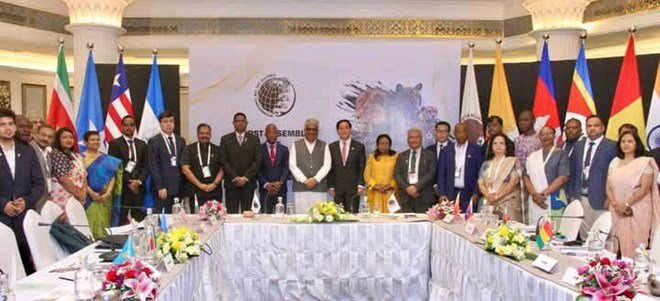
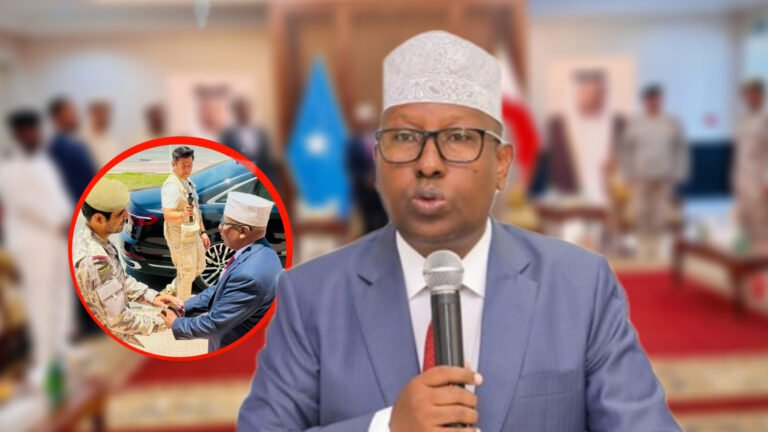
Arbaco 18, June 2025 {HMC}- Wasiir ku-xigeenka Wasaaradda Deegaanka iyo Isbeddelka Cimilada, Xildhibaan Xuseen Cali Xaaji, ayaa ka qeybgalay shirkii ugu horreeyay ee Ururka Caalamiga ah ee Daryeelka Duurjoogta (International Big Cat Alliance – IBCA), kaas oo lagu qabtay magaalada New Delhi ee dalka Hindiya.

Shirkan oo ay hoggaamineyso Dowladda Hindiya ayaa lagu aas-aasay urur caalami ah oo ujeedkiisu yahay ilaalinta iyo badbaadinta bisadaha waaweyn ee duurjoogta ah, sida shabeelka, haramcadka, libaaxa iyo noocyo kale oo halis ugu jira dabar-go’.

Wasiir Xuseen Cali Xaaji ayaa shirkan ka muujiyay muhiimadda ay leedahay ilaalinta duurjoogta ku nool gudaha Soomaaliya iyo guud ahaan Geeska Afrika.

Wasiirka ayaa xusay in iskaashi caalami ah oo xooggan uu fure u yahay badbaadinta noolaha dabiiciga ah iyo xoojinta dadaallada deegaanka ee ka socda dalalka ay sida dhow u taabanayaan isbeddelada cimilada.

Waxa uu shirka ka sheegay Wasiir Xuseen in Dowladda Federaalka Soomaaliya ay ka go’an tahay ah in ay kaalin muuqata ka qaadato ilaalinta deegaanka, la dagaallanka isbeddelka cimilada, iyo difaaca duurjoogta.

Shirka inta uu socday Xuseen Cali Xaaji ayaa kulan gaar ah la yeeshay Wasiirka Deegaanka, Dhirta iyo Isbeddelka Cimilada ee Dowladda Hindiya, iyagoo isla meel dhigay xoojinta iskaashiga labada dal ee ku saabsan deegaanka, tababarrada farsamada, iyo hawlgallada wadajirka ah.

Soomaaliya waxa ay ka mid tahay dalalkii aasaaska u dhigay ururkan, taas oo caddeyneysa doorka muuqda ee ay ku leedahay dadaallada caalamiga ah ee ilaalinta deegaanka iyo duurjoogta.

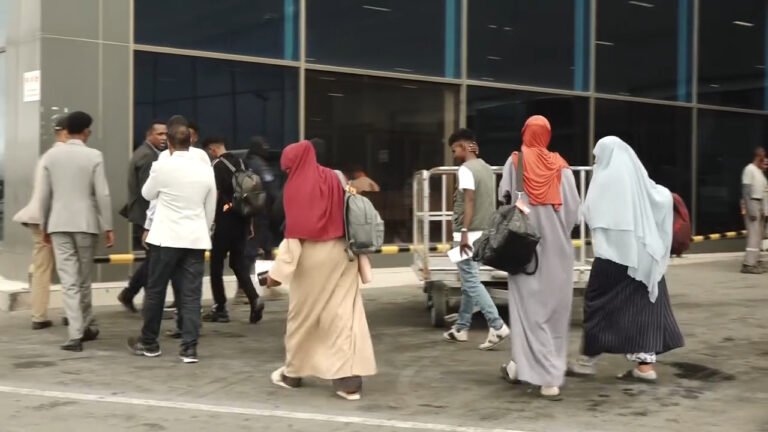
{DAAWO MUUQAALKA} Tahriibayaal Dalka Dib loogu soo celiyey.

0
Arbaco 18, June 2025 {HMC}  Tahriibayaal Dalka Dib loogu soo celiyey.


HOOS KA DAAWO MUQAALKA WARBIXINTA

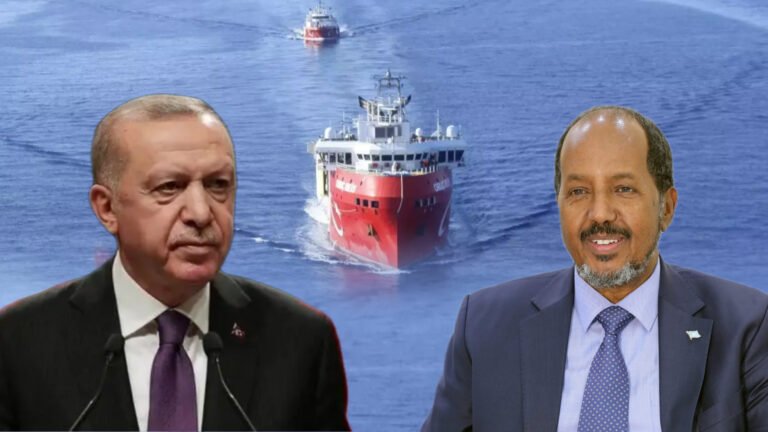
{DAAWO MUUQAALKA} Markabkii Shidaalka Ka baarayey Soomaaliya oo Turkiga kusoo Bandhigayo sahmintii uu Sameeyey.

0
Arbaco 18, June 2025 {HMC} Markabkii Shidaalka Ka baarayey Soomaaliya oo Turkiga kusoo Bandhigayo sahmintii uu Sameeyey.

HOOS KA DAAWO MUQAALKA WARBIXINTA

{DAAWO MUUQAALKA} Muxuu yahay Dardaaranka Wasiir fiqi uu siiyay Saraakiil Soomaali ah oo Qatar Tababar ku qaadaneyso.?

0
Arbaco 18, June 2025 {HMC}, Muxuu yahay Dardaaranka Wasiir fiqi uu siiyay Saraakiil Soomaali ah oo Qatar Tababar ku qaadaneyso.?

HOOS KA DAAWO MUQAALKA WARBIXINTA

{DAAWO MUUQAALKA} Wararkii Ugu Dambeeyey weerarkii iiraan ay ku qaaday israa’iil.

0
Arbaco 18, June 2025 {HMC} Wararkii Ugu Dambeeyey weerarkii iiraan ay ku qaaday israa’iil.

HOOS KA DAAWO MUQAALKA WARBIXINTA

Iran’s supreme leader rules out negotiations with Israel

0

Wednesday 18,June 2025 {HMC}  Iran’s Supreme Leader Ayatollah Ali Khamenei said Wednesday that the country will continue responding to Israeli attacks and will never negotiate with Israel.

“We must give a strong response to the terrorist Zionist regime. We will show the Zionists no mercy,” Khamenei said in a statement on X.

On Tuesday, US President Donald Trump said that Washington knows “exactly” where Khamenei is, saying he is safe “for now” while warning that “our patience is wearing thin.”

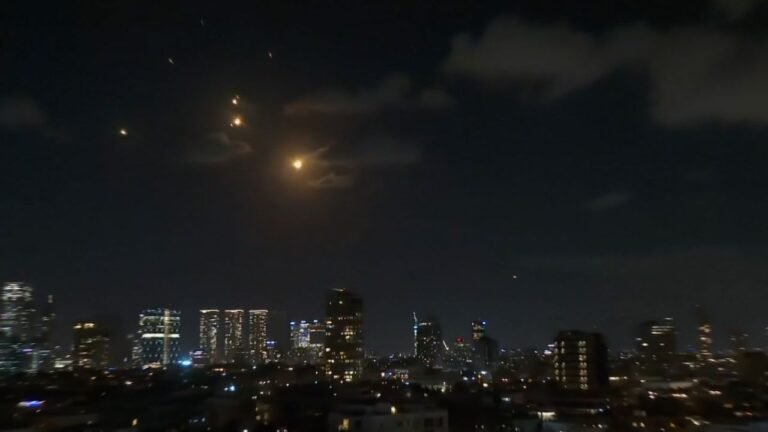
Regional tensions have escalated since Friday, when Israel launched airstrikes on multiple sites across Iran, including military and nuclear facilities, prompting Tehran to launch retaliatory strikes.

Israeli authorities said at least 24 people have been killed and hundreds injured since then in Iranian missile attacks.

Iran said at least 224 people have been killed and more than 1,000 wounded in the Israeli assault.

Source

Empty stadiums, mismatched teams: Key talking points at FIFA Club World Cup

0

Wednesday 18,June 2025 {HMC} When the FIFA Club World Cup (CWC) opened on Saturday, Lionel Messi, arguably the world’s greatest footballer, weaved his magic on the field as a cluster of former stars – David Beckham, Ronaldo, Kaka, Bebeto, Roberto Baggio and Javier Zanetti – watched on from their VIP seats at the Hard Rock Stadium in Miami.

While Messi was unable to score any goals in Inter Miami’s 0-0 draw against Egyptian club Al Ahly, football fans turned up in their thousands to watch the Argentinian lead his team in what could have been a goal-fest for the home side.

The organisers, led by FIFA President Gianni Infantino, appeared pleased with the tournament opener and would have hoped for the goals, spectators and popularity to increase as the Club World Cup progressed.

Infantino has treated the tournament as his personal project and aimed to bring the biggest names in football to the United States, one of the co-hosts for the 2026 FIFA World Cup.

From Inter Miami’s inclusion in the CWC under a special ‘host nation’ spot for the regular-season winners of MLS (other football continents had different entry criteria for qualification), to Infantino’s widely-reported comment that Portugal superstar Cristiano Ronaldo “might play in the Club World Cup”, and increasing the winner’s prize money by a whopping $35m, the FIFA chief has pulled out all the stops to support his claim that this competition is “the start of something historic that will change our sport for the better,” as he said earlier this week.

However, three days in, the CWC, billed by FIFA as the most elite global club competition, has yet to match the pre-tournament hype created by the sport’s governing body.

Here’s the key talking points after the opening 72 hours at the Club World Cup:

Questionable match scheduling amid player burnout concerns
Kickoffs scheduled at noon and 3pm local time on scorching hot summer days have led to players dealing with difficult weather conditions in some fixtures.

In Sunday’s PSG vs Atletico group match at the Rose Bowl in Pasadena, the temperature was recorded at 31 degrees Celsius (87.8 Fahrenheit) shortly after kick-off at midday local time.

PSG coach Luis Enrique said the heat “had an impact on the game.”

“The rhythm of our play was a bit lower than usual,” Enrique said in a post-match interview.

“We did very very well in difficult conditions,” PSG midfielder Vitinha said.

Every team at the FIFA Club World Cup plays three group matches in the space on nine days.

While that schedule in itself is not unusual for an international competition, the CWC has been subject to criticism from players’ unions long before the first kick of the opening game, as it comes off the back of a long domestic and international season in Europe and the Middle East for many clubs, while others – from the US, South America and Oceania – have hit pause on their regular seasons and will return to their respective leagues after the Club World Cup.

“The decision to schedule the FIFA Club World Cup between June 15 and July 13 without implementing further player workload safeguards demonstrates a lack of consideration for the mental and physical health of participating players, as well as a disregard for their personal and family lives,” FIFPRO – the global union representing professional football players – said in a statement when the tournament schedule was released in 2024.

“The extreme mental and physical pressures at the pinnacle of the game is the principal concern of players with multiple club and national team competitions, leading to exhaustion, physical injuries, mental health issues, diminished performance, and risks to career longevity,” the statement added.

FIFPRO called for the consideration of player health and safety regulations as a “matter of urgency” but that failed to deter FIFA from tinkering with the schedule.

Will there be more one-sided matches?

Bayern Munich made history at the FIFA Club World Cup on Sunday as they became the first team to score double digits in a single game when they thumped Auckland City, a club made up of semi-pro players with full-time day jobs, 10-0.

The 34-time German champions, fielding a full-strength team, scored four goals in the first 21 minutes of the game in front of a hapless Auckland defence.

Add to it the fact that the fixture seemed more of a practice outing than a challenge for the Bundesliga side, with Bayern coach Vincent Kompany saying: “The next game against Boca Juniors will be the highlight of the group stage.”

While minnows and favourites are often pitted together in global tournaments such as the FIFA World Cup, Auckland City – the Oceania champions and rated 4,957th in the world in the Opta Power Rankings – face strong opposition in their remaining group matches.

After losing to sixth-ranked Bayern Munich, they face 24th-ranked Portuguese side Benfica and Argentinian mega club Boca Juniors, who are ranked 131.

There are similar concerns that the talent gap between the next-lowest ranked clubs, such as Al Ain, Urawa Reds, Wydad Casablanca and Ulsan HD, and their much higher ranked opponents, might yield more one-sided scorelines in the group stage.

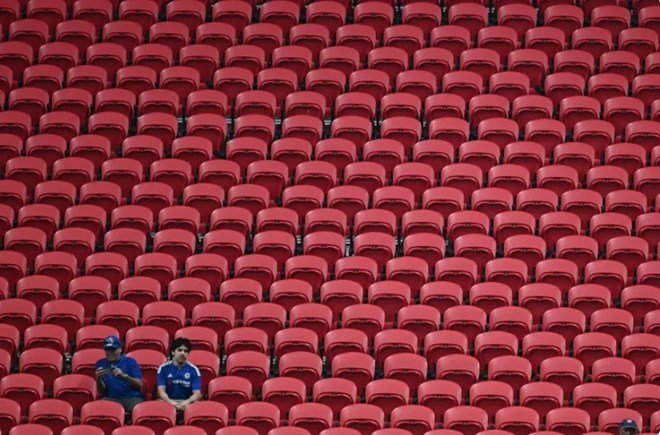
Empty stadiums and low-ticket sales

While Messi-mania brought the crowds in the tournament opener in Miami on June 14, and European champions PSG thrashed Atletico Madrid in front of 80,000 Los Angeles fans at the famous Rose Bowl a day later, the same cannot be said for some of the other fixtures in the opening three days.

Monday’s Chelsea vs LAFC encounter at the Mercedes-Benz Stadium in Atlanta was played out in front of 22,137 spectators – less than one-third of the stadium’s 75,000 seat capacity.

Post-match, Chelsea manager Enzo Maresca, when asked to describe the atmosphere in Atlanta, said: “I think the environment was a bit strange.”

The Chelsea-LAFC encounter was not the only fixture to experience low attendance.

On Monday, a Group C match between Flamengo and Esperance de Tunis attracted 25,797 fans to Philadelphia’s 69,000-seat Lincoln Financial Field, representing a 37.4% attendance rate.

A Group B match on Sunday between Botafogo and Seattle Sounders, played at the 69,000-seat Lumens Field in Seattle, drew 30,151 spectators, or 43.7% of maximum spectator capacity, according to official match figures.

Also on Sunday, the 82,500-capacity MetLife Stadium, the venue for the FIFA Club World Cup final, was filled with 46,275 fans for the Group A clash between Palmeiras and Porto, representing 56.1% of the arena’s maximum spectator capacity.

Of the remaining 36 group-stage games, 13 will be weekday afternoon kickoffs and it remains to be seen whether underwhelming ticket sales at some venues will continue throughout the first phase of the tournament.

Source: Al Jazeera


Police officer arrested over shooting of civilian during Kenya protest.

0

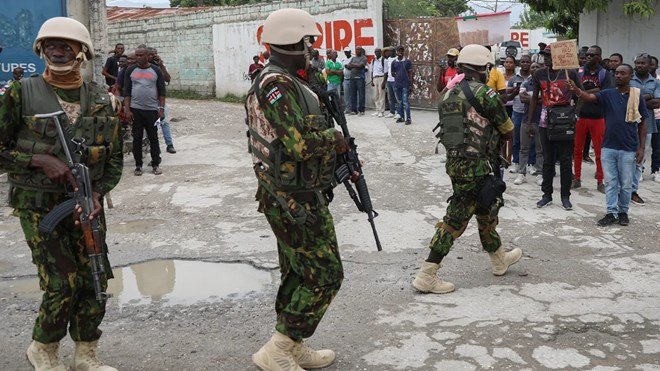
Wednesday 18,June 2025 {HMC} A Kenyan police officer has been arrested over the shooting of an unarmed civilian on Tuesday during protests in the capital Nairobi touched off by the death of a blogger in police custody, a police spokesperson said.

Earlier in the day, a video aired on Kenyan broadcaster Citizen Television’s X account showed two policemen repeatedly striking a man on the head before one of them fired at him with a long-barrelled gun as he tried to walk away.

The man fell to the ground as people in the crowd shouted: “You have killed him.”
Another video aired on the Nation newspaper’s website featured a witness saying the shooting victim was selling face masks and was not a protester.

Reuters could not independently verify the two videos.

A Reuters journalist saw the man on the ground with a heavily bleeding head wound, his hand clutching a packet of face masks.

It was not immediately clear if that man was the same person mentioned in the police statement.
Police spokesperson Muchiri Nyaga said an officer who fired his anti-riot gun at a civilian had been arrested.

“Following this incident, the Inspector-General [of the] National Police Service ordered the immediate arrest and arraignment in court of the involved officer,” Nyaga said in a statement.

Protests have erupted in Nairobi, Mombasa and several smaller towns over the death of blogger and teacher Albert Ojwang in police detention, which re-inflamed long-standing accusations of extrajudicial killings by security forces.

The state-funded Kenya National Commission on Human Rights said it had recorded 21 other injuries ranging from gunshot wounds, head cuts, whip lashes, blunt trauma and asthma attacks from inhaling teargas in Nairobi, Mombasa, Kilifi and Kwale counties.

LIGHTNING ROD

The June 8 death of Ojwang, 31, has been a lightning rod for public discontent, a year after more than 60 people were killed during protests initially touched off by proposed tax increases.

Police first said he had committed suicide, but Kenya’s police chief later apologised after an independent autopsy found that Ojwang’s wounds pointed to assault as the cause of death.

As demonstrators took to the streets of Nairobi on Tuesday, police fired tear gas, and clashes also broke out when unidentified motorcyclists beat up protesters, dispersing them, the Reuters journalist said.

Local broadcaster NTV showed video of the bikers shouting “No protests.”

Amnesty International’s Kenya chapter, in a post on X, referred to the presence of dozens of motorbikes with two hooded passengers whipping protesters and members of the public.

Reuters could not immediately identify the bikers.

Nyaga referred to the group as goons. “Investigations have commenced to identify and deal with the criminals accordingly.”

President William Ruto said last week that Ojwang had died “at the hands of the police”, which he called “heartbreaking and unacceptable”.

Ojwang was arrested as part of an investigation triggered by a formal complaint by deputy police chief Eliud Lagat, according to the Independent Policing Oversight Authority watchdog.

Citizen TV said demonstrations also erupted in Mombasa, Kenya’s second largest city, on Tuesday and it showed protesters shouting slogans and holding placards saying, “Stop killing us”.

Last week, hundreds of people demonstrated in Nairobi over the blogger’s death, with vehicles set ablaze.

Lagat said on Monday he had stepped aside temporarily, pending the completion of an inquiry into Ojwang’s death.

Two senior officers and a closed-circuit TV technician, who had been called in to dismantle the CCTV at the police station where Ojwang died, have been arrested in connection with the investigation.

Additional reporting by Edwin Waita, Humphrey Malalo, Edwin Okoth, Thomas Mukoya; writing by Elias Biryabarema and Ammu Kannampilly; editing by George Obulutsa, Bernadette Baum, Andrew Cawthorne and Mark Heinrich

Source 

Somalia releases seven Yemeni fishermen after two months of detention.

0

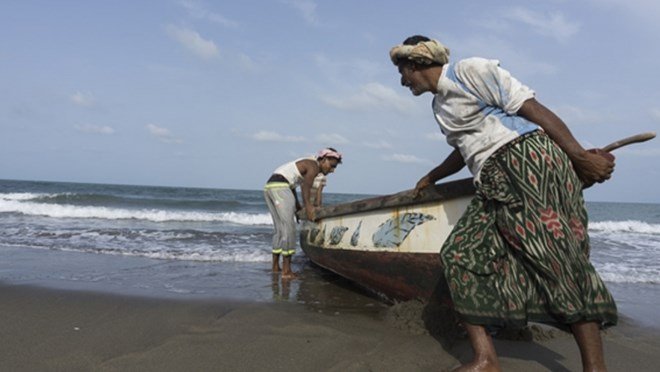
Wednesday 18,June 2025 {HMC} The Yemeni Embassy in Somalia has announced the release of seven Yemeni fishermen who had been detained for nearly two months by authorities in Bosaso, Puntland.

The fishermen were arrested after entering Puntland’s territorial waters without obtaining a fishing permit from the local Ministry of Fisheries.

In an official statement, the embassy warned Yemeni fishermen against fishing in Somali waters without prior authorization, emphasizing that such violations could lead to detention and legal consequences.

The embassy also stressed the importance of raising awareness among fishermen about the necessity of securing permits before operating in Somali waters to protect their interests and avoid punitive measures.

Source Yeman Online

Kenya and Finland reaffirm support for Somalia’s peace efforts amid ATMIS drawdown.

0

Wednesday 18,June 2025 {HMC} Kenya and Finland have reiterated their commitment to supporting Somalia’s peacebuilding efforts, especially amid the ongoing drawdown of the African Union Transition Mission in Somalia (ATMIS) and increasing regional sensitivities.

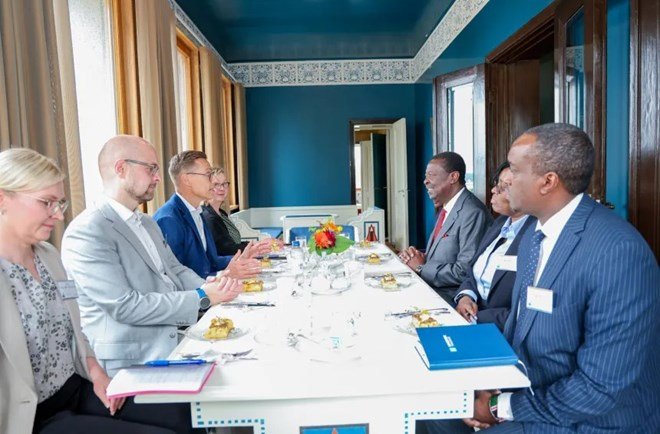
The pledge was made during a high-level consultative dialogue between Kenya’s Cabinet Secretary for Foreign and Diaspora Affairs, Musalia Mudavadi, and Finnish President Alexander Stubb, held at the historic Kultaranta Presidential Castle on the sidelines of the ongoing Kultaranta Talks in Naantali.

In a statement, CS Mudavadi highlighted that the discussions focused on the evolving security dynamics in Africa, particularly the Horn of Africa.
“We underscored the critical need to sustain international momentum behind Somalia’s peacebuilding process, especially in light of the ongoing ATMIS drawdown and heightened regional sensitivities,” said Mudavadi.

The two leaders reaffirmed their shared commitment to multilateralism and emphasized the importance of African-led solutions through regional frameworks such as the East African Community (EAC), the Southern African Development Community (SADC), and the Intergovernmental Authority on Development (IGAD) as the foundation for long-term peace.

They also discussed the potential of engaging eminent persons to facilitate dialogue and promote stability across conflict-prone areas.

President Stubb assured Kenya of Europe’s continued support for Africa’s regional institutions as they strive for sustainable peace and security.

“I welcomed President Stubb’s assurance of Europe’s continued support for Africa’s regional bodies as they pursue lasting peace and security on the continent,” Mudavadi stated.

Meanwhile, the African Union Support and Stabilization Mission in Somalia (AUSSOM), which officially replaced ATMIS in early 2025, is facing a critical financial shortfall. The mission lacks a stable funding mechanism, and efforts to secure international support have faltered. The UN Security Council missed a key deadline to provide financial backing, while the United States has declined to contribute, citing operational inefficiencies and concerns over fair burden-sharing.

The funding crisis poses a significant threat to the mission’s ability to operate effectively, potentially undermining hard-won security gains in Somalia and across the region.

Source Hiiraan online