


Axad 13, April 2025 {HMC} Waxaa halkan idin kugu soo gudbineyna Dhacdooyinkii Ugu Dambeeyay Caalamka ee Warbaahinta Hiiraanweyn.
{DAAWO MUQAALKA} AUSSOM oo wajahaysa khatar dhaqaale iyo Midowga Afrika oo digniin diray…
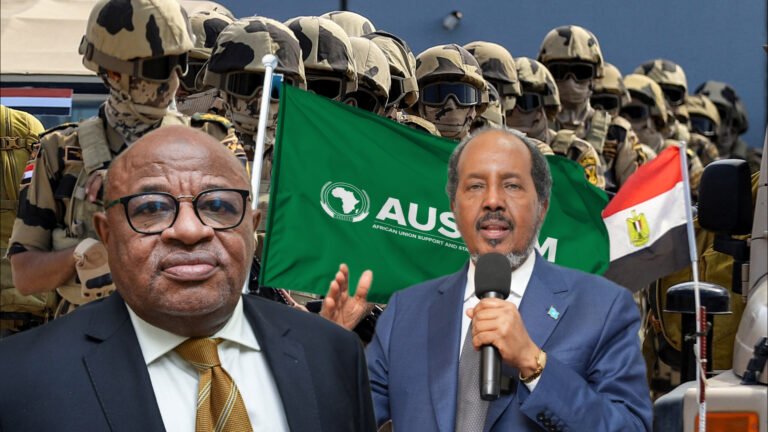
Axad 13, April 2025 {HMC} AUSSOM oo wajahaysa khatar dhaqaale iyo Midowga Afrika oo digniin diray…
HOOS KA DAAWO MUQAALKA WARBIXINTA
{DAAWO MUQAALKA} SSC Khaatumo oo sheegtay in gooni-isu-taagga Somaliland aanu guulaysan doonin
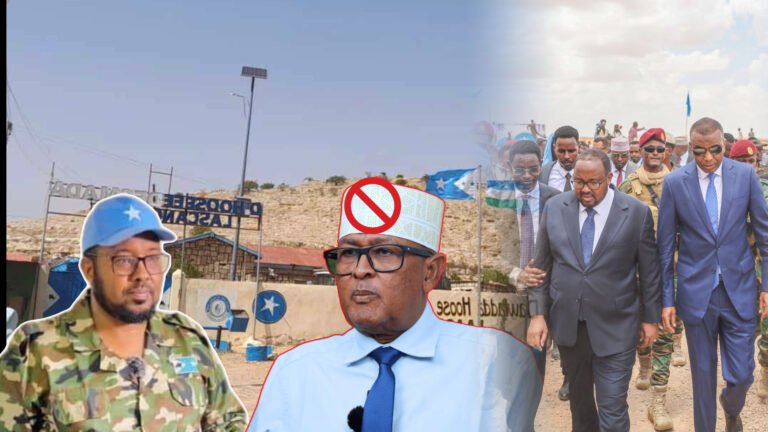
Axad 13, April 2025 {HMC} SSC Khaatumo oo sheegtay in gooni-isu-taagga Somaliland aanu guulaysan doonin
HOOS KA DAAWO MUQAALKA WARBIXINTA
{DAAWO MUQAALKA} Wararkii ugu Dambeeyay 13-4-2025.
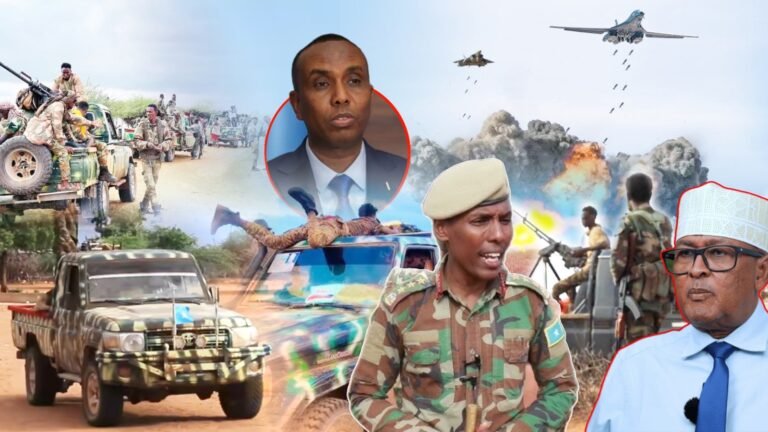
Axad 13, April 2025 {HMC} Waxaa halkan idin kugu soo gudbineyna Wararkii ugu rbacoDambeeyay Soomaaliya iyo Caalamka ee Warbaahinta Hiiraanweyn.
HOOS KA DAAWO WARARKII UGU DAMBEEYAY.
{DAAWO MUQAALKA} Dowladda Masar oo Muqdisho ka Dajisay Muqdisho Agab ciidan.
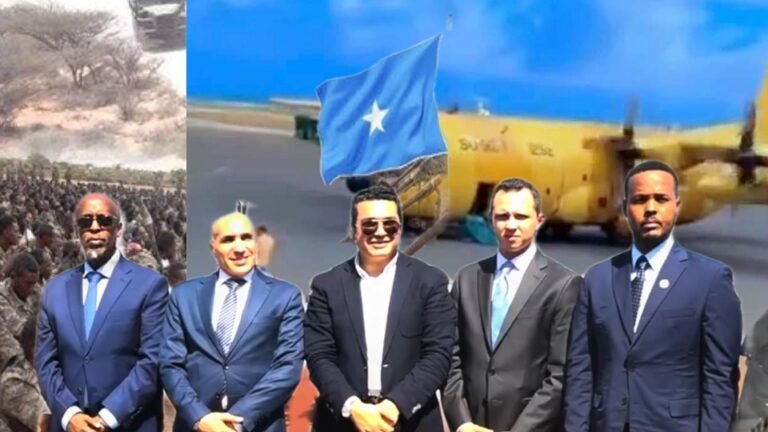
Axad 13, April 2025 {HMC} Dowladda Federaalka Soomaaliya ayaa maanta dowladda Masar kala wareegtay agab ciidan oo ay Muqdisho soo gaarsiiyeen wafdi sare oo ka socday Qaahira.
Wafdigan oo uu hoggaaminayo Axmed Cali Towfiiq Ibraahim Lutfi, Kaaliyaha Wasiirka Arrimaha Gudaha Masar, ayaa maanta soo gaaray magaalada Muqdisho, halkaas oo ay kusoo dhoweeyeen mas’uuliyiin ka tirsan dowladda Federaalka Soomaaliya.
Munaasabad kooban oo lagu wareejinayay agabka ciidanka ay ku deeqday Wasaaradda Arrimaha Gudaha ee Masar ayaa ka dhacday garoonka diyaaradaha Aadan Cadde ee magaalada Muqdisho.
HOOS KA DAAWO MUQAALKA WARBIXINTA
Nigerian bandit kingpin and 100 followers killed.
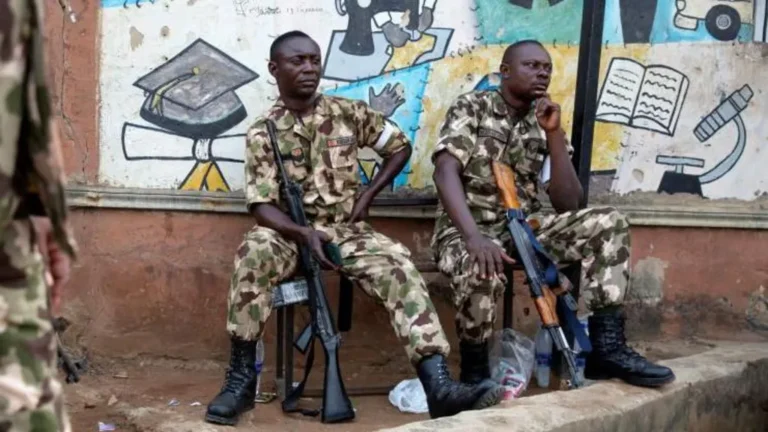
A notorious bandit kingpin and 100 of his suspected followers have been killed in a joint military operation in north-west Nigeria, authorities say.
Gwaska Dankarami was said to have been a high-value target who reportedly served as second-in-command to an Islamic State-linked leader.
The alleged gang leader had been hiding in the Munumu Forest, with authorities reporting that several other criminal hideouts were also destroyed across the state on Friday.
His apparent death comes after bandits kidnapped 43 villagers and killed four others in a deadly attack on a village called Maigora in the northern Katsina State earlier this week.
The police had said that it deployed security forces in pursuit of the kidnappers.
However, this is not the first time Dankarami’s death has been reported.
In 2022, the Nigerian Airforce claimed to have killed him in a similar operation.
The Katsina State commissioner for internal security and home affairs, Nasir Mua’zu, said the killing was a significant milestone in the fight against banditry in the state.
“It is expedient to state that this successful mission has significantly disrupted the criminal networks that have long terrorised communities across Faskari, Kankara, Bakori, Malumfashi, and Kafur,” Mua’zu added.
Security forces said they had also recovered and destroyed two machine guns and locally fabricated shotguns.
In a separate operation on Thursday, security forces killed six bandits, including their commander, while several other bandits escaped with bullet wounds.
Seven motorcycles were also intercepted and recovered during the intelligence-led operation.
Katsina, the home state of former Nigerian President Muhammadu Buhari, has witnessed sporadic attacks by bandits and kidnappers that have claimed many lives.
The state governor, Malam Dikko Umaru Radda, has expressed the government’s determination to eliminate criminals and ensure every forest is thoroughly monitored to protect residents.
The authorities said that the operations are part of a broader effort to restore stability in the state and the north-west region of Nigeria, which has witnessed repeated banditry attacks.
‘Death is everywhere’: Sudan camp residents shelter from attacks.
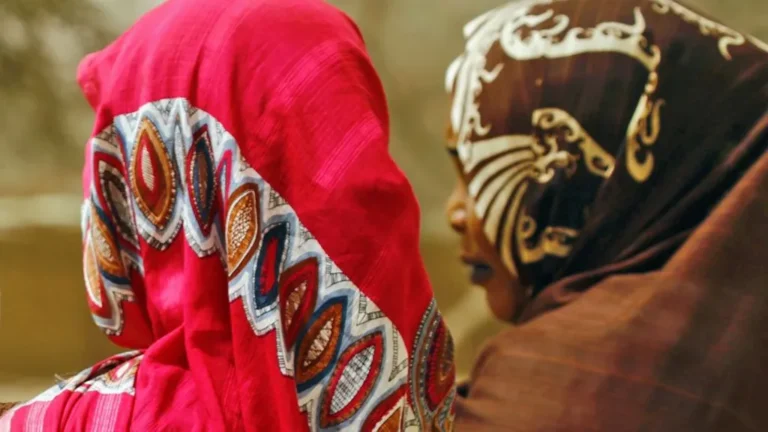
Sunday 13, April 2025 {HMC} Devastating attacks on a camp hosting hundreds of thousands of people who had fled Sudan’s civil war have continued for a third day, residents have told the BBC.
One person in the Zamzam camp described the situation as “extremely catastrophic” while another said things were “dire”.
More than 100 civilians, among them at least 20 children and a medical team, have been killed in a series of assaults that began late last week in Sudan’s western Darfur region, the UN has said.
The attacks – on the city of el-Fasher and two nearby camps – have been blamed on the paramilitary Rapid Support Forces (RSF). It has said reports of atrocities were fabricated.
The camps, Zamzam and Abu Shouk, provide temporary homes to more than 700,000 people, many of whom are facing famine-like conditions.
News of the attacks comes on the eve of the second anniversary of the start of the civil war between the RSF and the army.
Contacting the BBC on Sunday morning, one Zamzam resident who works at a community kitchen providing food for those in the camp, said “a large number of young people” had been killed.
“Those who were working in the community kitchen have been killed, and the doctors who were part of the initiative to reopen the hospital were also killed,” Mustafa, 34, said in a WhatsApp audio message.
“My uncle and my cousin were killed. People are wounded, and there is no medicine or hospital to save them – they are dying from bleeding.
“The shelling is still ongoing, and we are expecting more attacks in the morning.”
He added that all routes out of the camp were closed and it was “surrounded from all four directions”.
Another resident, Wasir, said that “nothing [was] left in Zamzam”.
“A large number of civilians have fled, and we are still trying to leave, but we haven’t succeeded, all the roads are blocked, and we have children with us.
“Death is everywhere. As I speak to you now from inside the trench, there is shelling happening.”
Some camp residents have got out and made the 15km (nine mile) journey to el-Fasher, according to North Darfur’s Health Minister Ibrahim Khater.
“I am observing many people walking from Zamzam – mostly children, women and the elderly,” he said in a message to the BBC.
“Some were injured, tired and saying they lost their family – dead on the streets. The situation is catastrophic.”
The UN’s humanitarian co-ordinator in Sudan, Clementine Nkweta-Salami, said she was “appalled and gravely alarmed” by reports from Darfur.
“This represents yet another deadly and unacceptable escalation in a series of brutal attacks on displaced people and aid workers,” she added in a statement.
The US State Department also said it was “deeply alarmed by reports of attacks by the RSF on Zamzam and Abu Shouk”, adding: “We condemn the RSF’s attacks on the most vulnerable of civilians.”
British Foreign Secretary David Lammy, who is hosting a conference on Sudan on Tuesday, described the reports of “indiscriminate RSF attacks” as “shocking”.
Aid organisation Relief International said nine of its workers “were mercilessly killed including doctors, referral drivers and a team leader” in the attack on Zamzam.
The charity, which said it was the last provider of critical health services in the camp, alleged RSF fighters were to blame.
“We understand that this was a targeted attack on all health infrastructure in the region to prevent access to healthcare for internally displaced people.
“We are horrified that one of our clinics was also part of this attack – along with other health facilities in el-Fasher.”
Kashif Shafique, the charity’s Sudan director, told the BBC’s Newshour programme that what happened was not random.
Relaying what two surviving female members of staff had described, he said RSF fighters went into a safety bunker and shot the nine victims in the head and chest.
In a statement released on Saturday, the RSF said it was not responsible for attacks on civilians and that scenes of killing in Zamzam were staged to discredit its forces.
Assessing satellite images, a team of specialists at Yale University in the US said on Friday that “this attack conservatively represents the most significant ground-based attack on Zamzam… since fighting erupted in the el-Fasher area in spring of 2024”.
The Yale School of Public Health’s Humanitarian Research Lab said it had observed that “arson attacks have burned multiple structures and significant areas of the camp in the center, south, and southeast portions of the camp”.
The war – a power struggle between the army and the RSF – has created the world’s largest humanitarian crisis, forcing more than 12 million people from their homes and pushing communities into hunger.
It began on 15 April 2023, after the leaders of the army and RSF fell out over the political future of the country.
El-Fasher is the last major town in Darfur under army control and has been under siege by the RSF for a year.
SOURCE BBC
AUSSOM oo wajahaysa khatar dhaqaale.
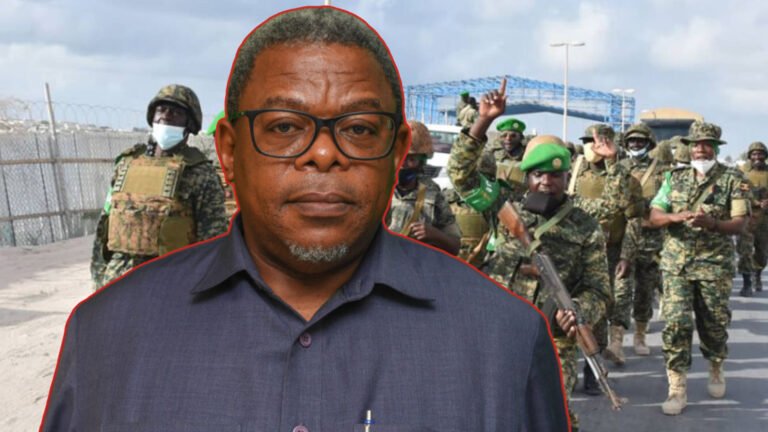
Sunday 13, April 2025 {HMC} Sivuyile Bam, Madaxa Howlgalka Taageerada Amniga Midowga Afrika ee Soomaaliya (AUSSOM), ayaa ka digay in howlgalka cusub uu wajahayo khatar weyn oo ku saabsan sii jiritaankiisa, kaddib markii ay sii xoogeysatay dhaqaale xumada heysata AUSSOM.
Isaga oo la hadlayay Golaha Ammaanka ee Qaramada Midoobay (UNSC) kulan gaar ah oo looga hadlayay xaaladda Soomaaliya, Bam ayaa sheegay.
“Xaaladda maaliyadeed ee AUSSOM waa mid aad u xun, khatarna ku ah jiritaanka howlgalka.”
Bam wuxuu xusay in howlgalka uu ku tiirsan yahay helidda maalgelin joogto ah iyo in ciidamada AUSSOM la keeno dalka si waqtiyeysan. Waxaa uu si gaar ah uga digay saameynta ba’an ee ay leedahay bixinta mushahar la’aanta ee socotay ilaa 7-9 bilood, taasoo keentay niyad-jab xooggan oo gaaray shaqaalaha rayidka ah iyo kuwa milatariga ee howlgalka ku jira.
Wuxuu sidoo kale caddeeyay in lagu wado in Kampala lagu qabto shir muhiim ah 25-ka April, kaas oo lagu wado in lagu xalliyo kala-duwanaanshaha u dhexeeya Midowga Afrika iyo Qaramada Midoobay ee la xiriira maalgelinta howlgalka.
AUSSOM ayaa hadda kordhisay tirada ciidamadeeda kahor 30-ka June, taariikhda la filayo in si buuxda looga guuro ATMIS, balse weli waxaa jira caqabado dhaqaale oo baahsan, kuwaas oo khilaafsan qorshaha uu dhigayo qaraarka UNSC ee tirsigiisu yahay 2767.
Qaraarkaasi wuxuu dhigayay saddex ikhtiyaar oo lagu maalgelin karo howlgalka AUSSOM, iyadoo lagu taliyey istiraatijiyad “isku-dhafan” oo mas’uuliyaddeeda ay si wadajir ah u qaataan Midowga Afrika iyo Qaramada Midoobay.
Cuba says US yet to clarify fate of two doctors abducted in Kenya 6 years ago

Sunday 13, April 2025 {HMC} Cuba has once again pointed a finger at the US over the prolonged delays in clarifying the fate of two doctors kidnapped in Madera in 2019 and suspected to have been in an area bombed by the US African Command (AFRICOM) last year.
Cuban Foreign Affairs Minister Bruno Rodriguez has, however, revealed that the efforts continue to clarify the situation of the two Cuban doctors, saying talks are still ongoing.
In a post on his official X page, Rodriguez noted that the country was marking six years since the two doctors were abducted and that their whereabouts were still a priority for the Cuban government.
“Six years ago, Cuban doctors Assel and Landy were kidnapped in Kenya while on an internationalist mission. Efforts to clarify the situation continue, with the ongoing attention and commitment of the highest level of the Party and the Government of Cuba,” he wrote.
The post failed to expound on exactly which measures were being put in place to ensure that the two, Assel Herrera Correa and Landy Rodríguez Hernández, would return home and whether or not they were alive.
This comes even as the Caribbean nation continues to blame the United States of America for failing to provide the necessary information a year after the US African Command (AFRICOM) attacked an Al Shabaab camp where the two were suspected to be held.
A report from the official media outlet Prensa Latina elaborated that after an airstrike by AFRICOM on February 15, 2024, news broke that the two doctors had been killed.
However, the Cuban government noted that, despite numerous efforts to obtain information from the US, none was presented that would allow for definitive conclusions and clarify whether the doctors were still alive or confirm their deaths.
“Given the nature of the conflict in Somalia and the impossibility of obtaining confirmation, in recent weeks the Cuban government has repeatedly requested, through direct communications and diplomatic notes, precise information from the United States government regarding the events that occurred,” the Foreign Ministry said in a statement.
After the airstrike, confusion reigned in the country, with the Cuban President, Miguel Diaz-Canel, being forced to address the news circulating on social media.
“I express all my solidarity and affection to the families of our doctors Assel and Landy in these moments of uncertainty and increased pain, in the face of the tragic news not yet confirmed, in whose clarification we are working hard with international authorities,” the president stated.
He promised to ensure that the country does not forget the two and that efforts to recover the two who were kidnapped on their way to Mandera Hospital in the presence of armed escorts would remain a priority.
Six years later, the Cuban government still blames the US for not providing detailed information on whether the doctors were found alive. With a new administration in Washington, this issue may once again take a back seat as President Donald Trump advocates for his America First agenda.
SOURCE

by Maurine Kirambia
The African country rammed with incredible beaches but 1 of world’s most dangerous places.

Sunday 13, April 2025 {HMC} Africa is full of stunning locations that people from across the world flock to see. But some places on the continent are also politically unstable and violent, and tourists are well advised to avoid them. One of these is Somalia, where conflict has been raging since the collapse of its government in 1991. After the overthrow of President Siad Barre, a power vacuum led to a civil war erupting between an array of factions, including the Somali National Movement (SNM) and forces in support of the government.
Later, groups like al-Shabaab, an extremist Salafi Jihadist military and political group that aims to impose its version of Islamic law on the state and overthrow the government, got involved. Outside actors have also intervened, including the United Nations (UN) and other international organisations. The UNOSOM mission established in 1992 aimed to restore peace and provide humanitarian aid in Somalia. It later evolved into UNOSOM II, which had a broader mission to establish a secure environment for aid delivery and promote peace.
In addition, the African Union Mission in Somalia (AMISOM) deployed troops to Somalia to support the Transitional Federal Government (TFG) and counter al-Shabaab.
Today, the primary conflict is between the Somali government and the militant group, but also includes other groups and clan militias.
These include Hizbul Islam, a former Islamic group that fought against al-Shabaab, and the Dhulbahante clan.
The Washington Institute says that the Islamic State (IS) is “underscoring the strategic significance of Somalia in its expansionist agenda”.
This includes establishing Somalia as a “pivotal base for its global jihadist network”.
Experts warn that this activity means that neighboring countries like Kenya and Ethiopia are “directly affected”, as “jihadist expansion threatens regional stability and maritime security”.
Militants are thought to be hiding deep in the mountains of north eastern Somalia.
Less than two weeks into his new term, US President Donald Trump said he had targeted a senior IS attack planner and others in Puntland – a semi-autonomous region of the African state – and “destroyed the caves they live in, and killed many terrorists without, in any way, harming civilians”.
Somalia’s rich cultural heritage and history and natural beauty means that, if the war were not happening, it most likely would be a major tourism hub.
The country boasts a long coastline with beaches, waterfalls, mountain ranges, and national parks.
There are also ancient ruins, mosques, and other architectural marvels waiting to be explored.
The Laas Geel Cave Paintings, for example, are believed to be more than 5,000 years old and are considered to be some of the best-preserved cave paintings in Africa, according to the Global Diversity Hub.
Despite the chaos caused by warfare, Somalia’s government still has a department of tourism.
It says on its website: “We enable an environment where people can visit and enjoy the diversity of Somalia.
“Of late Somalia has prioritised the advancement in winning the confidence of tourists to come and explore the ancient history and vast experience.”
Current advice from the Foreign Office to Brits reads: “FCDO advises against all travel to Somalia, including the three eastern regions of Somaliland – Togdheer, Sanaag and Sool – and excluding the three western regions of Somaliland – Awdal, Maroodijeh and Sahil.
“This is due to the threat from terrorist groups and continuing violence.”
Officials add: “FCDO advises against all but essential travel to the three western regions of Somaliland – Awdal (including Boorama), Maroodijeh (including Hargeisa) and Sahil (including Berbera).”
SOURCE
By Adam Toms