Home Blog Page 1110

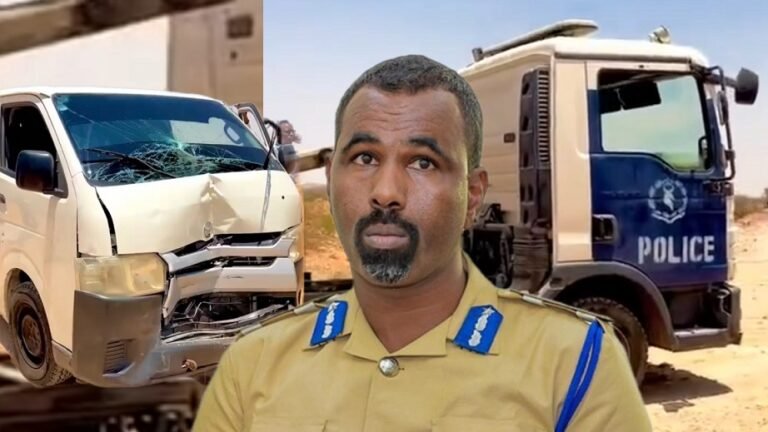
{DAAWO MUQAALKA} Puntland oo war ka soo saaray gaari ay isku Dileen 6 Askari.

0

Axad 23, March 2025 {HMC}  Ciidanka Booliska Puntland ayaa faahfaahin ka bixiyay iska hor imaad maanta ka dhacay magaalada Garoowe, kaas oo dhexmaray laba ciidan sababayna dhimashada labo askari iyo dhaawaca 5 kale oo labada dhinac ah.

War-saxaafadeed kasoo baxay taliska ciidanka Booliska Puntland ayaa lagu sheegay in hawlgal qorsheysan lagu qabtay gaari bas ah oo Booliisku ku sheegay in horay looga dhacay Xafiiska Hanti-dhawrka Puntland.

HOOS KA DAAWO MUQAALKA WARBIXINTA 

Cudurka Kilyo fadhiisiga oo aad ugu soo badanaaya Gobolka Waqooyi Bari Dalka Kenya

Axad, 23 March 2025 {HMC} Dhaqaatiirta caafimaadka ayaa sheegay in Cudurka kelyo fadhiisiga uu aad ugu soo badanayo muddooyinkii u dambeeyay dhulka Soomaalida, iyada oo aad ay u kordhayso tirada dadka u baahanaya dhaqitaanka Kelyaha ama heer ay gaaraan in la beddelo.

Sidoo kale waxa ay tilmaameen in Isbitaalka guud ee Wajeer uu tirakoob uu sameeyey ku ogaaday in ragga ay yihiin kuwa ugu badan ee xanuunkaasi la dhiban, “Bukaanada ayaa 58 kamid ah ay yihiin rag, halka haweenka tiradooda ay gaarayso ilaa 21 dumar ah” waa sida lagu sheegay tirakoobka Isbitaalka.

Dr Daa’uud Cabdi Sheekh oo kamid ah dhakhaatiirta ismaamulka Wajeer ayaa wareysi uu siiyay BBC uga warbixiyay dadka reer Wajeer ee cudurkan uu soo ritay oo tiradoodu soo badanayso, iyo habka ugu wanaagsan ee cudurkaasi looga hortagi karo.

”Kelyo fadhiisashadu waa cudur kelyaha ku dhaca, waxayna ka bilaabataa wax yar oo aan qiimo lahayn oo wax laga qaban karo, sida dhiig karka oo kugu ridi kara, iyo kiniiniyada xanuun baabi’iyaha oo Soomaalidu aadka u cunaan” ayuu yiri dhakhtarku.

Baaritaan la’aanta aan joogtada ahayn ayeysan dad badani isaga warqabin in cudurkani uu soo hayo ama ay qabaan, iyada oo ay isbitaallada tagaan xilli aan waxba laga qaban karin oo kilyuhoodu fadhiisteen, sida uu dhaqtarku sheegay.

”Qofka Soomaaliga ah cudurkiisa waxaa la ogaadaa marka uu soo dhaco, qofka suu u fiican yahay wuu iska ordayaa wuu soo fadhiisanayaa, waa la baarayaa, kellidii inay fadhidaa la arkayaa, markaas oo ah goor dambe oo aan waxba laga qaban karin ilaa la dhaqo” ayuu sheegay Dr Daa’uud Cabdi oo ka hawlgala Wajeer.

Dr Daa’uud ayaa aaminsan isbedelka nolosha Soomaalida in uusan sabab u ahayn xanuunka kelyaha oo waxyaabaha keena ay aad u badan yihiin, Dadka qaba sonkorta iyo dhiig karka ayaa ah kuwa ugu badan ee laga diiwaan galiyay isbitaalka Wajeer ee la dhiban kelyo fariisashada.

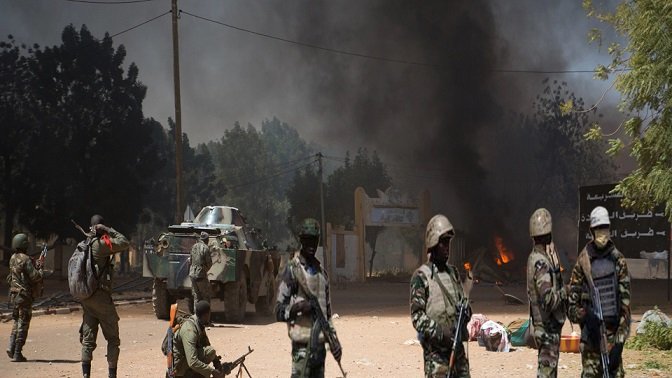
Niger Declares Three Days of Mourning After Mosque Attack Kills 44.

0

Sunday, 23 March 2025 {HMC} The government of Niger has declared three days of mourning following an attack on a mosque in the country’s southwest that killed at least 44 people.

The victims were killed in a “savage” armed assault in the Fambita quarter of the rural border town of Kokorou, the interior ministry said in a statement broadcast on state television on Friday.

West Africa’s Sahel region has seen an uptick in violence in recent years following the rise of armed fighters linked to the al-Qaeda and ISIL (ISIS) armed groups that took over territory in north Mali after the 2012 Tuareg rebellion.

Since then, it has spread into neighbouring Niger and Burkina Faso, and more recently into the north of coastal West African countries such as Togo and Ghana.

Niger’s interior ministry said the latest attack occurred early in the afternoon as people were attending a prayer service at the mosque during the Muslim holy month of Ramadan.

“The heavily armed terrorists surrounded the mosque to carry out their massacre with unusual cruelty,” it said, adding that the attackers also set fire to a local market and homes.

The defence ministry blamed the attack on the Islamic State in the Great Sahara, or EIGS, an affiliate of ISIL, in a statement late on Friday.

EIGS had no immediate reaction to the allegation. Previous attacks in Niger were claimed by al-Qaeda affiliate groups.

The government has promised to hunt down the perpetrators and put them on trial.

The military-run government of Niger frequently fights armed groups in the region, and civilians are often victims of the violence.

Since July 2023, at least 2,400 people have been killed in Niger, according to the database of ACLED, a non-governmental organisation that gives armed conflict location and event data.

Across the greater Sahel region that encompasses several countries, hundreds of thousands more have been killed and millions displaced as armed groups attack towns and villages as well as government security outposts.

The failure of governments to restore security contributed to two coups in Mali, two in Burkina Faso and one in Niger between 2020 and 2023. All three remain under military rule despite regional and international pressure to hold elections.

Since the coups, authorities have turned away from traditional Western allies and have sought military support from Russia instead.

Source: Al Jazeera and news agencies

Ethiopia’s army claims to have killed 300 Fano fighters in renewed clashes.

0

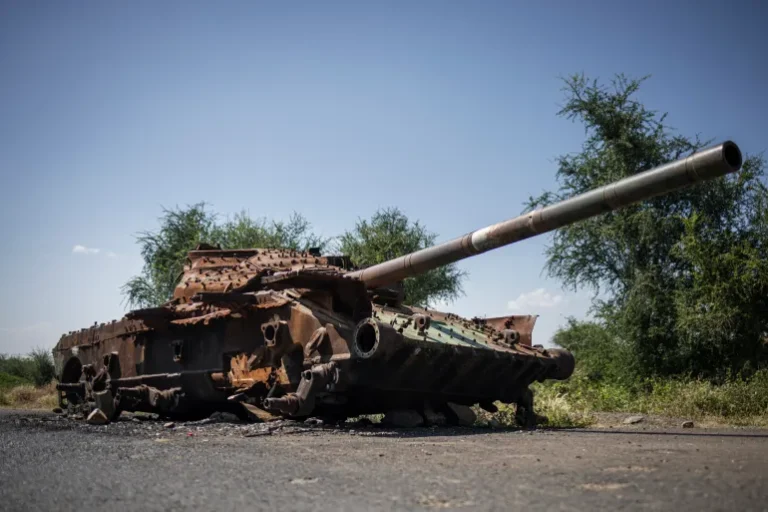
Sunday, 23 March 2025 {HMC} Ethiopian troops have killed more than 300 Fano armed group fighters, former allies against rebels in the Tigray region, in two days of renewed clashes in the northern Amhara region, according to the army.

The military claimed in a statement on Friday that the fighters had carried out attacks in various zones of the Amhara region before being “destroyed” by the army.

The statement said that 317 Fano fighters were killed and 125 others injured.

However, Abebe Fantahun, spokesperson of Amhara Fano in Wollo Bete-Amhara, contradicted the tally, telling the Reuters news agency late on Friday the army had not killed even 30 of their fighters.

Yohannes Nigusu, spokesperson for Fano in Gondar, Amhara region, said 602 federal army soldiers were killed in the fighting and 430 wounded, while 98 soldiers had been captured and weapons had been seized by the fighters.

Former allies

The Fano fighters fought alongside the Ethiopian army and Eritrean forces in a two-year war against the Tigray People’s Liberation Front, which controls the northern Tigray region.

Since then, Eritrea and Ethiopia have fallen out, with the former excluded from peace talks to end that war in November 2022.

Fighting between the army and the Fano fighters broke out in July 2023, following Amhara’s sense of betrayal regarding the terms of the 2022 peace deal.

Last year, the TPLF split into two factions led by Debretsion Gebremichael and Getachew Reda, each claiming party control.

The army’s statement on Friday accused Brigadier General Migbey Haile, a senior military official allied with Debretsion’s faction, of supporting the Fano fighters’ attacks in the Amhara region.

“Brigadier General Migbey Haile is an anti-peace and anti-development promoter who has a history of putting the people of Tigray into war without any military knowledge,” the army said.

However, Abebe told Reuters that that was a “lie” and denied the general had any links to the Fano fighters.

‘Abusive army acting with impunity’

Fears of a new war emerged in recent weeks after Eritrea reportedly ordered a nationwide military mobilisation and Ethiopia deployed troops towards their border.

Meanwhile, Human Rights Watch has accused the Ethiopian military of human rights abuses and committing war crimes during its ongoing fight against the Fano fighters.

Last year, Human Rights Watch found that several dozen civilians were executed in the town of Merawi in Ethiopia’s northwestern Amhara region.

“The Ethiopian armed forces’ brutal killings of civilians in Amhara undercut government claims that it’s trying to bring law and order to the region,” deputy Africa director at Human Rights Watch, Laetitia Bader, said.

Source: Al Jazeera and news agencies

Netumbo Nandi-Ndaitwah sworn in as Namibia’s first female president

0

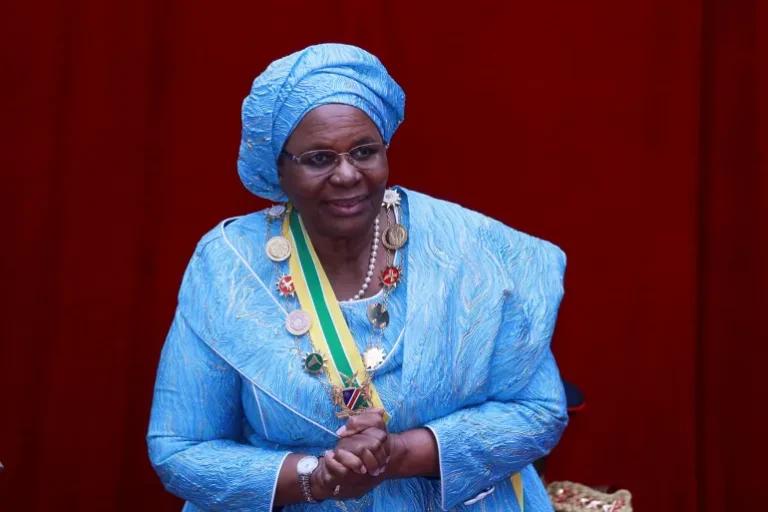
Sunday, 23 March 2025 {HMC} Netumbo Nandi-Ndaitwah has been sworn in as Namibia’s first woman president, after winning elections last year that extended the governing party’s 35-year grip on power.

Nandi-Ndaitwah, 72, became one of the few women leaders on the African continent, following a ceremony on Friday attended by heads of state from several African countries including Angola, South Africa and Tanzania.

Outgoing President Nangolo Mbumba, 83, handed power to Nandi-Ndaitwah at a ceremony that coincided with the 35th anniversary of Namibia’s independence and was moved from the Independence Stadium to State House because of rare heavy rains.

Loud applause and ululations erupted as NNN, as Nandi-Ndaitwah is popularly known, took her oath of office.

In her inaugural speech, Nandi-Ndaitwah acknowledged her historic election, but also said that Namibians elected her for her competence and merit.

She added that while the country has seen progress since independence, “there’s a lot that needs to be done.”

Previously in the post of vice president for a year, she is a veteran of the South West Africa People’s Organisation (SWAPO) that led the sparsely populated and uranium-rich country to independence from apartheid South Africa in 1990.

Nandi-Ndaitwah secured 58 percent of the vote in the chaotic November elections, which were extended several times after logistical failures led to major delays.

Namibia is witnessing one of its “foremost daughters breaking through the glass ceiling”, outgoing leader Mbumba said. “It has been a long time coming.”

The youthful opposition Independent Patriots for Change (IPC) mounted a strong challenge at last year’s election but took only 25.5 percent of the presidential vote, underscoring continued loyalty to SWAPO even as the popularity of other Southern African liberation parties has waned.

A key issue at the ballot box was widespread unemployment among the young population, with 44 percent of 18- to 34-year-olds without work in 2023 in a country of just three million people.

On the eve of her inauguration, Nandi-Ndaitwah said tackling unemployment was a priority.

“In the next five years we must produce at least 500,000 jobs,” she told South Africa’s national broadcaster SABC, adding it would require an investment of 85 billion Namibian dollars ($4.67bn).

Key sectors for job creation are agriculture, fishing and the creative and sports industries, she said.

She appealed for unity after political divisions surfaced during the elections, which the IPC sought to annul in a failed court action.

“We can make our politics during the campaign and so on but once it’s over, we must build Namibia together,” she said.

Source: Al Jazeera and news agencies

DRC’s M23 Rebels to Withdraw from Walikale in Peace Gesture.

0

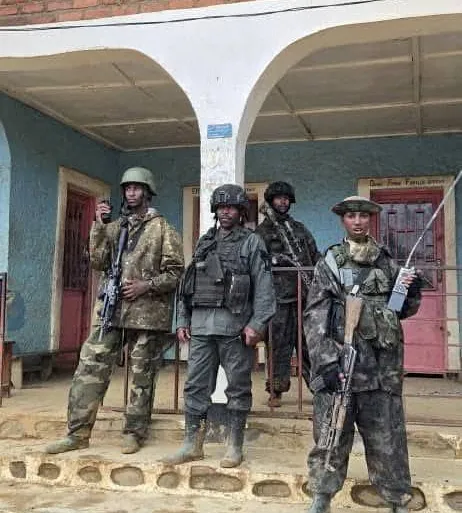
Sunday, 23 March 2025 {HMC} M23 rebels staging an offensive in the eastern Democratic Republic of the Congo (DRC) will withdraw their forces from the town of Walikale, which they took control of this week, in support of efforts to address the conflict, a rebel alliance that includes M23 has said.

The Congo River Alliance said in a statement on Saturday that it had “decided to reposition its forces” from Walikale and surrounding areas.

The Congolese government said it hoped the move would be translated into concrete action after M23 this week pulled out of planned talks with Congolese authorities in Angola at the last minute due to European Union sanctions on some of its leaders and Rwandan officials.

It would have been its first direct engagement with DRC’s government after President Felix Tshisekedi reversed his longstanding refusal to speak to the rebels.

This decision was in line with a ceasefire declared in February and in support of peace initiatives, the alliance said in a statement that was greeted with scepticism by DRC government army officers.

A senior member of the alliance who did not wish to be named told the Reuters news agency that repositioning meant withdrawing to “give peace a chance”.

The source declined to say where M23 rebels would withdraw.

“We are asking for Walikale and surroundings to remain demilitarised,” the source said.

“If the FARDC (DRC’s army) and their allies come back, this means they want to relaunch hostilities.”

Foreign Affairs Minister Therese Kayikwamba Wagner told reporters: “We are going to see whether M23 will withdraw from Walikale and whether M23 will give priority to dialogue and peace … So we hope that this will be translated into concrete action.”

Walikale is the furthest west the rebels have reached in an unprecedented advance that has already overrun eastern DRC’s two largest cities since January.

Its capture put the rebels within 400km (250 miles) of Kisangani, the country’s fourth-biggest city with a bustling port at the Congo River’s farthest navigable point upstream of the capital Kinshasa, some 1,500km (930 miles) away.

SOURCE Aljazeera 

Somalia Earns Historic First Point in World Cup Qualifier.

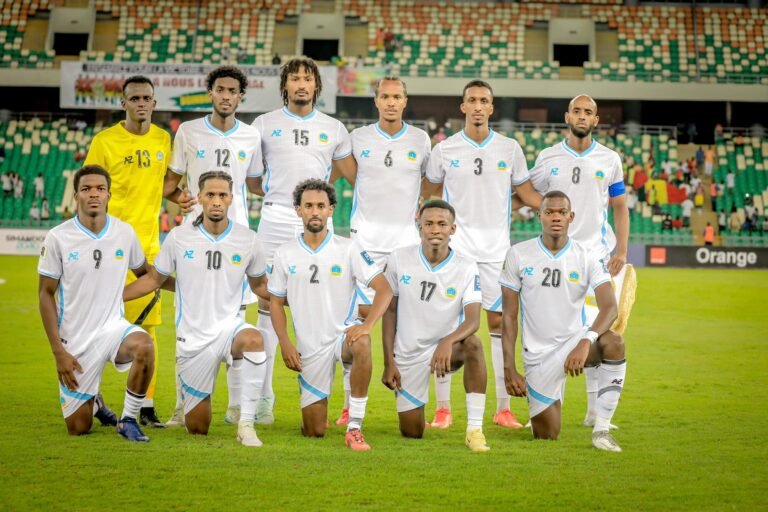
Sunday, 23 March 2025 {HMC} Somalia earned its first point of the 2026 FIFA World Cup qualifiers on Friday with a resolute defensive display in a goalless draw against Guinea at the Stade Alassane Ouattara in Abidjan.

It was a result few predicted—and even fewer believed possible as the match unfolded.

At the heart of this defensive masterclass was Abdirahman Maamaan—a name that may not resonate in European football circles, but on Friday night in Abidjan, he was a colossus.

The 25-year-old goalkeeper thwarted wave after wave of Guinean attacks, making no fewer than 13 saves, including a spectacular point-blank stop to deny Serhou Guirassy midway through the second half.

Guinea, boasting top-tier talent from the Bundesliga, Ligue 1, and La Liga, controlled possession and dictated the tempo.

François Kamano found pockets of space, Issiaga Sylla surged forward with menace, and Mohamed Ali Camara posed a constant aerial threat from set pieces—yet none could find a way past Somalia’s last line of defense.

In the 30th minute, Camara’s thunderous volley from a loose corner was pushed wide by Maamaan’s outstretched gloves, setting the tone for the night.

The Ocean Stars, meanwhile, were disciplined and opportunistic, absorbing pressure and countering when the chance arose.

Their best moment came in the 75th minute when 18-year-old Yusuf Ahmed, earning just his third international cap, burst past the Guinean backline, only to see his effort drift agonizingly wide.

Despite finishing with just 34% possession, Somalia’s organization and discipline belied its underdog status.

Fullback Yonis Farah made a crucial last-ditch tackle to deny Guirassy a tap-in, while captain Ahmed Abdi marshaled the defense with veteran composure.

For Guinea, the draw is a significant setback.

What was expected to be a routine three points now leaves the Syli National five points behind Group G leaders Algeria and Mozambique, both sitting on 12 points.

With an away trip to Uganda next, Guinea’s qualification hopes are under increasing pressure.

Somalia, still at the bottom of the table but no longer pointless, will take this performance as a sign of progress.

From a team that suffered four straight defeats to one capable of holding its own against continental heavyweights, this result could mark a turning point.

Next up is a trip to Botswana on Tuesday—a fixture that once seemed unwinnable but now presents an opportunity.

Islamic State in Somalia: the terrorist group’s origins, rise and recent battlefield defeats

0

Saturday, 22 March 2025 {HMC} The Islamic State in Somalia is an affiliate of the transnational jihadist group Islamic State, known in short as ISIS.

Based in the semi-autonomous northern Somalia territory of Puntland, the terrorist group was the target of the first foreign combat operation of the Trump administration in February 2025.

Previously, the group has been linked to planned terror attacks on the Vatican and on the Israeli embassy in Stockholm.

Stig Jarle Hansen, a researcher and author of several books on jihadism in Africa, examines its origins, rise and recent battlefield defeats in the mountains of Puntland.

1. The rise of the Islamic State

Before the establishment of the Islamic State in Somalia in 2015, the Somali jihadist group al-Shabaab had established itself in the north.

The small group had extensive connections to smuggling networks.

It later split into two and the future leader of the Islamic State in Somalia, Sheikh Abdulqader Muumin, emerged from one of the splinter groups.

In Somalia, clans define the relationship between people and all actors in the society.

The connections of the new group to the Ali Suleiban sub-clan enabled it to profit from the clan’s links to smuggling and maritime piracy groups.

Puntland is the hub of communication and maritime trade between Somalia and Yemen, as well as the wider Middle East. Smuggling has gone on in the region for centuries.

The rugged terrain is ideal for piracy, illegal smuggling and insurgents.

Puntland has been more or less autonomous from the rest of Somalia for more than three decades, and the Somali government has little influence there today.

2. The jihadist behind the Islamic State in Somalia

Muumin lived in Sweden through the 1990s and early 2000s and later moved to the UK.

Back in Somalia, he joined al-Shabaab and became a prominent figure in the group’s jihadist videos. Such videos aim to maintain morals, attract new recruits and create sympathy for the group.

In 2015, Muumin defected to lead the Islamic State in Somalia.

His second-in-command was another Ali Suleiban clansman, Mahad Moalim.

In 2016, the first video of the group was circulated through Islamic State media outlets.

A milestone for the group followed its 2017 suicide bombing of the Juba Hotel in Bosaso, Puntland’s commercial capital and sea port.

This enabled the Islamic State in Somalia to pressure Bossaso-based businesses to pay it protection money, the single most important source of income.

In 2017-2018, the group is believed to have been behind as many as 50 assassinations in central Somalia.

The killings were a forceful tool to generate protection money.

On 27 July 2018, the Somali group was officially designated as a full province by the Islamic State, also known as ISIS.

The Maktab al-Karrar regional office was based in the small Puntland chapter, giving it global responsibilities.

The Somali group was made responsible for the central African and the Mozambique provinces of the Islamic State.

Money flowed to the group from the Islamic State, as did extortion money from Bossaso, other northern Puntland cities and more infrequently from Mogadishu.

In the first half of 2022, the US Treasury claimed that the organisation generated US$2.3 million from extortion payments, related imports, livestock and agriculture.

The regional office and Muumin emerged as key financial players in east Africa, and even outside it, from their base in Buur Dexhtaal in Bari Puntland.

Indeed, unnamed US officials claimed in 2023 that Muumim had been made the transnational leader of the Islamic State.

3. An overblown reputation

The Islamic State’s reputation in Somalia is often overstated. The group has never captured or held large territories.

Its numbers in 2024 were estimated to be between 600 and 1,600. That pales in comparison to al-Shabaab in the south of Somalia.

Its links to a planned attack on the Israeli embassy in Stockholm 2024 were probably weak and failed to hold up in court. And the jihadist linked to a planned attack in the Vatican 2018 seems to have left Islamic State prior to the planning.

It is also doubtful that Muumin is the global leader of the Islamic State as claimed by some.

That’s for two main reasons. First, an Islamic State leader has to be drawn from a tribe related to the prophet (Qureshi).

Muumin is not. Second, the Islamic State in Somalia is the smallest of the Islamic State provinces in Africa. It is likely that a leader of a stronger province would have ranked higher.

Although the income-gathering capacities of the Puntland-based group give it prominence in the Islamic State media, the Islamic State in Somalia does not rank higher than the Islamic State in the Sahara and Mozambique.

4. Down but not out

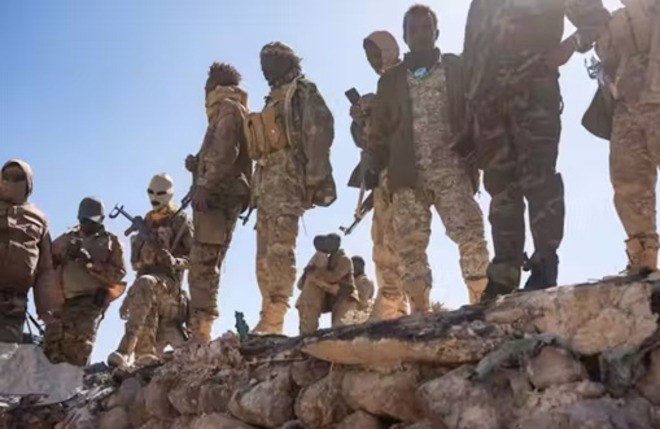
The Puntland authorities launched a relatively successful counter-offensive against the Islamic State in January 2025.

This was combined with air support by the US and the United Arab Emirates.

Puntland won important battles in January and February, including an attack in which it killed 70 Islamic State fighters.

By late February, the morale of the Islamic State fighters seemed to break. With the fall of Buur Dexhtaal, the main base, in March, all the larger known bases had fallen. Many of the fleeing foreign fighters were captured.

But the Islamic State is not defeated. The terrain enabled some of the fighters to hide.

Neither Muumin, who is in his 70s, nor his second-in-command Abdirahman Fahiye have been reported killed. There are at least several hundred fighters left.

If the Islamic State is still able to extort money from the northern business community, it could recruit from the large numbers of Oromo Ethiopian refugees in and around Bosaso, as well as locals who need jobs.

SOURCE 

One million malnourished children in Nigeria and Ethiopia risk losing aid, UNICEF says

0

Saturday, 22 March 2025 {HMC} The United Nations children’s agency said on Friday it will run out of its supply of lifesaving food to treat children suffering from acute forms of malnutrition in Ethiopia and Nigeria within the next two months due to lack of funding exacerbated by Trump administration cuts to foreign aid.

Some 1.3 million children under five suffering from severe acute malnutrition risk losing access to lifesaving support this year in Ethiopia and Nigeria, UNICEF says.

“Without new funding, we will run out of our supply chain of Ready-to-Use-Therapeutic-Food by May, and that means that 70,000 children in Ethiopia that depend on this type of treatment cannot be served,” Kitty Van der Heijden, UNICEF’s deputy executive director, told reporters in Geneva via video link from Abuja on Friday. “Interruption to continuous treatment is life-threatening.”

In Nigeria, UNICEF said it may run out of supplies to feed 80,000 malnourished children as soon as the end of this month. Van der Heijden described recently being in a hospital in Maiduguri with a child who was so malnourished that her skin was falling off.

International donors have in recent years reduced contributions to UN agencies, including UNICEF. Its funding woes were accelerated when the United States, its top donor, imposed a 90-day pause on all U.S. foreign aid on the first day of President Donald Trump’s return to the White House in January.

That action, and ensuing orders halting many programmes of the U.S. Agency for International Development worldwide, have jeopardised the delivery of lifesaving food and medical aid, throwing into chaos global humanitarian relief efforts.

“This funding crisis will become a child survival crisis,” warned Van der Heijden, adding that the sudden nature of the cuts did not give the agency the ability to mitigate the risks.

Funding cuts have also hit health programmes offering nutrition and malaria care for pregnant women and children in Ethiopia. Twenty-three mobile health clinics were taken out of operation in the region of Afar, with only seven left operating due to funding cuts, according to UNICEF.

Reporting by Olivia Le Poidevin Editing by Bill Berkrot

Mandera man jailed for 30 years for killing his boss.

0

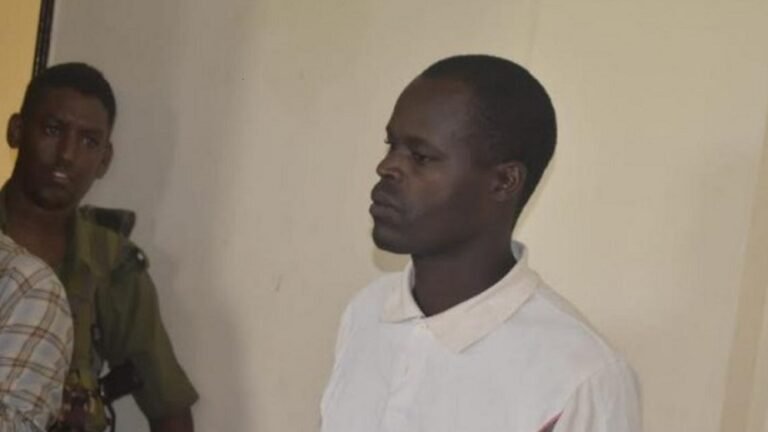
Saturday, 22 March 2025 {HMC} A middle-aged man has been jailed by Garissa High Court for 30 years for the murder of his employer in May 2023.

Appearing before the high court judge, Justice John Onyiego, the accused, Anthony Murithi Nyaga, had been charged with the murder of Hassan Salat Mohamed, contrary to Section 203 read with 204 of the penal code.

According to the relatives of the deceased, Nyaga had been employed by their kin for 9 years before committing the offense.

Nyaga was employed at a quarry mining site before the government banned the activities in Mandera County following increased insecurity cases occasioned by Al Shabaab terrorists.

After the ban, his employer, Mohamed, is said to have asked him to take leave until the ban was lifted, but instead, the accused hit him on the head, killed him, and buried him in a shallow grave before escaping to his home county, Embu, where he was arrested and arraigned in Garissa court.

While sentencing the accused, the court noted that the accused did not show any remorse and had abused his employer’s trust. Thus, in support of the case, the prosecution called 11 witnesses, leading to his conviction.

“I have considered the circumstances under which the offense was committed. I have also considered the negative pre-sentencing report prepared and the mitigation record. The accused person is not remorseful, and the offense committed is very serious,” the judge ruled.

“The accused person committed a brutal and inhuman offense, abused his employer’s trust, and cut off his income source; he deserved a deterrent sentence,” he added.

Abdirizack Salat, who was a nephew to the deceased, while welcoming the ruling, was, however, quick to add that the suspect should have been handed a longer jail term.

“As a family, we are happy that justice has finally been served to us as a family. Even though we would have really wished to see the victim handed at least 50 years or even a life sentence because of what he did,” said Salat.

Salat further said that they will challenge any effort by the accused to appeal the judgement, saying that as a family they were yet to heal from the unfortunate incident, two years down the line.

On her part, Sumeya Hassan Salat, a daughter to the deceased, said that it has been two years of suffering and mental anguish since the passing on of her father.

Sumeya, who was struggling to control her tears, said that life has never been the same again since her father was murdered.

“As a family we know that we will never have our father back because whatever happened is irreversible, but at least we take solace from the fact that as a family we got justice from our courts,” a visibly emotional Sumeya said.


By Erick Kyalo