


Khamiis 26, DEC 2024 {HMC} Dhageystayaal halkan waxa aan idiin kugu soo gudbi neynaa Warka Duhurnimo ee Warbaahinta Hiiraanweyn
Warka waxaa soo jeedinayo ::Abdiyare & Zahro Gabre
Farsamadii ::Yaasiin Daacad
Khamiis 26, DEC 2024 {HMC} Dhageystayaal halkan waxa aan idiin kugu soo gudbi neynaa Warka Duhurnimo ee Warbaahinta Hiiraanweyn
Warka waxaa soo jeedinayo ::Abdiyare & Zahro Gabre
Farsamadii ::Yaasiin Daacad

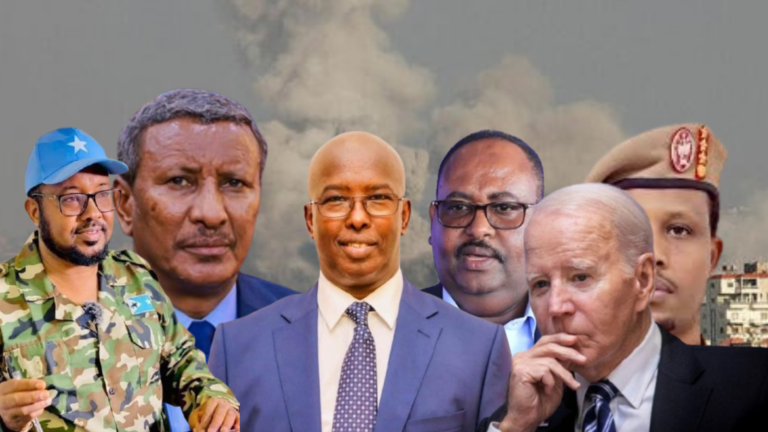
Khamiis 26, Dec 2024 {HMC} Xildhibaan Maxamed Abiib Oo ka Hadlay Xasuuqa ka dhacay Dacawaley
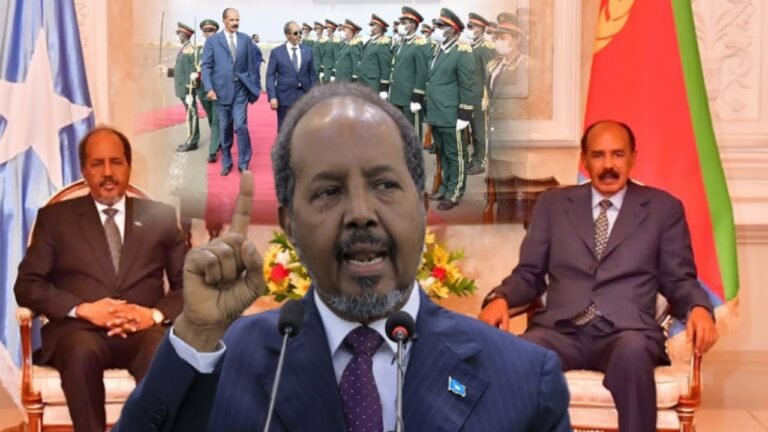
Khamiis 26, Dec 2024 {HMC} Madaxweynaha Eritrea “Waa in la joojiyaa faragelinta lagu hayo arrimaha gudaha Soomaaliya”.
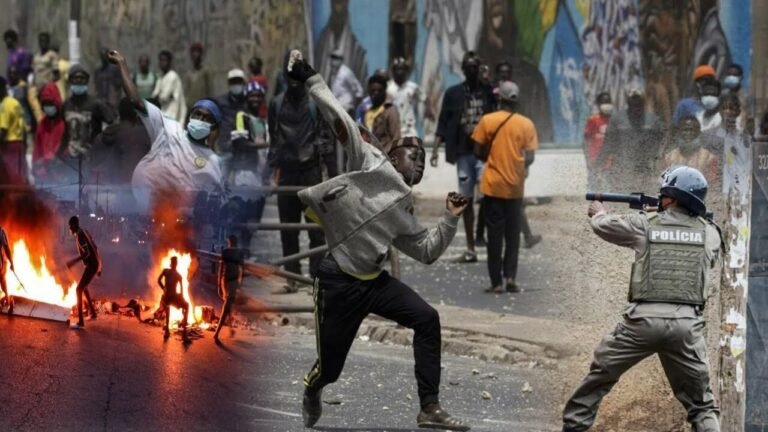
Khamiis 26, Dec 2024 {HMC} Ganacsigii ugu badnaa ee Soomaalida oo lagu boobay dalka Mozambique.
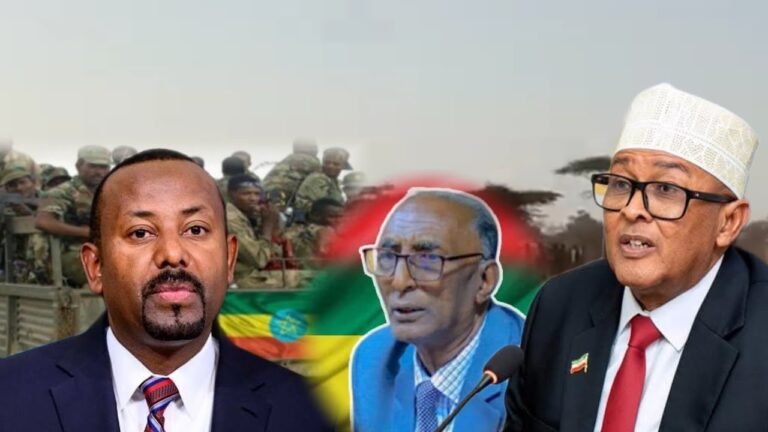
Khamiis 26, Dec 2024 {HMC} Soomaaliland iyo Itoobiya oo ka wada hadlaya dagaalkii Dacawaley
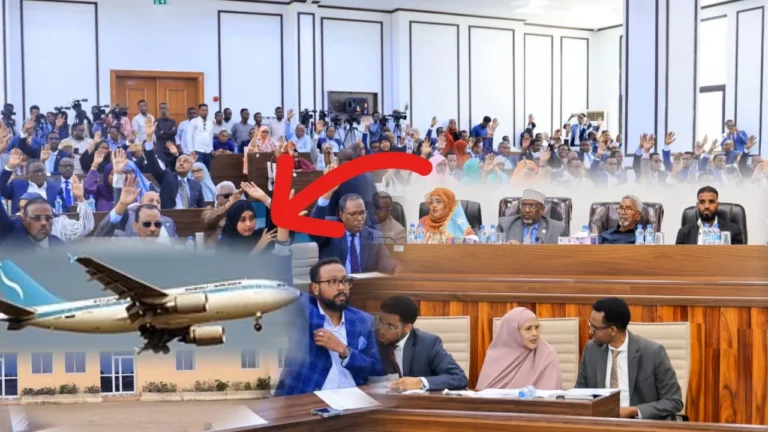
Khamiis 26, Dec 2024 {HMC} Xildhibaana ka tirsan Baarlamaanka oo digniin soo saaray.
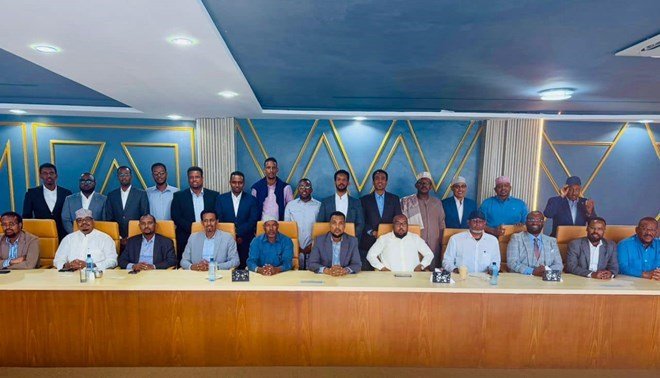
Khamiis 26, Dec 2024 {HMC} Xildhibaano katirsan Baarlamaanka Soomaaliya ayaa si kulul u canbaareeyay go’aannada lagu xayiray duulimaadyada rayidka ah ee Doolow, kuwaas oo ay sheegeen in ay ka hor imaanayaan shuruucda dalka iyo axdiyada caalamiga ah.
War-saxaafadeed ay soo saareen xildhibaanndan, ayaa lagu sheegay in go’aanka hay’adda duulista uu yahay mid si cad uga soo horjeeda qodobbada 61aad, 69aad iyo 21aad ee Dastuurka KMG ah ee Soomaaliya.
Qodobbadaas ayaa si cad u damaanad qaadaya xorriyadda isu-socodka muwaadiniinta Soomaaliyeed iyo waajibaadka hay’adaha dowladda ee ilaalinta xuquuqdaas.
Xildhibaannada ayaa sidoo kale ku eedeeyay madaxda dowladda in ay caadeysteen xad-gudubyo ku saabsan xuquuqda muwaadiniinta iyo inay si aan sharci ahayn u hakiyaan isu-socodka gudaha dalka, taasoo liddi ku ah sida ay sheegeen shuruucda qaranka iyo axdiyada caalamiga ah ee ay Soomaaliya ka qayb tahay, sida Axdiga ICAO/Chicago.
War-saxaafadeedka ayaa ugu dambayn digniin adag loogu diray hay’adaha iyo madaxda mas’uulka ka ah falalkan, iyagoo ku boorriyay in ay si degdeg ah dib ugu noqdaan amarro iyo ficillo lagu sheegay inay yihiin kuwa sharci-darro ah.
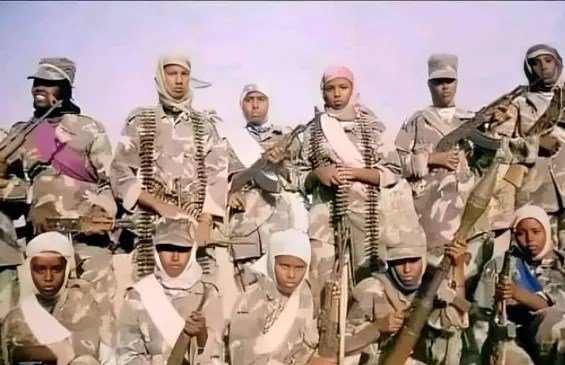
Thursday 26, Dec,2024 {HMC} Hinda Aden and her fellow rebel fighters were trekking through the grasslands of Ethiopia’s Ogaden region under the cover of night, to avoid the enemy’s gaze, when they saw headlights approaching in the distance.
“We knew who it was – that’s when we started running,” Hinda says about that fateful August 2006 night – the first time she found herself on the front lines of a decades-long war that had raged in Ethiopia’s far east.
With each step, the then-22-year-old ventured deeper into the bush, as Ethiopian military vehicles pursued her team of Ogaden National Liberation Front (ONLF) rebels through the dark.
The ONLF, which formed in 1984, was a social and political movement that transitioned into an armed group in the 1990s, as it battled against the Ethiopian army with the goal of achieving self-determination for ethnic Somalis living in Ogaden.
Hinda joined the rebellion in 2002 at age 18. Four years later she was pushing through the grassland, gun in hand, while the Ethiopian army pursued the ONLF by land and air.
“I saw flashes coming from the [military] planes, that’s when I knew they were taking [surveillance] pictures of us and likely feeding it back to the ground forces trying to capture us,” Hinda says.
The rebels tried hiding among the trees, but knew they’d soon be found. “All I could do was clutch my AK-47 tighter and keep moving.”
Her company, which numbered about 100 that night, including Hinda and four other female fighters, evaded their enemy. By sunrise, they had lost their pursuers – or so they thought.
As they walked in the scorching sun through the rural countryside of Qorahay province – sparsely populated as many civilians had fled the ongoing conflict – they came face to face with soldiers.
“We encountered Ethiopian troops but this time there was no cover. So we had no choice but to fight them head-on right there in the open,” Hinda says. “They even had tanks but it didn’t deter me. I was ready to be martyred that day.”
As the two sides clashed, gunfire and blasts gripped the air and shells struck the soil around them. Once the smoke cleared, several of Hinda’s comrades lay dead, including three fellow female rebels.
That August 5, 2006 battle in Hashalile was Hinda’s first combat experience upon returning from neighbouring Eritrea, where she had spent four years undergoing military training as a member of the ONLF – and it’s one that still stays with her even years after a peace deal was signed between the two sides in 2018, formally ending hostilities.
Intense rebel war
The origins of the Ogaden conflict are rooted in European colonialism but have affected generations of ethnic Somalis – many of whom, like Hinda, made the decision to take up arms.
In 1948, the British Empire began its colonial partition of the Somali territories in East Africa; Ogaden was ceded to Ethiopia in July that year. The partition of the territory coincided with the partitions of Kashmir and Palestine that also transpired in 1948. By 1954, more Somali territories had been ceded to Ethiopia by colonial Britain as part of the Anglo-Ethiopian Treaty.
Since, many Somalis in the Ogaden region have viewed their struggle against the Ethiopian state as an anti-colonial one – with the rebels initially receiving assistance and support from neighbouring Somalia in their struggle for self-determination.
However, following the collapse of the Somali government in 1991, the rebellion in Ogaden transitioned from a Mogadishu-led war effort to a more grassroots rebellion led by Ogaden-Somalis themselves and spearheaded by the ONLF.
In 1992, when the ONLF was more a political entity, it won regional elections by a landslide, soon calling for a referendum on independence for the Ogaden region. But Ethiopia’s then-Prime Minister Meles Zenawi dismissed the calls and launched a large-scale military offensive. Forced from power by Ethiopia’s government in 1994, the ONLF took up arms.
The intense rebel war waged by the ONLF spanned a near quarter century, with the Ethiopian government responding in what rights groups called a brutal campaign that saw villages set ablaze, towns emptied and the arid grasslands soaked in blood as conflict between the opposing sides engulfed the region.
Finally, in October 2018, the war in Ogaden came to an end after a peace agreement in Asmara, hosted by the Eritrean government, was signed between the ONLF and the Ethiopian government.
While the agreement ceased hostilities between the warring parties, consecutive Ethiopian governments have viewed the Somalis in Ogaden as a thorn in their side due to their aspirations for self-determination, which if they were to come to fruition would alter Ethiopia’s borders.
Meanwhile, for former rebels who grew up in the midst of all-out war, like Hinda, the scars have been slow to heal.
‘At the mercy of armed men in uniform’
Hinda, now 40, was born in the city of Degehabur, some 800km (500 miles) from Addis Ababa.
She is the eldest of nine children, but her childhood was akin to growing up in an open-air prison, where forced disappearances, extrajudicial killings and armed men in uniform were part of everyday life, she tells Al Jazeera.
“Our community was always at the mercy of armed men in uniform who didn’t speak our language, didn’t understand our culture and treated us as if we were colonial subjects.”
Hinda recounts a childhood memory: “As a young girl, I recall playing outside and one of my relatives pointed to a group of kids standing in front of the next house over and I was told their parents were killed by Ethiopian soldiers after being taken from their home in the middle of the night.
“Those kids were the same age as me. The only difference is that they’ve become orphans,” she thought.
At an early age, Hinda witnessed many effects of the war firsthand. “Our family home was repeatedly raided and we were put under surveillance. There were soldiers stationed by our home both day and night because they were looking for my mother.”
Hinda’s mother – Ambaro Ahmed Muse – was among the first female rebel fighters to take up arms with the ONLF when they were forced from power in 1994. Ambaro rose to the ranks of a senior rebel fighter and as a result became a wanted fugitive of the Ethiopian state.
“The Ethiopian soldiers and local Somali police would routinely raid our home when ONLF rebels were spotted in the area, thinking that maybe my mother would appear to visit us. So our home was always a target for surveillance and raids.”
Hinda found herself living in a state of fear at a young age, worried that any knock on the door could be her last.
One night, Hinda was taken from her home by a group of soldiers, who beat her and dragged her out by her feet.
“My mind was rushing; I was screaming, trying to fight back. I thought I was going to be killed. I already knew so many people that were dragged from their home in the middle of the night and never seen again.”
Hinda was imprisoned under the mere suspicion of communicating with her mother, who had eluded the Ethiopian government. After three months of arbitrary detention, she was released but would soon relive a similar horror.
Upon being arrested a second time during a raid on their home, Hinda was forced to sign a document that stated she would be sentenced to death if she was ever arrested again.
“I was not a rebel fighter but they were punishing me for a war I had nothing to do with,” she says. “That’s when I knew it was time to leave.”
Hinda spoke to her father about her predicament. He admitted he would not be able to protect her from the government and that she should leave to find refuge. “That’s when I made the decision to join the ONLF in 2002.”
But even with her gone, Hinda’s father did not escape harassment. He was jailed numerous times by security forces, leading to his health deteriorating until he finally died in 2012.
‘No turning back’
When Hinda first left home, she did not know where to go. “At first, I didn’t know how to reach the rebels. All the points leading to and from the city of Degehabur were manned by soldiers.”
She was naturally fearful, knowing if she was arrested a third time she’d be sentenced to death. That’s when a female cousin snuck her onto a car with a group of men heading out of town. She later found herself 73km (45 miles) away in the town of Gunagado.
There, Hinda was paired with a group of camel herders heading to the countryside, so as to arouse less suspicion as she made her way to the rebels.
“As we trekked through the countryside, I could hear hyenas in the distance. I didn’t know where we were but I knew there was no turning back.”
Upon making contact with the ONLF in the Qali-Dhagah forests, Hinda was welcomed with open arms and a new chapter in life soon began.
Hinda was sent to Eritrea for four years of combat training. It was 2002 and ONLF training camps were operational in Eritrea, with the Eritrean state supporting the group in its war against Ethiopia.
From 1999 to 2000, the ONLF opened offices in Eritrea’s capital, Asmara. This coincided with an ongoing border war between Eritrea and Ethiopia, with Eritrea opening its doors to rebel groups at war with the Ethiopian state. The border war between Ethiopia and Eritrea ended in 2000 but was soon replaced by a cold-war-style atmosphere as the opposing sides began backing different rebel groups. By 2001, ONLF training camps became operational in Eritrea. The following year, Eritrea began training the first batch of female ONLF rebels. Asmara would continue its support for the ONLF until the 2018 peace agreement.
“Once I returned [to Ogaden] in 2006, I had confidence like never before. And I was prepared to follow in my mother’s footsteps,” Hinda says.
After the Hashalile battle, more clashes followed. Skirmishes would evolve into firefights. Both allies and foes would perish, while Hinda found herself getting more entrenched in a rebel war raging in Ethiopia’s far east. She had become numb to the death around her.
From hit-and-run attacks to face-to-face combat and seeking shelter in the forests from military aircraft in pursuit, Hinda would evolve into a battle-hardened female rebel fighter in a male-dominated space, she tells Al Jazeera. Meanwhile she was away from family while death was part of everyday life as she passed through villages set ablaze by government forces.
‘Renditioned’
But even in times of war, there are moments of joy, Hinda says.
Over the years she developed a close relationship with a fellow ONLF rebel fighter and the two married in 2007.
Five years later as the rebel war raged, the health of Hinda’s husband began to deteriorate. There was no access to medical centres in the rural countryside and if they ventured into the towns or cities for treatment, they risked getting arrested by the Ethiopian government.
That’s when Hinda and her husband made the decision to travel to Hargeisa in northwest Somalia. As the couple got settled there, things began to change for the worse, Hinda reveals.
“During one night, my husband received a call … After the call came to an end, my husband informed me that a relative we both knew called.
“I immediately told him to stop talking to that man because he was suspected of being a spy working with the Ethiopian government.”
Afterwards Hinda’s husband went to sleep. The next morning he woke up complaining of head pain. In mid-afternoon, he decided to go for a walk to clear his head but he never returned, Hinda tells Al Jazeera.
Once it hit nightfall, she began to worry. The following morning, with no sight of him, she made the decision to search for him, starting at the nearby market.
“Everyone I spoke to at the market gave me the cold shoulder. Each person I asked would either walk away or give me a bad look as if my questions weren’t welcome.”
Demoralised, she eventually made her way home.
For the next 30 days, Hinda searched all over Hargeisa for her husband through intermediaries and not directly, due to the fear of being discovered as an ONLF member.
“I had a couple of individuals I trusted check the local jails and police stations for any sight of my husband. I never got the answers I was looking for.”
With a group of relatives, she went to the headquarters of the Criminal Investigative Department (CID) in Hargeisa, but officers threatened her with violence if she continued asking questions.
“That’s when one of the CID officers came forward, smirked and asked where my husband was taken from and we told him the neighbourhood and then he said, ‘We picked him up.’ “
Hinda was shocked, yet relieved to at least know who had taken her husband. When she asked where he was being held, the officer said, “He was sent out west (in reference to Ethiopia).”
“That’s when I knew he’d been renditioned,” Hinda tells Al Jazeera, recalling her devastation at the news.
Members of the ONLF, their supporters and even civilians from the Ogaden region with no ties to the ONLF have been arrested in the past and renditioned to Ethiopia by the different semi-autonomous states in Somalia, including Somaliland – according to rights groups such as the African Rights Monitor.
A couple of weeks later, Hinda got word from Ogaden that her husband had been taken to Jail Ogaden – a notorious prison in Ethiopia where a 2018 Human Rights Watch report said thousands of prisoners, many of them government critics, dissidents and civilians, had been detained for years under horrific conditions. Torture, rape and death were common.
“Once I found out my husband was in Jail Ogaden, I had to leave Hargeisa, knowing there was a chance I could risk the same fate.”
Hinda would later flee first by road then by plane, eventually reaching the port city of Kismayo in the south of the country.
For the next six years, she would be in exile, not knowing the fate of her husband. Away from her family as well as her comrades on the battlefield, she had no choice but to make do with her new circumstances.
Cessation of hostilities
In October 2018, the ONLF and Ethiopian government signed the peace deal in Asmara. This would lead to a cessation of hostilities between the warring parties and see the ONLF pursue its political objectives through peaceful means.
The agreement also paved the way for ONLF fighters and supporters to return to the region without risking persecution. They includedHinda.
“When I returned to Ogaden, I reunited with my husband. He looked different, almost unrecognisable,” she says, sharing that he has been tortured repeatedly while in Jail Ogaden for six years.
Even though the guns went silent and Hinda had finally reunited with her husband, harsh realities began to sink in. Now back in the former war zone, Hinda had to figure out how to adjust to civilian life and in essence start from scratch.
“Many female ex-combatants describe civilian life as a continuation of the harsh realities of rebel life,” explains Dr Juweria Ali, a research fellow at the University of Westminster’s Centre for the Study of Democracy.
“This is largely due to the long-term consequences of combat and imprisonment, including physical illness, loss of livelihoods for themselves and their dependents, reproductive health issues, and social exclusion.”
As Hinda struggled to adapt to post-war life in Ogaden, she reconnected with former female rebel fighters that came together in a women’s group called Hormud.
“We formed Hormud in 2019, so we can preserve our history as women and the role we played in this region’s struggle,” says Gaari Ismael, the chairwoman of Hormud’s women’s group and a survivor of torture as a former female fighter in the ONLF.
Formed in 2019, a year after the peace agreement, Hormud consists of 68 former female rebel fighters from the ONLF. This includes wounded veterans, those with psychological issues as well as those looking to reunite with their comrades in the post-war society that Ogaden finds itself in. Its name, Hormud, is derived from the first all-female ONLF rebel unit trained in Eritrea in 2002 that consisted of 48 women, of whom 12 died in combat while others fled the region or were imprisoned.
The organisation provides former female rebel fighters the space to come together and cope with their trauma from years of war. It also fundraises to help each stay afloat and to assist with basic necessities, Gaari tells Al Jazeera.
“As women, it’s of utmost importance that we do our best to fill the void and look out for one another and help each other cope with the trauma of war and ways of starting afresh. Despite having no support from any government body, it won’t deter us,” she says.
“Organisations like Hormud play a vital role for women in post-conflict societies,” Dr Ali says, explaining that they help with psychosocial support in a safe environment, while also fostering a sense of community.
But she cautions that “without a targeted reintegration programme addressing the physical, psychological, and economic needs of ex-combatants, they are likely to struggle to reintegrate back into society.”
For Hinda, the war still lingers. “The guns have gone silent but we’re still uncertain about what the future holds,” she says. “We’ve been through a lot but our journey [as former female rebels] is far from over.”
Thursday 26, Dec,2024 {HMC} A group of Somali federal lawmakers condemned the government’s decision to suspend civil flights to Dolow in the Gedo region on Wednesday, calling the move unconstitutional and violating international conventions.
In a joint press statement, the lawmakers criticized the suspension, citing Articles 21, 61, and 69 of Somalia’s transitional constitution, which guarantees citizens’ freedom of movement and the obligation of government institutions to protect their rights.
“The flight suspension directly infringes upon Somali citizens’ rights and contradicts national laws as well as international conventions, including the ICAO/Chicago Convention, to which Somalia is a party,” the statement read.
The lawmakers accused government leaders of consistently undermining citizens’ freedoms and urged an immediate reversal of the flight suspension orders.
The controversy follows recent clashes in Dolow, where Ethiopian and Jubaland forces seized control of the strategic town after intense fighting with Somali National Army (SNA) troops on Sunday. The Somali Ministry of Foreign Affairs alleged that Ethiopian troops attacked SNA bases in the district— which was denied by Addis Ababa.
Tensions between the federal government and Jubbaland remain high, fueled by disagreements over governance and electoral processes. Jubbaland rejected the federal government’s push for universal suffrage elections, opting to hold indirect regional elections in November 2024.
Source Hiiraan online
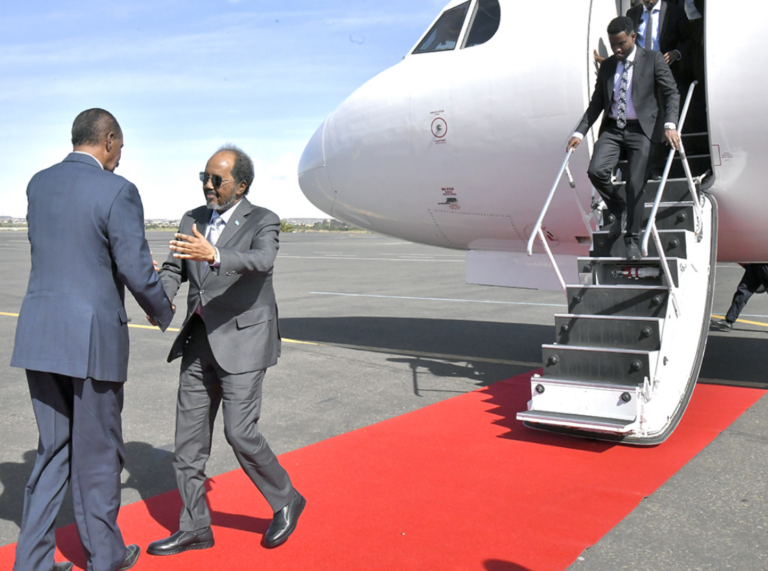
Thursday 26, Dec,2024 {HMC} Somalia’s President Hassan Sheikh Mohamud arrived in Asmara on Wednesday for bilateral talks with Eritrean President Isaias Afwerki, marking his fourth visit in six months.
The Eritrean Ministry of Information confirmed that the visit aims to enhance bilateral ties and address regional and international matters of shared importance. President Mohamud was received with a red-carpet reception at Asmara International Airport, underscoring the growing partnership between the two nations.
Somalia’s ties with Eritrea and Egypt have strengthened in response to Ethiopia’s contentious deal with Somaliland, granting Addis Ababa port access in Berbera. Mogadishu condemned the agreement as an infringement on its sovereignty and a step toward Somaliland’s international recognition. Ethiopia, a landlocked nation, defended the deal as vital to its economic interests, further straining relations with Somalia.
Eritrea, which shares a fraught history with Ethiopia, has expressed concerns over Addis Ababa’s ambitions for port access, viewing them as a potential threat to its territorial integrity.
The alliance between Somalia, Eritrea, and Egypt reflects a shifting balance of power in the Horn of Africa. The three nations solidified their partnership during a summit in Asmara last October, agreeing to enhance security cooperation and counter-terrorism efforts. Analysts view the alliance as a counterweight to Ethiopia’s regional dominance, with Eritrea expressing concerns over Addis Ababa’s maritime aspirations as a potential threat to its territorial integrity.
In October, Somalia, Eritrea, and Egypt solidified a tripartite agreement aimed at bolstering security cooperation and countering perceived Ethiopian provocations.
Analysts view the burgeoning alliance between Somalia, Eritrea, and Egypt as a counterweight to Ethiopia’s regional dominance. Ethiopia’s maritime aspirations, coupled with its contentious dam project on the Nile, have strained its relations with Somalia and Egypt, both of whom see Addis Ababa’s actions as destabilizing.
Efforts to ease tensions between Somalia and Ethiopia gained traction with Turkey’s mediation of the Ankara Declaration in December 2024. The agreement emphasized Somalia’s territorial sovereignty while granting Ethiopia conditional commercial access to the Somali coastline. Observers hailed the deal as a step toward resolving the Somaliland dispute, but challenges remain as Addis Ababa navigates its relations with Mogadishu.
Turkish President Recep Tayyip Erdogan, instrumental in brokering the agreement, leveraged Turkey’s significant investments in Somalia, including military training programs and humanitarian aid. The declaration also set a timeline for further negotiations, reflecting Turkey’s growing regional influence.