


Isniin 10 March 2025 {HMC} Waxaa halkan idin kugu soo gudbineynaa Wararka ugu waa weyn Soomaaliya iyo Caalamka ee Warbaahinta Hiiraanweyn
{DHAGEYSO} Warka Duhurnimo ee Radio Hiiraanweyn {10-03-2025}
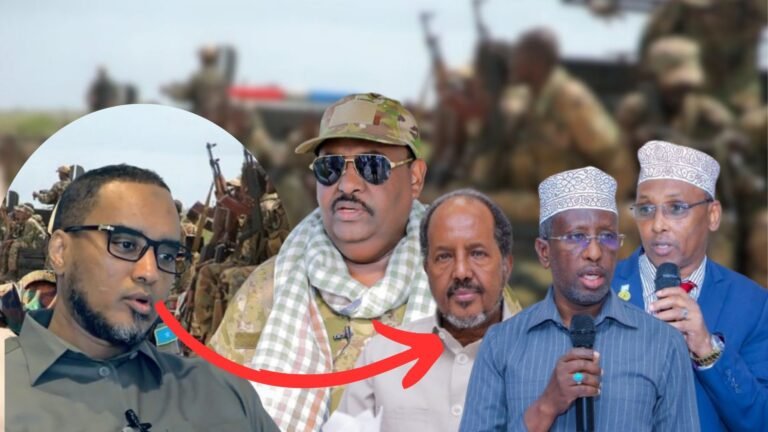
Isniin 10, Mar 2025 {HMC} Dhageystayaal halkan waxa aan idiin kugu soo gudbi neynaa Warka Duhurnimo ee Warbaahinta Hiiraanweyn
Warka waxaa soo jeedinayo ::Abdiyare iyo Shugri
Farsamadii ::Abdiqani Osoble
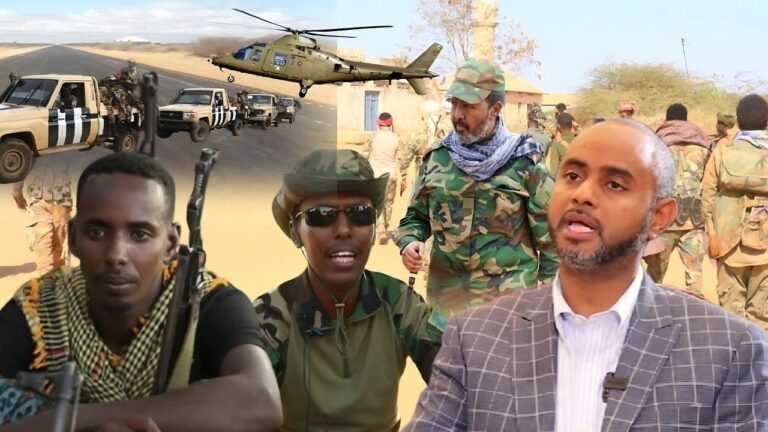
{DAAWO MUQAALKA} Odayaal dhaqan oo ku sugan kenya oo Xoolo ugu Deeqay Ciidamada Macawiisleeyda.

Isniin 11 March 2025 {HMC} Odayaal dhaqan oo ku sugan kenya oo Xoolo ugu Deeqay Ciidamada Macawiisleeyda.
HOOS KA DAAWO MUQAALKA WARBIXINTA
{DAAWO MUQAALKA} Wararkii ugu Dambeyey abaabul Dagaal oo ka socda sh/dhexe.
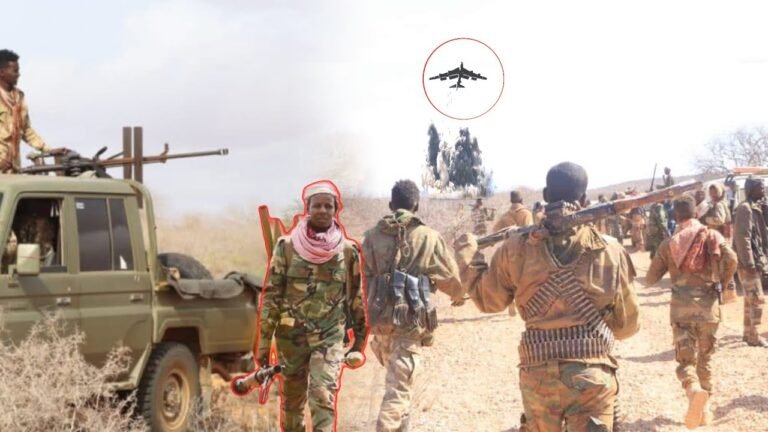
Isniin 11 March 2025 {HMC} Wararkii ugu Dambeyey abaabul Dagaal oo ka socda sh/dhexe.
HOOS KA DAAWO MUQAALKA WARBIXINTA
Dowladda Soomaaliya Oo War Kasoo Saartay Xiisadaha Kasoo Cusboonaaday Dalka Koonfurta Suudaan
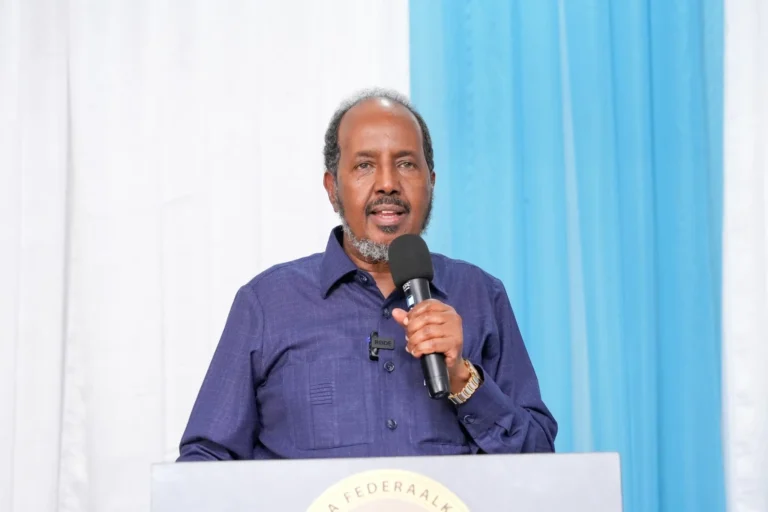
Isniin 10, March 2025 {HMC} Madaxweynaha Soomaaliya Xasan Sheekh Maxamuud ayaa sheegay in Soomaaliya ay si buuxda ula garab taagan tahay shacabka Koonfurta Suudaan, iyadoo ay jirto xiisad siyaasadeed oo ka dhalatay xarigga madaxda xisbiyada mucaaradka.
“Waxaan sii wadi doonnaa dadaallada lagu doonayo in lagu helo nabad iyo mustaqbal xasilloon oo ummaddooda ah,” Madaxweyne Xasan Sheikh ayaa sidaasi yiri markiii qadka taleefoonka kula hadlay madaxweynaha Koonfurta Suudaan Salva Kiir iyo madaxweyne ku xigeenka Riek Machar.
Madaxweyne Xasan Sheikh ayaa sheegay in Soomaaliya ay walaac ka muujinayso xiisadaha ka taagan dalka koonfurta Suudaan isagoo ku booriyay wadahadal si looga hortago in ay sii xumaato.
“Xasiloonida Koonfurta Suudaan waxay udub dhexaad u tahay nabadda iyo ammaanka gobolkayaga ballaaran,” ayuu yidhi madaxweyne Xasan Sheikh.
Madaxweynaha Soomaaliya ayaa u xaqiijiyey Kiir iyo Machar in ay ka go’an tahay Soomaaliya inay taageerto dadaallada horseedi doona xal nabadeed.
Xiisad Koonfurta Suudaan ayaa horraantii bishan ka taagneyd Koonfurta Suudaan markii ciidamada ammaanka ee daacadda u ah madaxweyne Silva Kiir ay xireen laba wasiir oo ka tirsan xukuumadda iyo dhowr sarkaal oo sare oo militari oo lala xiriirinayo hoggaamiyaha mucaaradka Riek Machar.
Xariga ayaa yimid ka dib markii iska hor imaadyo rabshado wata ay ku dhexmareen ciidamada qaranka iyo malayshiyaad ka soo jeeda qowmiyada Nuer ee Machar, ee waqooyiga magaalada Naasir.
SNA neutralizes senior militant responsible for extorting local communities in Lower Shabelle
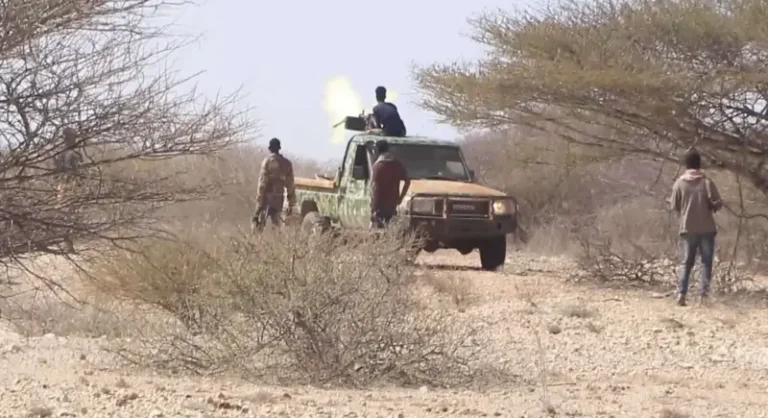
Monday March 10, 2025 {HMC} The Somali National Army (SNA), specifically the 143rd Brigade, has carried out a successful operation in which they neutralized a notorious militant leader responsible for extorting local communities and conducting reconnaissance in the Beledul-Amiin area of the Afgoye district.
The militant, identified as Da’ud Mohamed Maleele, had been terrorizing residents of the Sabiid and Beledul-Amiin areas, particularly targeting farmers by extorting goods and forcibly taking food supplies.
The 143rd Brigade carried out the planned operation in Beledul-Amiin, where Maleele was killed, thus eliminating the threat to local civilians. The operation marks another significant success for the Somali National Army in its ongoing efforts to secure the country from militant groups.
Source SONNA
Ethiopia expands commercial fleet as maritime talks with Somalia continue

Monday March 10, 2025 {HMC} Ethiopia has ordered six new commercial ships to expand its trade capacity as part of broader efforts to strengthen its economic position and secure direct maritime access, the Ethiopian Shipping and Logistics Services Enterprise (ESL) confirmed Monday.
Two of the newly acquired vessels—both Ultramax dry bulk carriers with a capacity of 62,000 metric tons each—have already been delivered and are now operational, according to state-run Fana Broadcasting Corporation. The remaining ships, which include container vessels (ETUs) capable of carrying between 3,000 and 4,000 containers per voyage, are expected to arrive next year.
Ethiopia, a landlocked country dependent on Djibouti for more than 90% of its trade, currently operates a fleet of 10 commercial ships, including the Abay II, a 63,000-ton bulk carrier. Ethiopian officials argue that an expanded fleet will reduce logistical costs and improve trade efficiency for Africa’s fifth-largest economy.
The ship acquisitions come as Ethiopia intensifies its push for maritime access, with Prime Minister Abiy Ahmed openly stating that Ethiopia “needs a direct outlet to the sea.”
In January 2024, Ethiopia signed a controversial Memorandum of Understanding (MoU) with Somaliland, offering recognition of the self-declared independent region in exchange for access to 20 kilometres of coastline for 50 years. The agreement, which would grant Ethiopia rights to develop a naval base and commercial port, was immediately rejected by the Somali federal government, which considers Somaliland part of its sovereign territory.
Mogadishu has since taken diplomatic action, securing backing from the Arab League, the African Union, and key regional allies in opposition to the deal. Somali officials have reiterated that any negotiations concerning port access must be conducted directly with the federal government, not Somaliland. Meanwhile, Turkey has stepped in as a mediator, with the Ankara Declaration laying the groundwork for future discussions between Ethiopia and Somalia over maritime trade agreements.
Source Hiiraan online
Somali ambassador denies President Mohamud rejected U.S. Embassy security warning

Monday March 10, 2025 {HMC} Somalia’s ambassador to the United States, Dahir Hassan Abdi, has denied reports that President Hassan Sheikh Mohamud dismissed a recent security warning from the U.S. Embassy in Mogadishu, saying the president’s remarks were unrelated to the advisory.
In an interview with VOA Somali, the ambassador clarified that President Mohamud’s speech on Friday—where he accused both foreign and domestic actors of fueling instability—was not a rejection of the U.S. security alert.
“The president’s address was aimed at the Somali people and focused on the country’s ongoing security challenges, the fight against Al-Shabaab, and the need to support Somali security forces,” Abdi said.
His remarks come on the heels of growing concerns over Somalia’s security situation, following a surge in Al-Shabaab attacks in central regions. The militant group has launched coordinated assaults, temporarily capturing key towns, including Balcad, which lies just 30 kilometers from Mogadishu, before Somali forces reclaimed control.
The U.S. Embassy issued a security advisory earlier in the week, warning of “potential imminent attacks” in Mogadishu, including at Aden Adde International Airport. The alert led Turkish Airlines and Qatar Airways to suspend flights to the Somali capital, inflicting economic losses and disrupting travel. Security analysts have criticized the warning, arguing that it created panic without offering actionable intelligence to thwart the threat.
During his speech, President Mohamud dismissed foreign security concerns as “propaganda” and reaffirmed Somalia’s ability to handle its security affairs independently. He urged Somalis to avoid areas controlled by Al-Shabaab, warning that both air and ground strikes would target the militant group’s hideouts.
Abdi added that Somalia maintains a strong security partnership with the United States and regularly shares intelligence with U.S. officials. He also pointed out that the Somali government took the embassy’s warning seriously, citing last week’s Cabinet meeting decisions on security measures.
“The Somali government remains the authoritative source for official security updates,” he added.
Source VOA
Why Mogadishu has better mobile phone reception than Manchester.

Monday March 10, 2025 {HMC} While the UK government struggles to deliver reliable mobile coverage across some rural communities, Somalia – a country that hasn’t had a functioning central government for three decades – has built one of Africa’s most resilient telecommunications networks. As a British researcher who conducts fieldwork in Somalia, I’m often struck by an ironic reality: I can find more reliable mobile coverage in hard-to-reach Somali villages than in certain parts of Manchester, where I’m from. This connectivity paradox highlights how necessity can drive innovation in unexpected places.
Upon arriving in a new town or village in Somalia, I’ve grown accustomed to an intriguing sight: elders – the traditional authorities in Somali society – greeting me with a hangool, a traditional walking stick, in one hand and a smartphone in the other. It hasn’t always been this way. In previous decades, making international calls often meant crossing borders into neighbouring Ethiopia or Kenya. Now, video calls between rural communities within Somalia and their diaspora relatives – whether engineers in Oslo or banking executives in Toronto – are commonplace. Traditional village meetings are still held under the shade of a tree, but it’s not unusual for elders to pause our conversation to patch in clan members from across the globe via WhatsApp.
Somalia’s telecommunications success story might seem counterintuitive. How has a country without a functioning central government for over three decades built one of Africa’s most sophisticated mobile networks? The answer, in part, is that Somalia’s telecom sector hasn’t merely survived despite the conflict and state collapse – it has thrived because of it. When the Somali state collapsed in 1991, hundreds of thousands fled abroad. Those who remained became dependent on money from this diaspora, creating an urgent need for reliable communication networks. In the regulatory vacuum that followed, companies like Hormuud Telecom stepped in, building extensive networks in the absence of government licenses or bureaucratic oversight. While these companies have since grown into powerful oligopolies, they’ve nonetheless delivered remarkable results: Somalia now has the cheapest mobile data rates in Africa and the seventh cheapest globally.
Today, the relationship between telecoms companies and the fledgling, externally supported Somali federal government is a complex one. In January 2024, tensions escalated when Somalia’s National Intelligence and Security Agency raided Hormuud’s offices, demanding access to customer data from their mobile money service. The company refused, citing privacy laws, leading to a brief but tense standoff that highlighted both the power of these telecom giants and the challenges they face operating in a conflict zone. Meanwhile, across the swathes of Somali territory lying outside of state control, these telecommunications companies operate in a complex security environment, navigating demands from various armed groups while maintaining services.
It is not despite but because of this complex political environment that innovation continues to flourish. Somalia largely skipped the landline era entirely, leaping straight to mobile networks. Today, 4G coverage extends across major urban centres and trading routes; as of early 2024, 5G began to be rolled out by several of the major providers. More than 70 per cent of Somalis use mobile money services like Hormuud’s EVC Plus or Telesom’s Zaad, making the country one of the world’s most advanced mobile money economies. This digital development varies significantly across Somalia’s regions, with the relatively stable northern territories enjoying more consistent coverage than southern regions, where Al-Shabaab maintains a stronger presence. Nevertheless, even in contested areas, basic mobile services remain remarkably resilient.
Somalia’s telecommunications sector serves as a powerful reminder that so-called ‘failed states’ can produce remarkably vibrant economic sectors and be hotbeds of innovation. The narrative of Somalia as simply a collapsed state misses the remarkable resilience and entrepreneurship that has emerged in this challenging environment.
However, it’s important to acknowledge that this success isn’t without significant downsides. Inequality is extremely high, with the benefits of digital connectivity unevenly distributed. Large parts of rural Somalia still face connectivity challenges. While telecom companies like Hormuud and Telesom have driven innovation, they function as oligopolies with considerable market power and political influence.
The secret that makes the system work is that Somalia’s digital infrastructure serves everyone’s interests, even amid protracted conflict. The Al-Qaeda affiliated Islamist group Al-Shabaab makes sophisticated use of social media; clans raise development funds through WhatsApp; NGOs deliver aid through mobile money; and nascent state authorities increasingly rely on digital services.
This disparity tells us something important about innovation. Britain’s sophisticated banking infrastructure, while advanced, may have actually slowed digital adoption. Meanwhile, Somalia’s lack of formal institutions forced rapid innovation in mobile money and digital governance. As such, some Somali villages with dirt roads and minimal infrastructure enjoy more reliable mobile connectivity than certain neighbourhoods in Manchester or other British urban areas.
Building on this foundation of connectivity, the real revolution, however, has come in the last five years. A proliferation of cheap smartphones from Asia, combined with Somalia’s low data costs, has transformed how Somali society operates. WhatsApp groups have become important coordination mechanisms for community action, particularly in areas where the state’s reach is limited. These groups, often organised along clan lines, can be used to crowdfund everything from new schools and hospitals to road construction projects, intersecting with traditional, decentralised clan governance structures.
A typical village, for instance, might have dozens of WhatsApp groups, each dedicated to specific community needs: one for emergency response, another for education initiatives, and others for political mobilisation.
The system’s effectiveness presents an unexpected challenge to Western state-building efforts in Somalia, of which the UK has been a significant contributor over the past decade. Despite billions of dollars and decades of work trying to establish centralised government institutions, in large parts of Somalia clan-based WhatsApp groups are often more successful at delivering basic services and maintaining order.
This digital ecosystem is sophisticated and adapted to Somali society. When a development project is proposed, diasporas who donated money can watch live video updates of the construction progress. Voice messages allow illiterate elders to participate alongside educated diaspora members in decision-making processes. In one group I observed, a doctor in Sweden, a lawyer in Canada, and a traditional elder under a tree in Somalia were all actively participating in a discussion about building a new health clinic.
A typical village in Somalia might have dozens of WhatsApp groups
The system isn’t without its drawbacks, however. WhatsApp groups can exacerbate clan rivalries, with development projects often framed in terms of competition between different clans. There is also evidence that traditional authorities, such as elders, are being sidelined as tech-savvy youth gain influence through their digital capabilities. Some diaspora members, overwhelmed by constant demands for contributions, resort to changing their phone numbers to avoid their obligations.
This digital revolution has also transformed conflict dynamics. During recent fighting in a city in northern Somalia where I conducted fieldwork, clan militias used WhatsApp groups to coordinate their operations and raise funds from the diaspora. Smartphones became weapons in their own right, with users documenting attacks and broadcasting them live to global audiences. One local man I interviewed would deliberately run toward attacks with his smartphone, livestreaming the events to diaspora members who could then mobilise support. This digital dimension of warfare, which has gained widespread attention in Ukraine, has been a reality in Somalia for years.
Somalia’s experience offers important lessons about development in the digital age. While the international community continues to push for conventional state-building, Somalis have organically developed a hybrid system that combines traditional social structures with modern technology. It’s a reminder that effective governance and development doesn’t always follow Western state-centric models. It’s also a compelling contrast to Britain, where despite being one of the world’s wealthiest nations, many rural communities still struggle with basic mobile coverage.
This digital transformation shows no signs of slowing. As one elder told me, gesturing with his smartphone: ‘Technology has advanced so many things. Even in the rural areas when they’re milking the cows and goats, we introduce new family members through video calls.’ It’s a powerful illustration of how digital innovation can flourish in the most unexpected places – even in the absence of a functioning state.
{DAAWO MUQAALKA} Waa sidee Xaalada Xildhibaankii lagu Afduubtay kenya ee lasii daayey.?
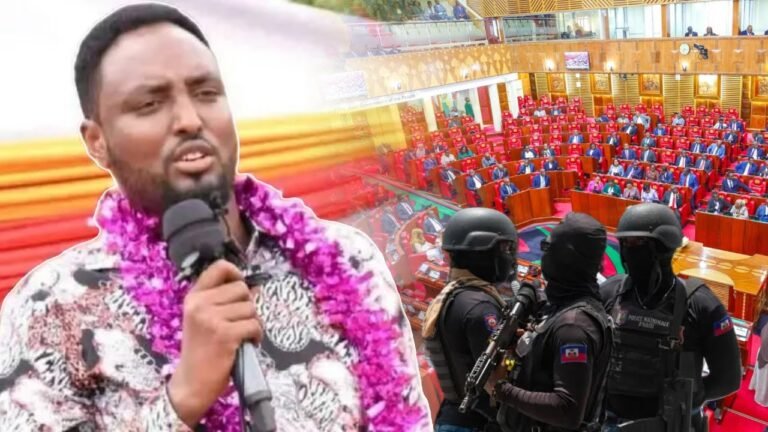
Isniin 11 March 2025 {HMC} Waa sidee Xaalada Xildhibaankii lagu Afduubtay kenya ee lasii daayey.?